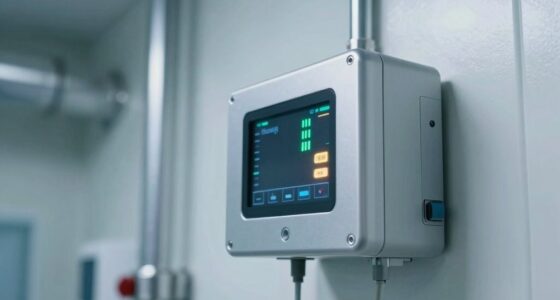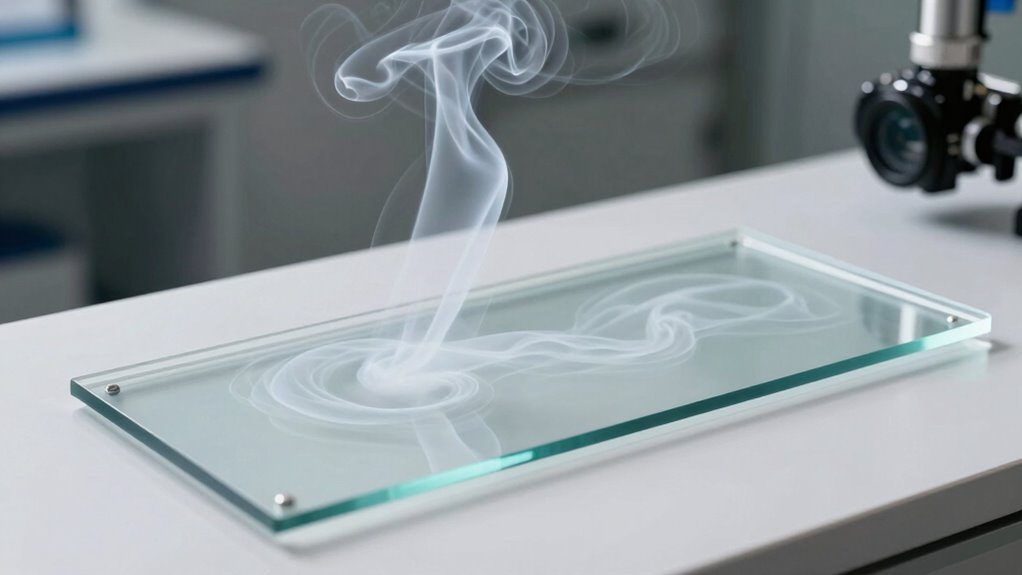

To spot turbulence in your clean bench’s airflow, use a simple smoke test. Place smoke near the inlet and observe how it moves inside the workspace. Steady, straight smoke indicates proper laminar flow, while swirling or uneven patterns reveal turbulence or disruptions. This quick visual tool helps you verify that the airflow is controlled and sterile. If you want to guarantee your system’s peak performance, keep exploring these effective techniques.

Prime made for students and young adults
- Fast, free delivery for dorm and study essentials
- Prime Video and Amazon Music included
- Member-only deals
Key Takeaways
- Use smoke or vapor at the inlet to visualize airflow patterns inside the clean bench.
- Observe smooth, straight smoke flow to confirm laminar airflow; swirling indicates turbulence.
- Turbulence appears as eddies or irregular smoke movement, signaling airflow disruptions.
- Properly conducted smoke tests help identify areas with airflow irregularities needing adjustment.
- Regular smoke testing ensures the integrity of airflow, maintaining sterile conditions and preventing contamination.

Have you ever wondered how clean benches maintain such sterile environments? It all comes down to precise airflow management, which is essential for preventing contamination. One effective way to understand and verify this airflow is through a simple yet powerful method called the smoke test. When you perform a smoke test, you use a small amount of smoke or vapor to visualize how air moves inside the bench. This process provides direct airflow visualization, allowing you to see the path and behavior of air currents in real time. By observing the smoke, you can identify areas where airflow might be disrupted, which is vital for guaranteeing the environment remains sterile.
Using smoke tests reveals airflow patterns and detects turbulence to ensure a sterile environment.
Turbulence detection is a key part of this process. When airflow is smooth and laminar, the smoke rises steadily, following a clear, straight path. However, if turbulence occurs, you’ll notice the smoke swirling, eddying, or becoming uneven. These irregularities indicate that the airflow isn’t consistent, which could compromise the sterile conditions the clean bench is designed to maintain. Recognizing turbulence early helps you pinpoint problematic zones that need adjustment or cleaning, ensuring the airflow remains ideal.
The smoke test is straightforward: you place a smoke source, such as a smoke tube or a vaporizer, at the inlet of the clean bench, and then observe how the smoke moves within the workspace. If the airflow is properly directed, the smoke should flow smoothly from the inlet to the exhaust, staying close to the surface and avoiding any backflows or eddies. If you see the smoke swirling or mixing erratically, it signals turbulence that could cause contamination risks. This visual feedback makes it easier to identify where airflow patterns break down and need correction.
Understanding airflow visualization through smoke testing also helps you verify the performance of your clean bench’s filtration and airflow systems. It acts as a real-time diagnostic tool that confirms whether the laminar flow is maintained or if adjustments are needed. Regular turbulence detection ensures that your environment stays sterile, protecting both samples and personnel. It’s a practical, cost-effective method that doesn’t require sophisticated equipment but provides critical insights into airflow integrity. Additionally, proper airflow management is crucial for maintaining a contamination-free environment, making these visual checks an essential part of routine maintenance.
In essence, using smoke to visualize airflow and detect turbulence is a simple yet effective way to maintain the highest standards of cleanliness. It empowers you to spot issues early, take corrective action, and ensure that the clean bench continues to deliver a sterile environment. This proactive approach guarantees that contaminants are kept at bay, safeguarding your work and ensuring reliable, safe results every time.
smoke test for clean bench airflow
As an affiliate, we earn on qualifying purchases.
As an affiliate, we earn on qualifying purchases.
Frequently Asked Questions
How Often Should I Perform the Smoke Test?
You should perform the smoke test weekly as part of your maintenance schedule to guarantee proper airflow and spot turbulence early. Regular testing frequency helps you catch airflow disruptions that could compromise clean bench performance. Incorporate this quick check into your routine, especially before critical work, to maintain a safe, contamination-free environment. Consistent testing keeps your airflow ideal and prevents potential issues from developing unnoticed.
What Safety Precautions Are Necessary During the Test?
You should always wear protective gear, like gloves and safety glasses, during the smoke test to protect yourself from potential hazards. Be aware of your surroundings and guarantee proper ventilation to avoid inhaling smoke or fumes. Keep a fire extinguisher nearby, and work in a well-lit area. Staying cautious and alert helps prevent accidents, confirming your safety while accurately evaluating airflow turbulence in the clean bench.
Can the Smoke Test Damage the Clean Bench?
The smoke test won’t damage your clean bench when used properly for airflow visualization. You should use a safe, non-toxic smoke source and avoid overloading the system with excess smoke. Make sure the smoke isn’t too thick, which could interfere with airflow or strain the filters. When done correctly, the test helps you see turbulence without harming the clean bench, ensuring your workspace remains safe and effective.
Is There an Alternative to Smoke for Airflow Testing?
Yes, there are smoke alternatives for airflow visualization, such as using a fog generator or a tissue test. These methods help you see how air moves without the potential risks associated with smoke. Fog generators produce a safe, visible mist that clearly shows turbulence and airflow patterns, making it easier to verify your clean bench maintains proper airflow. Always choose non-invasive options to protect your equipment and workspace.
How Do I Interpret Turbulence Patterns Accurately?
When interpreting turbulence patterns in airflow visualization, look for irregular, swirling, or disrupted smoke lines that indicate turbulence detection. For example, if you notice erratic smoke movement near a filter, it suggests airflow disturbances. Consistent, smooth flow lines mean laminar airflow, while chaotic patterns signal turbulence. Pay close attention to these patterns to identify areas needing airflow optimization, ensuring your clean bench maintains proper airflow and contamination control.
Conclusion
Remember, a gentle breeze can hide unexpected currents—what seems calm on the surface might conceal unseen disturbances. By mastering simple tests like the smoke trick, you can guarantee your clean bench remains a sanctuary of purity. Sometimes, a small glimpse into the unseen reveals more than words ever could. Stay attentive, trust your instincts, and keep the flow steady—because what’s beneath the surface often holds the key to true cleanliness.
Halloween Picks
halloween
As an affiliate, we earn on qualifying purchases.