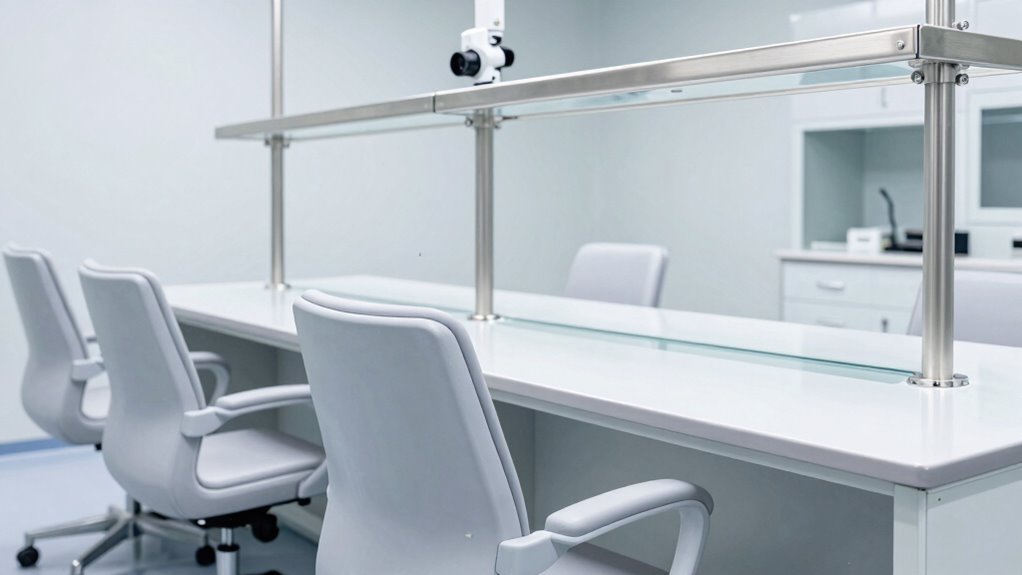
When selecting cleanroom furniture and chairs, don’t overlook ergonomic features like adjustable height and lumbar support, which reduce strain and unnecessary movement—key sources of contamination. Also, prioritize durable, smooth, non-porous materials that are easy to disinfect and resist bacteria buildup. Skipping these details can compromise hygiene and safety standards. Pay attention to these critical design aspects, as small choices can greatly impact contamination control and operational success—if you continue exploring, you’ll learn how to optimize your cleanroom environment.
Key Takeaways
- Many overlook ergonomic features like adjustable height and lumbar support, which reduce physical strain and contamination risks.
- Failing to select smooth, non-porous, and antimicrobial materials can harbor bacteria and complicate cleaning.
- Ignoring furniture design that minimizes unnecessary movement increases contamination potential in cleanrooms.
- Neglecting durability and cleanability of materials may lead to frequent replacements and compromised sterilization.
- Small ergonomic and material details significantly impact contamination control and overall cleanroom safety.
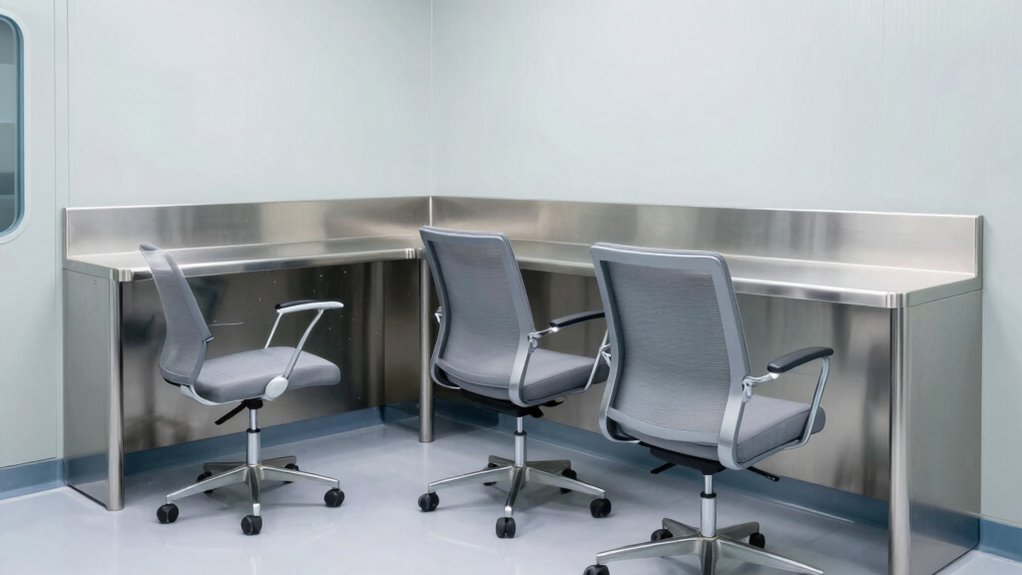
Equally important is ergonomic design, which directly impacts both safety and productivity. When you’re working long shifts in a cleanroom, uncomfortable furniture can lead to fatigue, strain, and even injury, which may inadvertently increase contamination risks through compromised focus or movement. Chairs with ergonomic features—such as adjustable height, lumbar support, and proper seat depth—allow you to maintain good posture and reduce physical stress. This focus on ergonomic design principles enhances user comfort and promotes correct movement patterns. This not only enhances comfort but also supports ergonomic design principles that promote proper movement and positioning, minimizing accidental contact with sterile surfaces or equipment, it also helps in maintaining a sterile environment by reducing unnecessary movements that could generate contaminants. Choosing furniture that balances material durability with ergonomic considerations isn’t just about comfort or longevity; it’s about maintaining strict contamination controls. Durable materials ensure that the furniture remains intact and easy to disinfect, preventing bacterial buildup in cracks or porous surfaces. Additionally, selecting furniture with smooth, non-porous surfaces further supports contamination control by facilitating thorough cleaning. Proper material selection also contributes to long-term cleanliness, which is essential in sterile environments. Incorporating anti-microbial surfaces can further reduce microbial growth and enhance overall hygiene. Meanwhile, ergonomic design helps you work efficiently and safely, reducing unnecessary movements that could introduce contaminants. When you consider these factors, you’re making a conscious effort to uphold the sterile standards required in sensitive environments like pharmaceutical labs, semiconductor manufacturing, or biotech facilities. Ultimately, overlooking these details can lead to costly contamination incidents, increased maintenance, and compromised product integrity. By prioritizing material durability and ergonomic design, you’re investing in furniture that not only lasts longer but also contributes profoundly to contamination control. It’s a small detail, but it has a big impact on your cleanroom’s overall sterility and operational success. Paying attention to these often-overlooked aspects ensures you create a safer, more efficient environment where contamination risks are minimized, and your work can proceed with confidence.
ergonomic cleanroom chair with adjustable height
As an affiliate, we earn on qualifying purchases.
As an affiliate, we earn on qualifying purchases.
Frequently Asked Questions
How Often Should Cleanroom Furniture Be Sanitized?
You should sanitize cleanroom furniture regularly, ideally following the manufacturer’s recommended maintenance schedules, which often suggest daily or weekly cleaning. Always consider surface compatibility when choosing cleaning agents to prevent damage. Regular sanitation minimizes contamination risks and maintains a sterile environment. By adhering to these schedules and using appropriate cleaning methods, you guarantee your cleanroom stays compliant, safe, and free from potential contaminants that could compromise your processes.
Are There Eco-Friendly Options for Cleanroom Furniture?
Think of eco-friendly options as a invigorating change for your cleanroom. Yes, you can choose furniture made from eco-friendly materials, like recycled plastics or sustainably sourced metals. These options support sustainable design, reducing your environmental footprint without sacrificing cleanliness standards. By selecting sustainable, eco-conscious furniture, you help protect the environment while maintaining the sterile conditions your cleanroom requires. It’s a win-win for safety and sustainability.
What Materials Are Best for Cleanroom Chairs?
You should choose cleanroom chairs made from materials like high-density polyethylene or polypropylene, which offer excellent material durability and are easy to clean. Look for ergonomic design features that support comfort and reduce fatigue during long shifts. These materials resist chemicals and scratches, maintaining cleanliness and integrity. Prioritize chairs with smooth surfaces and minimal crevices, ensuring contamination control while providing ergonomic support for users.
Can Furniture Be Customized for Specific Contamination Levels?
Yes, furniture can be customized for specific contamination levels. You should consider material compatibility when choosing options, ensuring they resist contamination and are easy to clean. Many manufacturers offer customization options like sealed surfaces, antimicrobial finishes, and non-porous materials tailored to your cleanroom’s requirements. These choices help maintain strict contamination controls, allowing you to optimize cleanliness and safety based on your unique environment and contamination sensitivity.
How Do Furniture Designs Impact Airflow in Cleanrooms?
Your furniture design impacts airflow in cleanrooms by either facilitating or obstructing it. Proper furniture placement guarantees minimal airflow obstruction, promoting uniform particle removal and maintaining contamination control. Avoid bulky or poorly positioned pieces that can disrupt airflow patterns. Streamlined, low-profile furniture allows air to circulate smoothly, reducing dead zones and ensuring consistent airflow. This careful planning helps maintain the cleanroom’s integrity and ideal contamination control.
Conclusion
Remember, cleanroom furniture is the silent guardian of your sterile domain. Each chair and table acts as the unwavering gatekeeper, holding back unseen threats and preserving purity. Neglecting contamination control is like leaving the door cracked open—inviting chaos into your carefully maintained sanctuary. By paying attention to these details, you’re not just choosing furniture; you’re safeguarding your entire mission. Keep the symbols of cleanliness strong, and your cleanroom will stand resilient against the tiniest intruders.