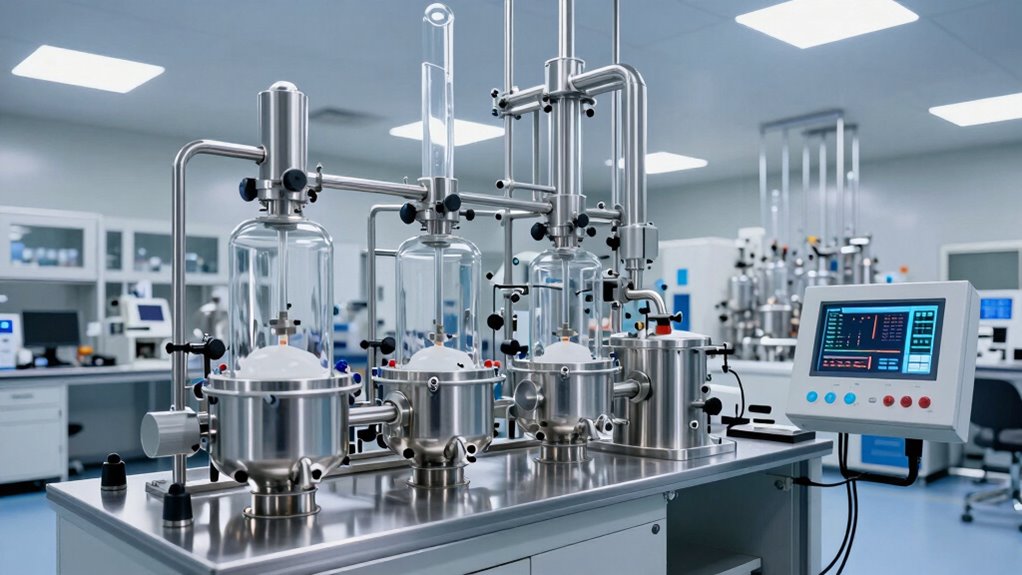

Continuous manufacturing in pharma leverages chemistry for more precise control over processes, resulting in higher purity, potency, and consistent quality. It allows you to monitor and adjust in real-time, reducing variability and ensuring safety. While regulatory challenges exist, early collaboration and robust validation can help you stay compliant and improve efficiency. Embracing this approach positions your organization at the forefront of innovation. To discover how chemistry can further transform your manufacturing, keep exploring this exciting advancement.
Prime for Young Adults — start your free trial
Fast free delivery, streaming and member deals for eligible 18–24 year olds.
As an affiliate, we earn on qualifying purchases.
Key Takeaways
- Continuous manufacturing allows for precise chemical control, leading to higher purity and potency of pharmaceutical products.
- The chemistry behind continuous processes enables real-time adjustments for consistent product quality.
- Continuous systems facilitate better process understanding and optimization through advanced analytical technologies.
- Overcoming regulatory challenges enhances the adoption of innovative chemical processes in pharma manufacturing.
- The chemistry-driven approach in continuous manufacturing accelerates production, ensuring safer and more reliable medicines.
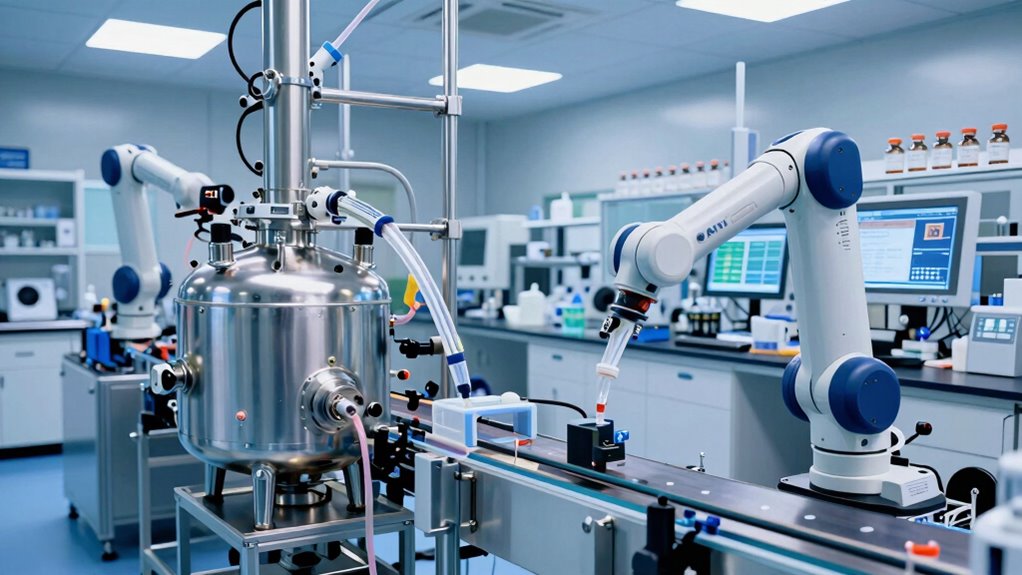
However, embracing continuous manufacturing isn’t without its hurdles. Regulatory challenges are among the most significant obstacles you face. The existing regulatory framework was built around batch processing, so adapting it to continuous processes requires careful navigation. You need to demonstrate that continuous manufacturing consistently meets safety, efficacy, and quality standards, which involves new validation strategies and thorough process controls. Regulatory agencies may demand additional data and risk assessments, complicating the approval process. Still, many regulatory bodies are evolving their guidelines to accommodate this innovative approach, but it demands proactive communication and collaboration from you. Staying ahead of regulatory expectations involves thorough documentation, rigorous process validation, and transparent reporting. Additionally, understanding the regulatory landscape and engaging early with authorities can significantly streamline approval pathways. Implementing continuous manufacturing means you have to rethink your quality assurance strategies. You’ll need advanced process analytical technologies (PAT) to monitor real-time data, ensuring that every step stays within set quality parameters. This real-time oversight allows you to make immediate adjustments, reducing variability and enhancing product consistency. It also enables you to detect and correct issues early, preventing costly recalls or batch failures. Developing a robust validation process is essential to demonstrate ongoing compliance and reliability of your continuous manufacturing system. Investing in training and infrastructure is crucial for a successful transition, as it ensures your team can operate these sophisticated systems effectively. Training your team to operate and troubleshoot these sophisticated systems is essential, as is investing in the right infrastructure. The chemistry behind continuous manufacturing offers the advantage of more precise control over reactions and processes, which ultimately results in higher purity and potency of the final product. Furthermore, adopting advanced control strategies can optimize process performance and ensure compliance with evolving standards. Developing a strong understanding of process analytical technology is key to effectively implementing real-time monitoring and control. Despite the initial hurdles, the long-term benefits of adopting continuous manufacturing are compelling. It not only boosts production efficiency but also enhances product quality and safety. By overcoming regulatory challenges through diligent planning and collaboration, you position yourself at the forefront of pharmaceutical innovation. Embracing the chemistry advantage of continuous manufacturing means you’re shaping a future where medicines are produced faster, safer, and more reliably, ultimately benefiting patients worldwide.
Process Analytical Technology (PAT) tools for pharma
As an affiliate, we earn on qualifying purchases.
As an affiliate, we earn on qualifying purchases.
Frequently Asked Questions
How Does Continuous Manufacturing Impact Drug Pricing?
You’ll find that continuous manufacturing helps lower drug prices through significant cost reduction. By streamlining production, you reduce waste, energy, and labor costs, making manufacturing more efficient. This efficiency allows you to offer drugs at more competitive prices, benefiting both your company and the market. As a result, continuous manufacturing enhances your market competitiveness, enabling you to respond faster to demand changes and keep prices attractive to consumers.
What Are the Main Regulatory Challenges for Continuous Manufacturing?
You face regulatory challenges like guaranteeing compliance, maintaining quality assurance, and meeting evolving standards. You must navigate complex approval processes, demonstrate consistent product quality, and adapt to new guidelines. Balancing innovation with regulatory demands requires meticulous documentation, robust validation, and proactive communication with authorities. Staying ahead involves continuous monitoring, rigorous testing, and fostering transparency to prevent delays and ensure your manufacturing process aligns with all regulatory expectations.
How Does Continuous Manufacturing Affect Supply Chain Resilience?
You’ll find that continuous manufacturing greatly enhances your supply chain resilience by increasing supply chain flexibility and simplifying inventory management. With a steady, uninterrupted production process, you can adapt quickly to demand changes and reduce stockouts. Additionally, real-time data helps you optimize inventory levels, minimizing waste and ensuring timely delivery. Overall, this approach makes your supply chain more reliable, responsive, and better equipped to handle disruptions.
What Training Is Needed for Staff to Operate Continuous Systems?
You need to provide your staff with thorough training on operator skills specific to continuous systems, including mastering process controls and troubleshooting techniques. Additionally, emphasize safety protocols to guarantee safe operation, addressing potential hazards unique to continuous manufacturing. Regular refresher courses help keep skills sharp and safety procedures up-to-date. By investing in this training, you’ll empower your team to operate efficiently and maintain compliance, ensuring smooth and safe continuous system operations.
Are There Specific Types of Drugs Best Suited for Continuous Manufacturing?
Think of continuous manufacturing as a river flowing smoothly, ideal for drugs with high stability and consistent quality. You’ll find it best suited for small molecules, biologics, and vaccines that benefit from steady process scalability. These drugs, like well-behaved currents, maintain stability over time, allowing seamless scaling and efficient production. If stability is shaky, the river’s flow may be disrupted, making continuous systems less suitable.
Conclusion
So, if you thought batch processes were the pinnacle of pharmaceutical innovation, think again. Continuous manufacturing isn’t just a fancy trend; it’s the chemistry superhero that promises faster, safer, and more efficient drug production. Sure, it might require a tiny leap of faith and a dash of modernization, but hey, who doesn’t love a good upgrade? Embrace the change, and maybe, just maybe, you’ll finally be able to keep up with the future of pharma.
Fall yard work Picks
leaf blowers
As an affiliate, we earn on qualifying purchases.