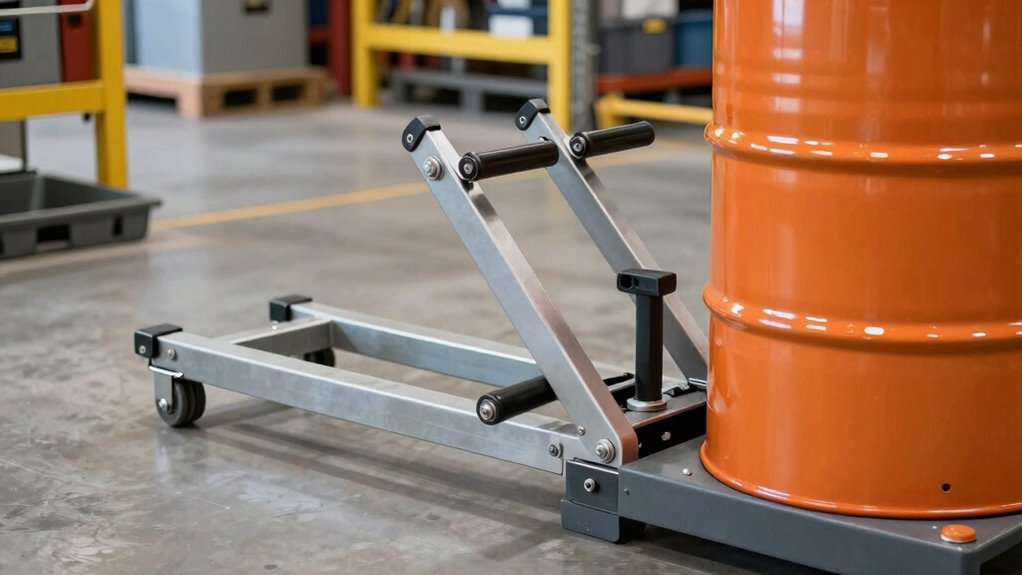

Properly designed drum lifters and tilters improve your control, making lifting and tilting safer and more ergonomic. Regular maintenance and inspections help prevent malfunctions that could cause spills or accidents. Using equipment crafted with ergonomic features reduces physical strain and fatigue, helping you work more efficiently. Diligent use of these tools, combined with proper training, can prevent costly spills and protect your safety. Keep exploring to discover how meeting ergonomic standards enhances spill prevention and safety even further.

Prime made for students and young adults
- Fast, free delivery for dorm and study essentials
- Prime Video and Amazon Music included
- Member-only deals
Key Takeaways
- Ergonomic design in drum lifters and tilters reduces physical strain and enhances control during handling.
- Proper maintenance prevents malfunctions that could lead to spills or safety hazards.
- Training ensures correct operation, minimizing mishaps and promoting spill prevention.
- Regular inspections identify wear or damage, supporting safe and spill-free equipment use.
- Effective handling techniques decrease the risk of accidents, leaks, and environmental contamination.

Equally essential is maintaining your drum lifters and tilters. Regular equipment maintenance keeps everything functioning smoothly, preventing unexpected failures during critical tasks. Check for signs of wear, corrosion, or damage before each use, and follow the manufacturer’s recommended maintenance schedule. This proactive approach not only prolongs the lifespan of your tools but also creates a safer working environment. Well-maintained equipment reduces the likelihood of leaks or spills, which can be hazardous in many industrial and warehouse settings. Remember, a small leak from a damaged drum or malfunctioning tilting mechanism can lead to costly cleanups, environmental hazards, or safety violations. By taking care of your tools, you guarantee they operate effectively and safely over time. Proper equipment care also plays a key role in preventing equipment malfunctions that could cause spills or accidents. Using drum lifters and tilters properly also supports spill prevention. When you lift and tilt drums with precision, you minimize the risk of accidental spills that could cause slips, falls, or chemical exposure. The ergonomic design of these tools helps you maintain better control, reducing physical strain and fatigue. This design feature enhances worker safety and efficiency, especially during repetitive tasks. Regular training on safe operation practices ensures that workers understand how to use these tools correctly, further reducing the risk of mishaps. Implementing preventive maintenance routines can significantly improve the longevity and safety of your equipment. This means you can work longer without risking injury or losing focus, which is essential in fast-paced environments. Proper safety training emphasizes not just how to operate the equipment but also how to do so in a way that prevents spills and protects the environment. Additionally, integrating equipment inspection routines can help identify potential issues early, avoiding costly downtime. Diligent equipment maintenance ensures that your tools function reliably, preventing leaks or malfunctions that could lead to spills.
Popular right now

KitchenAid 5.5-Qt Bowl-Lift Stand Mixer, Porcelain White

Dyson Car+Boat Cordless Handheld Vacuum

Vitamix VX3 Professional-Grade Blender with BlendPilot, 48 oz, Black
As an affiliate, we earn on qualifying purchases.
Frequently Asked Questions
What Materials Are Drum Lifters and Tilters Typically Made From?
You’ll find drum lifters and tilters are typically made from durable materials like steel or aluminum, ensuring material durability and strength. These materials also support ergonomic design, making it easier for you to handle drums safely and efficiently. The sturdy construction helps prevent spills and accidents, while the ergonomic features reduce strain on your body. Overall, the combination of durable materials and ergonomic design enhances both safety and ease of use for you.
How Do I Select the Right Drum Lifter for My Needs?
To select the right drum lifter, consider your specific needs and the weight of your drums. Focus on features that support proper drum lifting techniques, like adjustable height and secure gripping mechanisms. Prioritize ergonomic design to prevent injuries and guarantee comfort during use. Check the lifter’s weight capacity and compatibility with your drums, and opt for models that promote ergonomic injury prevention while improving safety and efficiency in handling tasks.
Are There Safety Certifications for Ergonomic Drum Handling Equipment?
Yes, there are safety certifications for ergonomic drum handling equipment. You might worry about whether these tools meet safety standards, but reputable manufacturers follow strict certification processes to guarantee compliance. Look for equipment certified by recognized organizations, such as OSHA or ANSI, which verify that safety standards are met. This not only guarantees safety but also helps prevent accidents and injuries during drum handling.
Can Drum Tilters Be Used With Non-Standard Drum Sizes?
Yes, you can use drum tilters with non-standard drums by employing custom adapters designed for specific sizes. These adapters guarantee secure handling and maintain safety during tilting operations. Before using, verify that the tilter’s capacity matches the drum’s weight, and always check that the custom adapters are compatible and properly installed. This approach helps prevent spills and promotes ergonomic, safe handling of non-standard drums.
What Maintenance Is Required for Long-Term Durability?
Think of your drum lifter as a trusted partner on a long journey—you need to keep it in top shape. You should perform routine inspections to catch any wear or damage early. Regularly check for corrosion and clean parts to prevent rust. Lubricate moving components and tighten bolts as needed. This proactive maintenance guarantees durability, safety, and smooth operation, so your equipment remains reliable mile after mile.
Conclusion
By choosing the right drum lifters and tilters, you not only improve safety and efficiency but also reduce the risk of injuries. Did you know that improper drum handling causes over 30,000 workplace injuries annually? Investing in ergonomic equipment can markedly cut that number and prevent costly accidents. So, prioritize spill prevention and ergonomics—you’ll protect your team and streamline your operations simultaneously. Safety isn’t just a priority; it’s a smart business move.