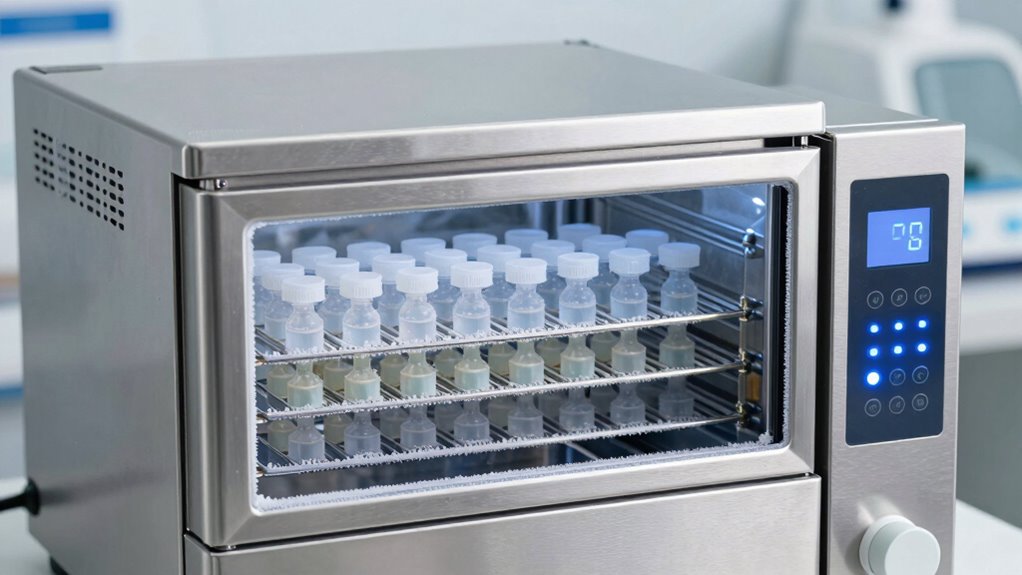

A good lyophilization cycle is determined by how well you control vacuum pressure and shelf temperature. You need to maintain the right vacuum to speed up sublimation without overdoing it, usually between 0.05 and 0.1 mbar. Managing shelf temperatures carefully—keeping them cold during primary drying and gradually warming during secondary drying—helps preserve product quality. Mastering these controls ensures efficient moisture removal and ideal results; continue to explore for more in-depth insights.

Get school and study supplies delivered free — and shop member deals
- Fast, free delivery on millions of items
- Access to Prime Big Deal Days deals on October 6–7
- Prime Video, Amazon Music and more included
Key Takeaways
- Properly balanced vacuum pressure ensures efficient sublimation without damaging the product.
- Precise control of shelf temperature maintains product stability and prevents collapse or melting.
- Continuous monitoring allows real-time adjustments for optimal drying conditions.
- Synchronizing vacuum and temperature parameters maximizes cycle efficiency and product quality.
- Avoiding abrupt changes in parameters reduces thermal stress and preserves product integrity.

Freeze dryers are specialized machines that remove moisture from food, pharmaceuticals, and other products by first freezing them and then sublimating the ice directly into vapor. To achieve a successful lyophilization cycle, you need to carefully control key parameters like vacuum pressure and shelf temperature. These factors directly influence the efficiency of moisture removal and the quality of the final product.
Vacuum pressure is essential because it lowers the boiling point of water, allowing sublimation to occur at low temperatures. When you set the right vacuum pressure, you create an environment where ice can change directly from solid to vapor without passing through the liquid phase. Too high a vacuum pressure, however, can slow down the sublimation process, extending cycle times and risking incomplete drying. Conversely, if the vacuum pressure is too low, it might cause over-sublimation, leading to product damage or loss of critical components. Typically, maintaining a vacuum pressure between 0.05 and 0.1 mbar provides an ideal balance, ensuring rapid and complete sublimation without compromising product integrity.
Shelf temperature is another essential factor that you must monitor throughout the cycle. During primary drying, you keep the shelves cold enough to keep the product frozen, but slightly warmer than the ice point to encourage sublimation. As the cycle progresses, gradually increasing the shelf temperature helps remove bound water, ensuring thorough drying. However, you must avoid exceeding the product’s critical temperature, which could cause collapse or melting. Proper temperature control involves setting initial shelf temperatures around -40°C to -20°C and then slowly raising them, often in small increments, during secondary drying. This gradual approach prevents thermal stress and preserves the structural and biochemical qualities of your product.
A good lyophilization cycle hinges on the synergy between vacuum pressure and shelf temperature. If you adjust one without considering the other, you risk incomplete drying or damaging your product. Continuous monitoring and fine-tuning of these parameters allow you to optimize cycle times while maintaining product quality. By understanding how vacuum pressure influences sublimation and how shelf temperature controls the rate of drying, you can design effective cycles that produce consistently high-quality dry products. Ultimately, mastering these controls ensures your freeze dryer operates efficiently, saving time and resources while delivering reliable results.
Additionally, understanding the lyophilization process helps in fine-tuning cycle parameters to prevent product damage and optimize drying efficiency. Paying attention to the drying cycle stages is crucial to ensure each phase is properly managed for optimal results. Proper control of these parameters also involves monitoring system feedback, which allows for adjustments in real-time to improve overall cycle performance. Integrating system feedback into your process helps detect deviations early, reducing the risk of product loss or cycle failure. Maintaining a thorough understanding of these critical parameters ultimately enhances the consistency and quality of your lyophilized products.
As an affiliate, we earn on qualifying purchases.
Frequently Asked Questions
How Do Different Product Types Affect Cycle Design?
Different product types greatly influence cycle design because you need to guarantee product compatibility and optimize preservation. You must customize cycles based on the product’s moisture content, heat sensitivity, and stability, adjusting parameters like temperature and vacuum levels. This cycle customization helps prevent damage, maintain quality, and ensure effective drying. By understanding these factors, you can tailor your lyophilization process for each product, achieving consistent and reliable results.
What Are Common Troubleshooting Issues During Lyophilization?
When troubleshooting during lyophilization, you’re often chasing a needle in a haystack. Shelf contamination can cause product spoilage or inconsistent drying, while vacuum stability issues lead to inefficient sublimation. To fix these problems, regularly inspect shelves for residues and guarantee your vacuum system maintains proper pressure. Addressing these issues promptly keeps your cycle running smoothly and prevents costly delays. Acting swiftly makes all the difference in quality and efficiency.
How to Optimize Cycle Time Without Compromising Quality?
To enhance cycle time without sacrificing quality, you should adjust shelf configuration for even heat distribution and efficient heat transfer. Maintain vacuum stability to prevent fluctuations that could impact product integrity. Use real-time monitoring to identify the ideal balance between drying speed and product quality. Fine-tune these parameters based on your specific product and process, ensuring a shorter cycle that still yields high-quality, properly lyophilized products.
What Safety Features Are Essential in Freeze Dryer Operation?
Think of your freeze dryer as a guardian of your samples’ safety. Essential features include robust vacuum integrity to keep the process sealed and efficient, preventing contamination. Safety interlocks act as vigilant protectors, halting operation if unsafe conditions arise. These features work together like a shield, ensuring safe, reliable operation, so you can focus on achieving perfect lyophilization without worry.
How Does Ambient Environment Influence Freeze Drying Efficiency?
Ambient conditions considerably impact freeze drying efficiency. Fluctuations in temperature, humidity, and pressure can slow down the process or cause inconsistencies. You need strict environmental control to maintain stable conditions, ensuring ideal vapor removal and preservation of product quality. By monitoring and adjusting ambient conditions, you’ll improve cycle reliability, reduce cycle times, and prevent contamination, leading to more efficient and consistent freeze drying results.
Conclusion
In conclusion, creating a good lyophilization cycle is all about balancing your freeze dryer settings—think of it as fine-tuning a recipe. If you’re worried about complexity, remember that understanding your product’s specific needs makes the process smoother. Visualize it like baking: just as you adjust oven temperature and time for perfect bread, tweaking your cycle guarantees your product’s integrity. Master these factors, and you’ll achieve ideal preservation every time.
Fall Picks
fall essentials
As an affiliate, we earn on qualifying purchases.