

Understanding particle shape beyond size involves examining features like aspect ratio, convexity, roundness, and surface roughness, which directly influence material behavior such as flow, packing, and bonding. Advanced geometric and fractal models help quantify complex surface details and surface roughness, providing deeper insights into particle interactions. Recognizing these subtle shape characteristics allows you to better predict performance and optimize processes. Continue exploring how shape analysis transforms material design and performance.
Prime for Young Adults — start your free trial
Fast free delivery, streaming and member deals for eligible 18–24 year olds.
As an affiliate, we earn on qualifying purchases.
Key Takeaways
- Morphological classification uses advanced shape descriptors like aspect ratio and convexity to analyze particle forms beyond size.
- Fractal geometry captures intricate surface roughness and complexity, providing deeper insights into particle interactions.
- Shape features influence material performance, affecting flow, packing, and bonding properties beyond mere size considerations.
- Combining geometric and fractal models enables detailed quantification of complex particle shapes and surface textures.
- Extending shape analysis enhances process optimization and material design by understanding subtle shape-related effects.
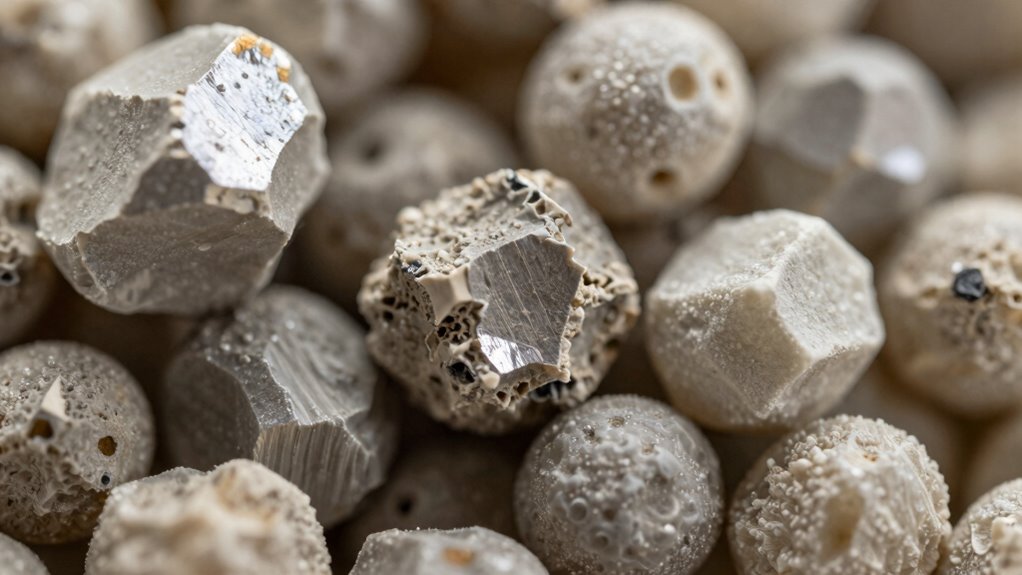
Morphological classification becomes another essential tool in your shape analysis toolkit. This approach involves categorizing particles based on their shape features—such as spherical, elongated, flaky, or irregular forms. Morphological classification isn’t just about labeling; it provides a structured way to relate shape characteristics to material performance. For example, spherical particles tend to flow more easily, while elongated or flaky particles may hinder flow but promote better packing in certain applications. When you combine morphological classification with advanced imaging techniques, you can develop detailed shape descriptors, like aspect ratio, convexity, or roundness, which help in predicting how particles will behave in bulk. Additionally, analyzing particle surface roughness offers deeper insights into particle interactions and bonding tendencies. Recognizing the importance of material performance in shape analysis helps tailor processes more effectively. In your work, you’ll realize that analyzing particle shape beyond size allows for a more extensive understanding of granular behavior. It enables you to optimize processes, improve material formulations, and predict performance more accurately. For instance, in powder metallurgy, knowing the fractal dimension of particle surfaces can inform how powders sinter or bond under heat. Similarly, in sedimentology, morphological classification helps interpret depositional environments and transport mechanisms. Incorporating advanced geometric models into shape analysis further enhances the ability to quantify complex particle features. By utilizing fractal geometry, you can capture the intricate details of particle surfaces that influence behavior and interactions. You’ll see that integrating fractal geometry and morphological classification offers a nuanced view of particle shape, capturing the complexity that simple shape descriptors might miss. Ultimately, by delving into shape analysis that extends beyond size, you gain the ability to control and manipulate material properties more effectively. It’s about recognizing the intricate details in shape that influence real-world performance, giving you a competitive edge in designing better materials and processes. Through the lens of fractal geometry and morphological classification, you reveal a deeper understanding of the subtle yet powerful role particle shape plays in the behavior of granular systems.
As an affiliate, we earn on qualifying purchases.
Frequently Asked Questions
How Does Particle Shape Influence Material Properties?
Particle shape directly affects material properties by influencing particle morphology and surface texture. When particles are elongated or irregular, they create more contact points, increasing friction and reducing flowability. Smooth or rounded shapes improve packing density and decrease wear, enhancing durability. You’ll notice these differences in strength, porosity, and how materials interact during processing. Ultimately, understanding particle shape helps you optimize material performance and predict behavior in various applications.
What Industries Benefit Most From Shape Analysis?
Think of industries as artists, and particle shape analysis as their palette. You find it most useful in chemicals, where it shapes formulations for ideal reactions, and in environmental sectors, where it impacts pollutant behavior. By understanding particle shapes, you can refine chemical blends and reduce environmental footprints. This insight guides better decision-making, ensuring your products perform efficiently while minimizing negative environmental effects, making your work both innovative and eco-conscious.
How Accurate Are Current Shape Measurement Techniques?
Current shape measurement techniques are quite accurate thanks to advanced imaging and machine learning. You can expect high precision when analyzing particle shapes, especially with sophisticated algorithms that reduce errors and enhance detail. These methods can reliably quantify complex geometries, making your assessments more consistent. Although no technique is perfect, ongoing advancements in imaging technology and AI continue to improve measurement accuracy, helping you make better-informed decisions in your industry.
Can Particle Shape Analysis Predict Flow Behavior?
Think of particle shape analysis as a crystal ball revealing flow behavior; it can indeed help. By performing morphology characterization and shape classification, you gain insights into how particles move and interact in a system. While it’s not foolproof, understanding shape features allows you to predict flow tendencies, especially in complex materials. This knowledge helps optimize processes, reduce clogging, and improve overall efficiency in handling granular or powder materials.
What Are Future Trends in Shape Analysis Technology?
You’ll see machine learning and 3D imaging revolutionize shape analysis technology. Machine learning algorithms will enhance accuracy and speed, enabling real-time, automated shape characterization. Meanwhile, 3D imaging will provide detailed, precise particle shape data, surpassing traditional 2D methods. Together, these advancements will improve predictive modeling, optimize processing, and open new possibilities in industries like pharmaceuticals, mining, and materials science, making shape analysis more thorough and efficient than ever before.
Conclusion
You now see that particle shape analysis goes beyond just size—it’s about the intricate details that shape performance and behavior. Like a sculptor revealing hidden contours, advanced techniques uncover nuances invisible to the naked eye. While size tells you how big, shape reveals the character within. Together, they form a complete story, guiding your decisions. Embrace this deeper understanding, and you’ll open a new dimension of precision in your material analysis, transforming challenges into opportunities.
NFL season / tailgating Picks
team gear
As an affiliate, we earn on qualifying purchases.