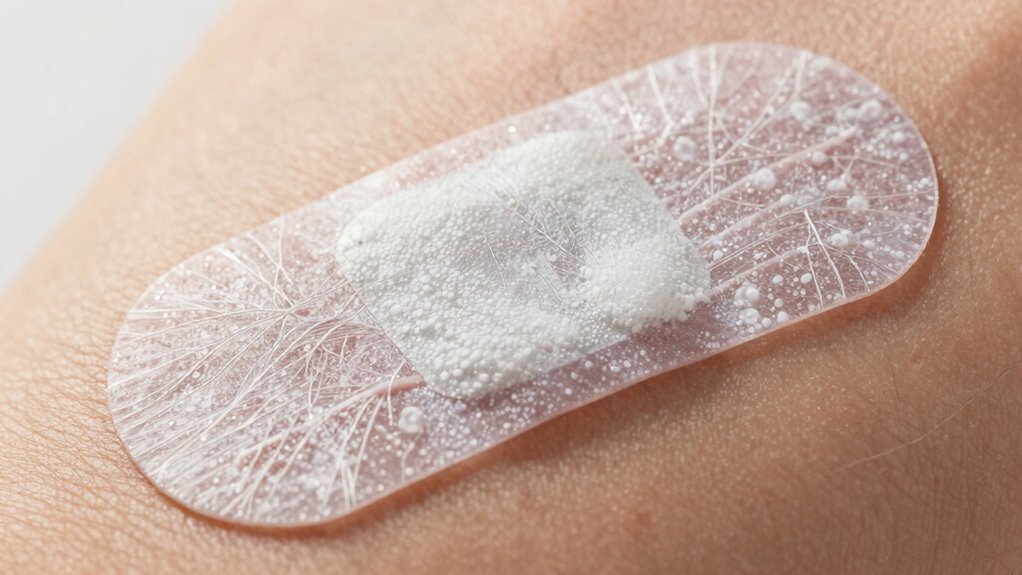
When you use a transdermal patch, molecules cross your skin mainly by diffusing through the outer layer called the stratum corneum. Small, lipophilic molecules pass more easily, while larger or water-soluble ones face more difficulty. The patch’s design, along with permeation enhancers, helps disrupt skin barriers to improve absorption. Factors like your skin condition and drug properties influence how well the molecules penetrate. If you want to understand the detailed process, there’s more to explore.

Get school and study supplies delivered free — and shop member deals
- Fast, free delivery on millions of items
- Access to Prime Big Deal Days deals on October 6–7
- Prime Video, Amazon Music and more included
Key Takeaways
- Molecules pass through the outer skin layer, the stratum corneum, to reach deeper tissues and bloodstream.
- Small, lipophilic molecules penetrate the skin more easily than larger or water-soluble ones.
- Permeation enhancers temporarily disrupt skin lipid structures to facilitate drug passage.
- The drug diffuses from the patch into the epidermis and then into the dermis where blood vessels are accessible.
- Skin condition and patch formulation influence the efficiency of molecule absorption.
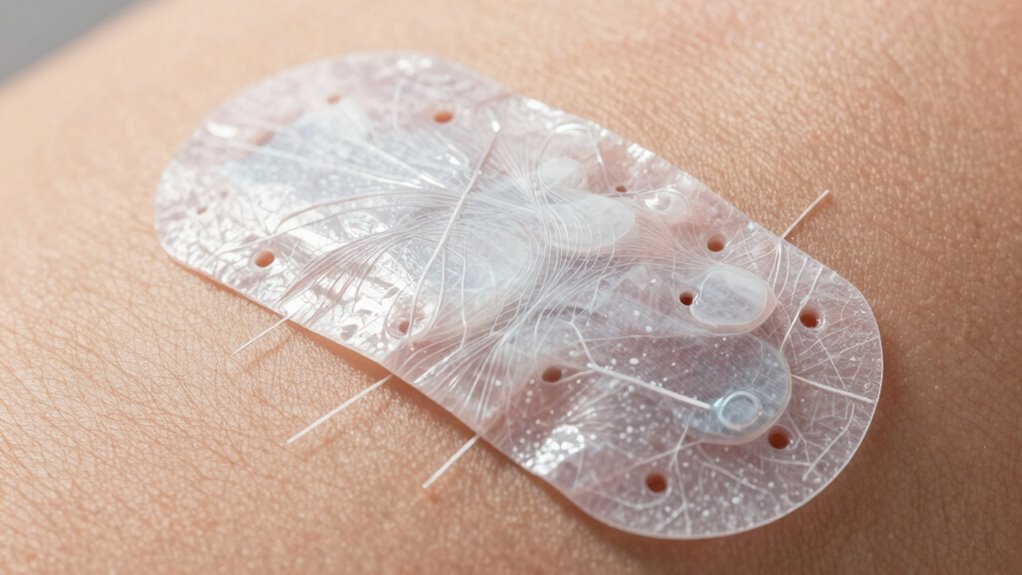
Transdermal patches are a convenient way to deliver medications through your skin, providing a steady release of drugs over time. This method of drug delivery is designed to bypass the digestive system, allowing the medication to enter your bloodstream directly through your skin. For this to work effectively, the molecules in the patch must cross the outermost layer of your skin, known as the stratum corneum, which acts as a formidable barrier. Understanding how molecules achieve skin absorption is key to appreciating how transdermal patches function.
When you apply a patch, the active drug molecules are formulated to penetrate the skin’s layers. These molecules are usually small, lipophilic (fat-loving), and able to dissolve in the skin’s lipid (fat) layers. The process starts with the drug diffusing from the patch into your skin’s outermost layer. From there, it moves through the epidermis and into the dermis, where blood vessels are abundant. Once in the blood vessels, the drug quickly enters your systemic circulation, allowing it to exert its intended effect. The skin’s barrier properties influence how well a drug can be absorbed, and formulations are carefully designed to optimize this process.
Molecules that are too large or water-soluble have a harder time penetrating the skin, which is why formulations are carefully designed to optimize skin absorption. The patch may include permeation enhancers—substances that temporarily disrupt the skin’s lipid structure—to facilitate easier passage of molecules. The goal is to maximize drug delivery while minimizing irritation or damage to your skin. Additionally, the barrier properties of the skin play a crucial role in determining how effectively a drug can be absorbed through transdermal delivery. Advances in drug formulation techniques continue to improve the efficiency of these patches. Researchers are also exploring new materials and technologies to further enhance permeation efficiency for a broader range of drugs.
The rate at which molecules cross the skin depends on several factors: the drug’s chemical properties, the condition of your skin, and the design of the patch. For example, if your skin is dry or damaged, absorption might be less efficient. Conversely, well-designed patches use controlled-release technologies to maintain a consistent drug level in your bloodstream, avoiding peaks and troughs. This steady delivery is especially useful for medications requiring consistent blood levels, such as nicotine for smoking cessation or hormone therapies. Moreover, ongoing research in permeation enhancers aims to further improve skin absorption and drug efficacy.
transdermal patch for pain relief
As an affiliate, we earn on qualifying purchases.
As an affiliate, we earn on qualifying purchases.
Frequently Asked Questions
How Do Skin Conditions Affect Patch Absorption?
Skin conditions can considerably impact patch absorption because they alter your skin barrier, making it either more permeable or more resistant. If your skin is damaged, inflamed, or dry, absorption variability increases, which can lead to unpredictable drug delivery. Conversely, healthy, intact skin provides a more consistent barrier, guaranteeing proper absorption. Always consider your skin condition when using transdermal patches to ensure safe and effective medication delivery.
Can Patches Deliver Large or Complex Molecules?
Think of your skin as a gatekeeper with strict rules. Large or complex molecules face hurdles due to their size and skin permeability, making it tough for them to pass through the skin barrier. While some advanced patches can deliver smaller molecules effectively, most struggle with bigger ones. So, delivering large or complex molecules via patches is like fitting a big puzzle piece into a tiny slot—challenging but sometimes possible with specialized technology.
How Long Can a Patch Remain Effective?
You can typically keep a transdermal patch effective for about 24 to 72 hours, depending on the medication and patch design. During this time, drug stability is maintained, guaranteeing proper delivery. Afterward, you should dispose of the patch safely to prevent accidental exposure or misuse. Always follow the manufacturer’s instructions for patch duration and disposal to ensure safety and effectiveness.
Are There Risks of Allergic Reactions?
Imagine a gentle breeze brushing against your skin—while transdermal patches are designed to be safe, allergic sensitivities can cause patch irritation or redness. You might develop a rash or itching if you’re sensitive to the adhesive or medication ingredients. To minimize risks, monitor your skin for reactions, and consult your healthcare provider if irritation persists. Being attentive helps make certain your treatment remains comfortable and effective.
Do Patches Work the Same for Everyone?
Patches don’t work the same for everyone because of individual variability. Your skin’s thickness, hydration, and even genetics can influence how well a patch delivers medication. While some might experience the full effect, others may notice less. The placebo effect can also play a role, making it seem like the patch is working or not. So, results can vary based on personal factors, emphasizing the importance of medical guidance.
Conclusion
Now you see how molecules cross your skin like tiny travelers slipping through a bustling city’s gates. Transdermal patches harness this process, delivering medicines smoothly and steadily—like a gentle stream flowing over rocks. Understanding these mechanisms helps you appreciate the magic behind effective drug delivery. So, next time you see a patch, remember it’s a clever gateway, guiding molecules into your body as effortlessly as a breeze whispers through trees.
Fall Picks
fall essentials
As an affiliate, we earn on qualifying purchases.