You’ve probably noticed how tasting or observing color changes helped people understand acidity for centuries. It wasn’t until the 19th century that scientists created the pH scale, turning subjective guesses into precise measurements. They used indicators that change color based on hydrogen ion concentration, and later, pH meters. This breakthrough made acidity quantifiable, transforming chemistry and science. Keep going to discover how these innovations constantly improved and impacted various fields today.
Key Takeaways
- Early methods relied on subjective observations like taste and color, making acidity difficult to quantify.
- The invention of the pH scale in the 19th century standardized measurement of acidity and alkalinity.
- Chemical understanding of hydrogen (H⁺) and hydroxide (OH⁻) ions underpinned pH measurement development.
- pH indicators provided visual color changes to estimate solution acidity levels quickly.
- Modern pH meters use voltage differences to precisely measure hydrogen ion activity, advancing accuracy.
Have you ever wondered how scientists measure acidity and alkalinity? It’s a fascinating journey rooted in understanding chemical reactions and developing tools like the pH indicator. For centuries, people knew that certain substances tasted sour or bitter depending on whether they were acidic or alkaline, but quantifying these properties remained a challenge. Early efforts to measure acidity relied on subjective observations, such as taste or color changes, which lacked precision. It wasn’t until the 19th century that scientists began to develop a systematic way to determine pH levels, ultimately leading to the creation of the pH scale.
Scientists developed the pH scale in the 19th century to systematically measure acidity and alkalinity.
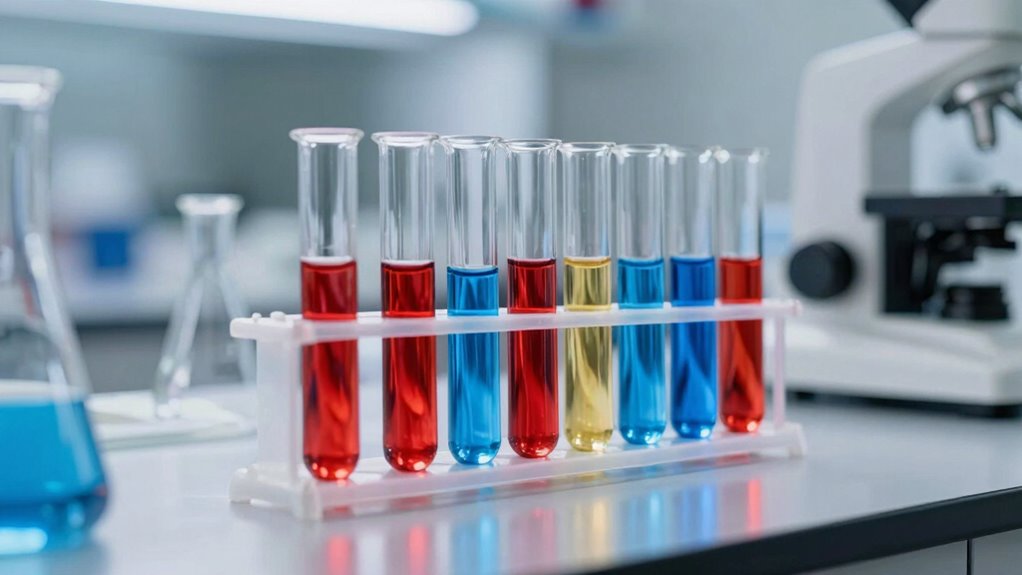
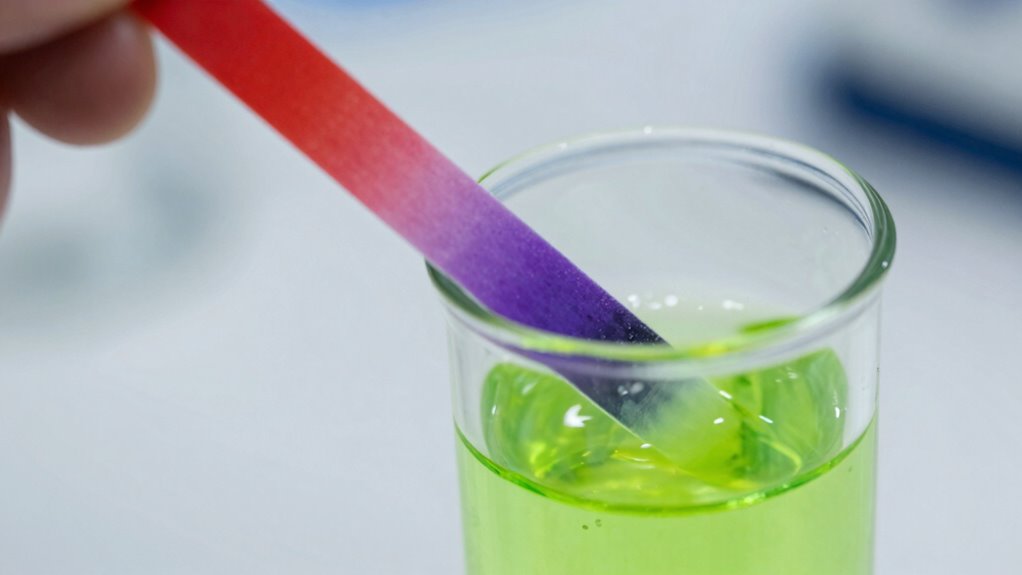
The key breakthrough came with understanding chemical reactions involving hydrogen ions (H⁺). Acids release hydrogen ions in solution, while bases release hydroxide ions (OH⁻). This fundamental chemistry allowed scientists to think about acidity and alkalinity in terms of ion concentration. But how could they measure these ion levels accurately? The answer was the development of pH indicators—substances that change color depending on the acidity or alkalinity of a solution. These indicators work by reacting with hydrogen or hydroxide ions, resulting in a visible color shift. For example, litmus paper turns red in acidic solutions and blue in alkaline solutions, providing a quick, visual way to assess pH.
By observing the color changes of pH indicators during chemical reactions, scientists could assign numerical values to acidity and alkalinity. This process marked the beginning of a standardized pH scale, which ranges from 0 to 14. A pH of 7 indicates neutrality, like pure water, while values below 7 signify increasing acidity, and those above 7 reflect increasing alkalinity. The invention of these indicators and their integration into chemical reactions allowed for precise, repeatable measurements, transforming the way we understand solutions. The development of chemical reaction mechanisms played a crucial role in refining pH measurement techniques. Additionally, the introduction of electronic pH meters**** further enhanced measurement accuracy and ease of use.
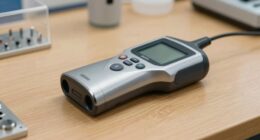
Over time, more sophisticated methods replaced simple indicators, such as pH meters that measure voltage differences caused by hydrogen ion activity. Still, the concept of using chemical reactions and color-changing indicators remains central to pH measurement, especially in educational and field settings. This evolution from subjective taste tests to precise instruments illustrates how scientific understanding of chemical reactions and the development of pH indicators made acidity and alkalinity measurable. Today, the pH scale is fundamental in chemistry, biology, medicine, and environmental science, helping us monitor everything from soil health to human blood. Your ability to understand and measure pH stems from this centuries-long story of scientific discovery and innovation.

VIVOSUN Digital pH and TDS Meter Kits, 0.01pH High Accuracy Pen Type pH Meter ± 2% Readout Accuracy 3-in-1 TDS EC Temperature Meter for Hydroponics, Pool and Aquarium, Yellow Blue, UL Certified
Application: Great for all home and laboratory TDS & pH testing applications including aquariums, swimming pools
As an affiliate, we earn on qualifying purchases.
As an affiliate, we earn on qualifying purchases.
Frequently Asked Questions
When Was the pH Scale First Invented?
You’ll find that the pH scale was first invented in 1909 by Søren Sørensen. In that historical context, scientists wanted measurement techniques to quantify acidity and alkalinity more precisely. Sørensen developed the scale to simplify these measurements, using a logarithmic system based on hydrogen ion concentration. This invention revolutionized chemistry, allowing you to easily compare the acidity of different substances, making scientific analysis more accurate and accessible.
Who Developed the First pH Measurement Method?
Imagine chemical indicators as tiny detectives revealing secrets of acidity; they paved the way for precise measurement. You learn that Søren P. L. Sørensen developed the first pH measurement method, using these indicators to gauge hydrogen ion activity accurately. His innovation transformed chemistry, allowing you to measure solution acidity with confidence and clarity. This breakthrough set the foundation for modern pH testing, making the invisible world of acids and bases visible and understandable.
How Does pH Affect Everyday Products?
You see, pH affects everyday products by influencing chemical reactions and ensuring consumer safety. For example, in skincare, a balanced pH keeps your skin healthy, preventing irritation. In food, pH controls fermentation and spoilage, making products safe to eat. Household cleaners rely on pH levels to effectively remove dirt without damaging surfaces or causing harm. So, understanding pH helps maintain product quality and keeps you safe in daily life.
Are There Alternatives to pH for Measuring Acidity?
Sure, there are alternatives to pH for measuring acidity, like chemical indicators that change color or digital sensors offering quick, precise readings. Ironically, while pH is the go-to, these options give you a different experience—chemical indicators are like mood rings for acids and bases, and digital sensors are the high-tech gadgets in your lab. So, yes, you don’t have to stick solely to pH; variety is the spice of chemistry!
Why Is pH Important in Environmental Science?
You need pH in environmental science because it helps you assess water contamination and soil fertility. A balanced pH indicates healthy conditions, while extremes can signal pollution or degraded soil. By measuring pH, you can identify harmful substances in water sources and determine if soil is suitable for farming. Monitoring pH allows you to take corrective actions, protecting ecosystems and ensuring sustainable land and water use.

2 Pack pH Test Strips, 160 Strips pH.1-14 Universal pH Test Paper Litmus Test Paper Soap Making Testing Strips for Water Wine Saliva Urine Soil Testing Pet Food and Diet pH Monitoring (Sealed Pack)
【Highly Accurate and Quick Readout】- 2 Pack (160pcs) HomEnjoy pH test strips is made of high-quality filter paper,…
As an affiliate, we earn on qualifying purchases.
As an affiliate, we earn on qualifying purchases.
Conclusion
Now that you’ve uncovered the story of the pH scale, it’s clear how understanding acidity transformed science and everyday life. You see, measuring the unmeasurable opened doors to countless discoveries, proving that knowledge is power. As the saying goes, “the proof is in the pudding,” and in this case, it’s in the precise measurements that reveal a world you might have overlooked. Keep exploring, and you’ll find that curiosity truly pays off.
2 Pack pH Test Strips, 160 Strips pH.1-14 Universal pH Test Paper Litmus Test Paper Soap Making Testing Strips for Water Wine Saliva Urine Soil Testing Pet Food and Diet pH Monitoring (Sealed Pack)
【Highly Accurate and Quick Readout】- 2 Pack (160pcs) HomEnjoy pH test strips is made of high-quality filter paper,…
As an affiliate, we earn on qualifying purchases.
As an affiliate, we earn on qualifying purchases.

APERA INSTRUMENTS AI209 Value Series PH20 Waterproof pH Tester Kit, ±0.1 pH Accuracy
Easy auto. calibration with buffer recognition; auto. temp. compensation (ATC) ensures accuracy in various temperatures (32 to 122F)
As an affiliate, we earn on qualifying purchases.
As an affiliate, we earn on qualifying purchases.