

The bioplastics market is set to grow steadily, with winners likely being companies investing in innovative, cost-effective bio-based feedstocks like algae, lignocellulosic biomass, and waste materials. Emerging technologies such as biodegradable packaging and automotive components will lead the way, while traditional plastics could decline due to stricter regulations and consumer demand. Some firms may struggle if they fail to adapt to technological advances or policy shifts. Keep exploring to discover which players are positioned to succeed and the innovations shaping this evolving industry.
Key Takeaways
- Market leaders are companies investing early in innovative, cost-effective bio-based feedstocks like lignocellulosic biomass and waste materials.
- Traditional plastics firms that fail to innovate may lose market share as bioplastics gain prominence across sectors.
- Emerging technologies such as advanced bio-refining and novel feedstock extraction methods will drive cost reductions and product quality improvements.
- Regions with strict environmental regulations and consumer demand for eco-friendly products will experience faster bioplastics adoption.
- Companies that adapt to policy changes and invest in R&D will capitalize on market growth, while those resistant face potential decline.
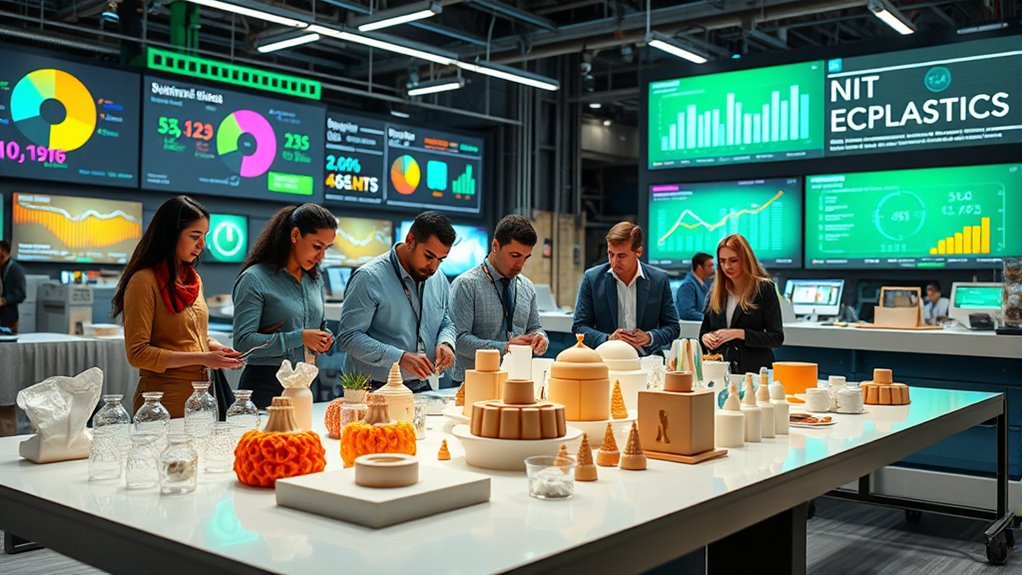
The bioplastics market is poised for significant growth as increasing environmental concerns and government initiatives drive demand for sustainable alternatives to conventional plastics. As someone invested in this industry, you’ll notice that bioplastics applications are expanding rapidly across diverse sectors, including packaging, agriculture, automotive, and consumer goods.
This diversification is a direct response to market growth drivers such as consumer demand for eco-friendly products, stricter regulations on single-use plastics, and corporate commitments to sustainability. These factors collectively accelerate adoption, making bioplastics a compelling choice for businesses seeking to reduce their carbon footprint.
You’ll see that the growth in bioplastics applications isn’t just about replacing traditional plastics but also about innovating new solutions that meet specialized needs. For example, biodegradable packaging options are gaining popularity due to their ability to reduce waste and landfill accumulation.
In agriculture, bioplastics are used for mulch films and seed coatings, offering environmentally friendly alternatives that decompose naturally. The automotive industry is increasingly integrating bioplastics into interior components, driven by the quest for lightweight, sustainable vehicles.
These applications underscore how market growth drivers are fueling innovation, pushing bioplastics beyond niche markets into mainstream use. Additionally, advancements in bio-based feedstocks are enabling the development of more sustainable and cost-effective bioplastic materials.
Market drivers are propelling bioplastics from niche to mainstream applications.
As you track the market, you’ll observe that the winners are those companies that invest early in research and development, focusing on scalable, cost-effective bioplastics production methods. Advances in bio-based feedstocks, such as algae, corn, and sugarcane, are making bioplastics more economically viable, which in turn broadens their applications.
Moreover, partnerships between academia, industry players, and governments are accelerating technological breakthroughs, enabling the creation of bioplastics with improved properties like durability, heat resistance, and shelf life.
Additionally, the integration of juice extraction techniques and other innovative processing methods can improve the efficiency and quality of bioplastics derived from various feedstocks, further supporting industry growth.
However, it’s not all smooth sailing. The market will also see losers—companies that fail to adapt or innovate may struggle as traditional plastics remain cheaper in some regions, and supply chain disruptions could hinder raw material availability.
Additionally, regulatory hurdles and inconsistent global policies can slow market penetration, especially in regions with less aggressive environmental mandates.
Emerging technologies will shape the future of this industry, with bioplastics derived from novel sources like lignocellulosic biomass and waste materials gaining momentum. These innovations promise to reduce costs and environmental impacts further, making bioplastics an even more attractive alternative.
As you follow this evolving landscape, it’s clear that the interplay between technological advancements, policy support, and consumer preferences will determine the winners and losers in the years ahead, ultimately shaping a more sustainable plastics industry.
Frequently Asked Questions
What Are the Environmental Impacts of Bioplastics Production?
When contemplating the environmental impacts of bioplastics production, you should be aware of biodegradability concerns, as some bioplastics don’t break down easily in natural environments.
However, they generally promote resource sustainability because they often use renewable biomass instead of fossil fuels.
While bioplastics can reduce plastic waste, you need to consider the energy and agricultural inputs involved, which may affect their overall eco-friendliness.
How Do Bioplastics Compare Cost-Wise to Traditional Plastics?
While the cost comparison between bioplastics and traditional plastics might seem straightforward, it’s a bit more nuanced. Production costs for bioplastics are often higher due to newer technologies and raw material expenses.
However, as demand grows and processes improve, prices are expected to become more competitive. You’ll find that investing in bioplastics can lead to long-term benefits, balancing initial costs with environmental and brand advantages.
Which Countries Are Leading Bioplastics Innovation and Adoption?
You should look at countries like the US, Germany, and China, which lead in bioplastics innovation and adoption. These nations benefit from supportive government policies and active industry collaborations that accelerate research, development, and commercialization.
Their investments foster sustainable practices, making them pioneers in the field. If you’re interested in this sector’s growth, focusing on these countries’ initiatives can give you valuable insights into emerging trends and technological advancements.
What Are the Main Barriers to Bioplastics Market Growth?
You might think growth is straightforward, but supply chain challenges and regulatory hurdles slow things down.
These barriers create gaps between innovation and market readiness, making it tough for bioplastics to scale efficiently.
While demand rises, steering through complex regulations and establishing reliable supply chains remain key obstacles.
Overcoming these issues is crucial if you want to see widespread adoption and sustainable growth in the bioplastics market.
How Will Consumer Preferences Influence Bioplastics Demand?
You’ll find that consumer trends markedly influence bioplastics demand, especially as packaging preferences shift toward eco-friendly options. When you prioritize sustainable packaging, you drive companies to adopt bioplastics to meet your expectations.
Your preferences for greener, biodegradable materials push brands to innovate and expand their offerings, ultimately increasing market growth. By choosing products with eco-conscious packaging, you directly contribute to boosting demand for bioplastics and encouraging industry-wide sustainability efforts.
Conclusion
As you explore the evolving bioplastics landscape, you’ll find promising opportunities gently guiding you toward more sustainable choices. While some technologies may face gentle hurdles, emerging innovations quietly pave the way for a greener future. Embrace these changes with optimism, knowing that today’s challenges often lead to tomorrow’s breakthroughs. By staying informed and adaptable, you can confidently contribute to a more eco-friendly world, where progress blooms softly yet surely.