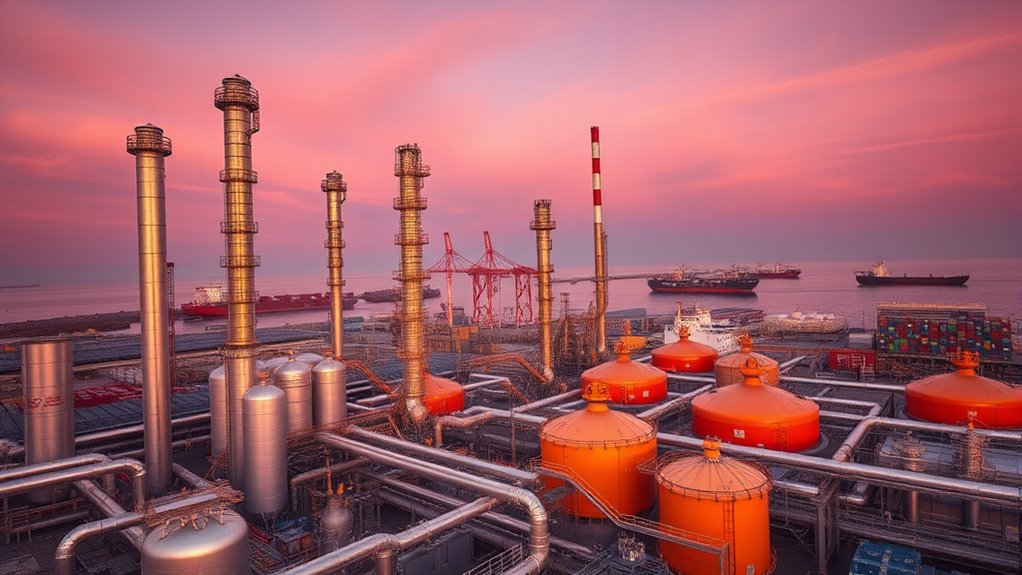

By 2025, the chemical industry is shifting towards sustainable products, driven by rising demand from eco-conscious markets. You’ll see a move away from fossil-based feedstocks toward renewable and recycled raw materials, supported by digital tools ensuring traceability and transparency. Trade patterns are also evolving with regional shifts and stricter regulations, prompting optimized logistics and supply chain resilience. Staying ahead means embracing these industry changes — explore further to understand the full scope of this transformation.
Key Takeaways
- Growing demand for sustainable chemicals driven by industry shift toward eco-friendly products and regulatory compliance.
- Increased adoption of renewable feedstocks and recycled materials to reduce dependence on fossil-based inputs.
- Digital tools enable real-time supply chain transparency, optimizing trade flows and reducing costs amid shifting trade patterns.
- Industry focuses on reducing carbon footprints through innovation, green chemistry, and sustainable sourcing practices.
- Market outlook emphasizes balancing demand growth with environmental goals, leveraging digital transformation for competitive advantage.

The chemical industry is poised for significant transformation by 2025, driven by rapid technological advancements, shifting global demand, and increasing emphasis on sustainability. As you steer through this evolving landscape, you’ll find that sustainable innovations are becoming central to operations, helping companies reduce environmental impact while maintaining profitability. Digital transformation plays a pivotal role in this shift, enabling you to optimize processes, enhance safety, and accelerate research and development. By adopting new digital tools, you’ll gain real-time insights into supply chains, improve inventory management, and streamline production, all while minimizing waste and energy consumption.
Embrace digital tools to optimize supply chains, reduce waste, and boost sustainability in the evolving chemical industry.
In this context, the focus on sustainable innovations isn’t just about regulatory compliance—it’s about creating a competitive edge. You’ll see companies investing heavily in green chemistry, renewable feedstocks, and eco-friendly manufacturing techniques. These advancements allow you to produce chemicals with a lower carbon footprint, meet stricter environmental standards, and appeal to eco-conscious consumers. Digital transformation supports these efforts by providing data-driven decision-making capabilities, which help identify areas for energy savings and waste reduction. Automated monitoring systems enable you to quickly respond to deviations, reducing downtime and enhancing overall efficiency.
By 2025, you’ll also notice a shift in how feedstocks are sourced and utilized. Traditional fossil-based inputs are gradually being replaced or supplemented with bio-based and recycled materials. This shift not only aligns with sustainability goals but also helps you mitigate risks associated with volatile oil markets. Staying informed about emerging feedstock technologies and collaborating with suppliers to secure sustainable raw materials will be crucial. Digital platforms will assist in tracking supply chains, ensuring transparency and verifying the sustainability credentials of your inputs. Additionally, many companies are adopting high suction power vacuums to efficiently clean manufacturing environments, helping maintain product quality and safety standards.
Trade dynamics in the chemical industry are also changing rapidly. You’ll find that regional trade patterns are shifting due to tariffs, trade agreements, and the push for localized production. Digital tools will be essential for steering through these changes, enabling you to analyze market trends, optimize logistics, and respond swiftly to disruptions. As sustainability becomes a key consideration in trade policies, you’ll need to demonstrate your environmental commitments through transparent reporting and certifications. This will require integrating digital systems that track and verify sustainable practices across your supply chain.

Glycerol: A Versatile Renewable Feedstock for the Chemical Industry
As an affiliate, we earn on qualifying purchases.
As an affiliate, we earn on qualifying purchases.
Frequently Asked Questions
How Will Geopolitical Tensions Impact Chemical Trade Routes in 2025?
Think of trade routes as vital arteries; geopolitical tensions act like blockages. In 2025, these tensions will likely cause trade route disruptions, forcing you to navigate new pathways. Conducting thorough geopolitical risk analysis becomes essential to avoid delays and costs. You’ll need to stay alert, adapt swiftly, and diversify supply sources to keep your chemical trade flowing smoothly despite emerging geopolitical challenges.
What Emerging Technologies Are Expected to Revolutionize Chemical Manufacturing Processes?
You can expect AI integration and nanotechnology advances to revolutionize chemical manufacturing processes by boosting efficiency and precision. AI helps optimize production workflows, reduce waste, and improve safety, while nanotechnology enables the creation of new materials with enhanced properties. Together, these emerging technologies will streamline operations, lower costs, and open new avenues for innovative chemical products, transforming the industry well before 2025.
How Are Environmental Regulations Influencing Chemical Industry Investments Globally?
Environmental regulations are considerably shaping your investments in the chemical industry, with over 60% of companies prioritizing sustainable practices to meet stricter standards. You must focus on regulatory compliance, which drives innovation and shifts towards greener feedstocks and processes. These policies push you to adopt eco-friendly technologies, reduce emissions, and guarantee long-term competitiveness in a rapidly evolving market. Staying ahead of regulations not only mitigates risks but also open new growth opportunities.
What Are the Projected Impacts of Climate Change on Chemical Feedstock Availability?
Climate change will likely cause climate-induced resource scarcity, impacting your access to key chemical feedstocks like hydrocarbons. As greenhouse gas mitigation efforts intensify, you may face stricter regulations that limit fossil fuel extraction, leading to supply constraints. This could prompt you to seek alternative feedstocks or invest in greener technologies, but it also risks increasing costs and disrupting your production processes in the near term.
How Will Consumer Preferences Shift Chemical Product Demand in Different Regions?
You’ll see consumer trends and regional preferences heavily influence chemical product demand. In developed regions, eco-friendly and sustainable products will grow in popularity, while emerging markets may prioritize affordability and functionality. As you adapt, focus on regional consumer preferences, tailoring offerings accordingly. This shift requires understanding local trends, preferences, and regulations, enabling you to meet evolving demand effectively and stay competitive in a dynamic global marketplace.
Conclusion
By 2025, the chemical industry will be more dynamic and essential than ever, shaping the future of countless sectors worldwide. Your innovative responses to evolving demand, feedstock shifts, and trade dynamics will define industry leaders of tomorrow. Embrace this relentless wave of change—it’s not just a market, it’s a roaring beast of opportunity. Stay agile, stay informed, and lead the charge into a future where your influence can change the world itself.