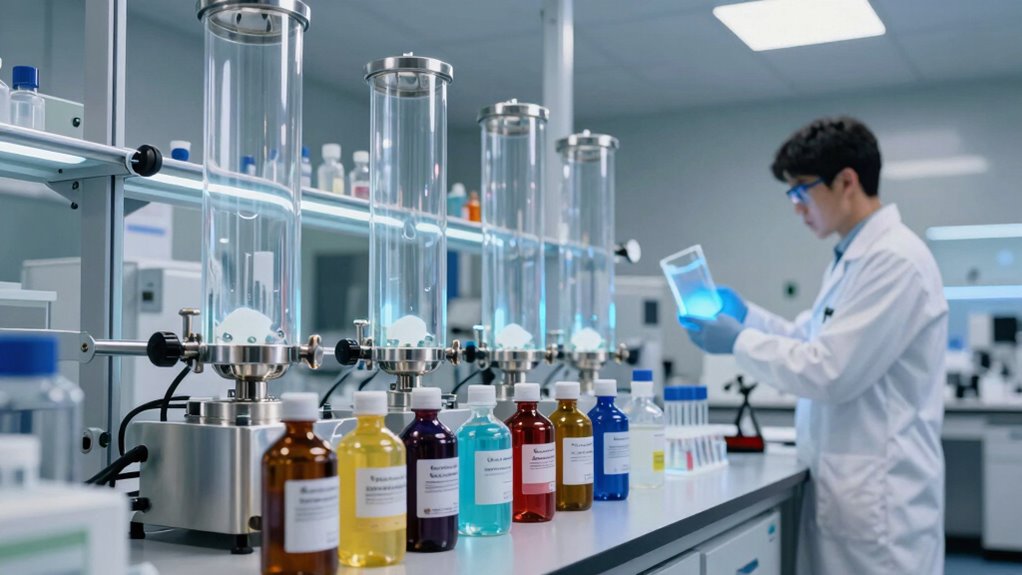

As you explore the low-GWP refrigerant market, you’ll see how regulations and environmental concerns are pushing innovation. Manufacturers race to develop safer, efficient formulations like natural refrigerants and HFOs to meet stricter climate policies, such as the Kigali Amendment. This shift impacts everything from product safety to sustainability, shaping industry standards. Keep exploring to uncover how these changes are driving the future of refrigeration and air conditioning technology.

Get school and study supplies delivered free — and shop member deals
- Fast, free delivery on millions of items
- Access to Prime Big Deal Days deals on October 6–7
- Prime Video, Amazon Music and more included
Key Takeaways
- Regulatory bans on high-GWP refrigerants are driving innovation toward environmentally friendly alternatives.
- The industry is rapidly developing low-GWP formulations like hydrocarbons, CO₂, and HFOs to meet compliance.
- Market competitiveness depends on balancing safety, efficiency, and sustainability in new refrigerant technologies.
- Collaboration among regulators, manufacturers, and researchers accelerates the formulation race for greener solutions.
- The shift aims to create a sustainable refrigeration industry aligned with global climate policies.
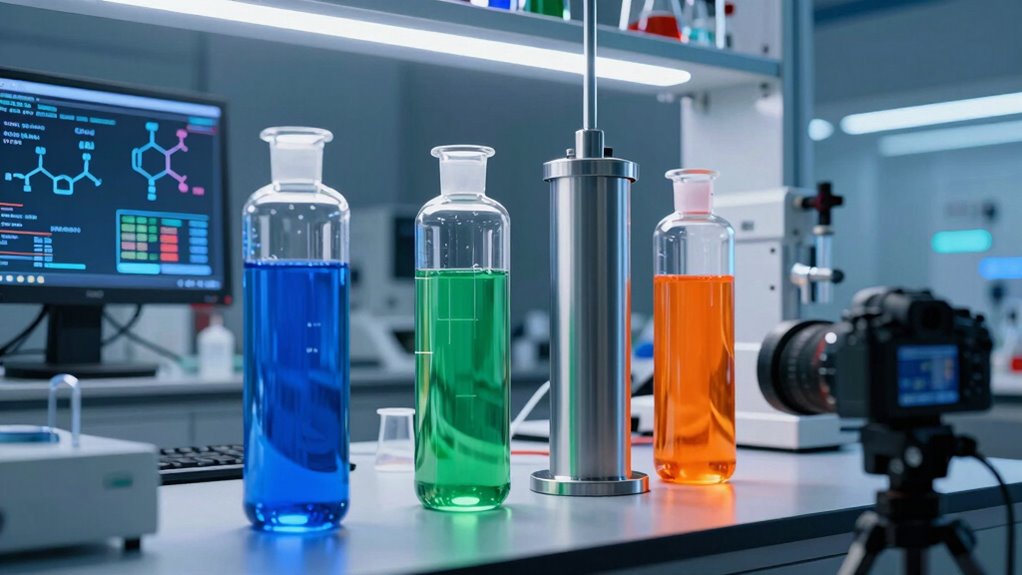
The refrigerant market is undergoing a significant transformation driven by evolving regulations and environmental concerns. As governments implement stricter climate policies, you’ll notice a shift toward low-GWP (Global Warming Potential) refrigerants. These policies aim to reduce greenhouse gas emissions from cooling systems, prompting manufacturers to innovate rapidly. Industry players are racing to develop formulations that meet new standards while maintaining efficiency and safety. This intense focus on industry innovation is reshaping the landscape, compelling you to stay updated on the latest refrigerant technologies and regulatory requirements.
The refrigerant industry is rapidly evolving amid stricter regulations and environmental concerns.
You’ll see that climate policy plays a pivotal role in this shift. Governments around the world are phasing out high-GWP substances like hydrofluorocarbons (HFCs), pushing the industry to find alternatives with a lower environmental impact. The Kigali Amendment, for example, sets ambitious targets for reducing HFC use globally. These policies create a clear demand for refrigerants with minimal climate impact, influencing research and development efforts. As a result, formulators are exploring options like hydrofluoroolefins (HFOs) and natural refrigerants such as hydrocarbons, carbon dioxide, and ammonia. Your role becomes more strategic as you evaluate compliance pathways and technological feasibility in light of these regulatory shifts.
The race for low-GWP refrigerants isn’t just about meeting compliance; it’s about staying competitive in a market that’s increasingly environmentally conscious. Industry innovation accelerates as companies seek to differentiate themselves by offering greener, more sustainable solutions. You’ll need to assess how new formulations perform across various applications, from residential air conditioning to commercial refrigeration. It’s also essential to weigh compatibility with existing systems and the infrastructure needed for safe, effective adoption. This innovation race pushes you to understand the nuances of each refrigerant’s properties, safety profiles, and lifecycle impacts.
In this dynamic environment, collaboration between regulators, manufacturers, and researchers becomes essential. You’re part of a broader movement that aims to balance environmental responsibility with technological advancement. The push for low-GWP refrigerants exemplifies how climate policy can drive industry innovation, leading to safer, more sustainable cooling solutions. The market shift is more than a technical challenge—it’s a pivotal step toward a more sustainable future for refrigeration and air conditioning. Additionally, understanding the regulatory landscape helps you anticipate future developments and prepare accordingly.
natural refrigerants for air conditioning
As an affiliate, we earn on qualifying purchases.
As an affiliate, we earn on qualifying purchases.
Frequently Asked Questions
How Do Low-Gwp Refrigerants Impact Overall Energy Efficiency?
Low-GWP refrigerants can improve your system’s energy efficiency through technological innovation, which often results in better heat transfer and reduced energy consumption. They also lessen the environmental impact by decreasing greenhouse gas emissions. As you adopt these refrigerants, you’ll notice more efficient operation, lowering your energy bills and carbon footprint. This shift supports sustainable practices, making your cooling systems more eco-friendly while maintaining performance.
What Are the Challenges in Transitioning Existing Systems to Low-Gwp Options?
You face challenges in shifting existing systems to low-GWP refrigerants, mainly compatibility issues and material compatibility. Some components may not work well with new refrigerants, risking leaks or failures. You need to evaluate and possibly replace parts, which can be costly and time-consuming. Ensuring that the new refrigerant integrates seamlessly without damaging materials or reducing efficiency is vital, making the upgrade process complex but necessary for environmental compliance.
Are Low-Gwp Refrigerants More Cost-Effective Long-Term?
You might think low-GWP refrigerants are more expensive upfront, but they often prove more cost-effective long-term. Their lower environmental impact aligns with increasing market adoption driven by regulations and consumer demand. As technologies improve and production scales up, costs tend to decrease, making these refrigerants not only environmentally responsible but also economically advantageous over time. Embracing them can future-proof your systems while supporting sustainability goals.
How Do Regulatory Policies Influence Refrigerant Formulation Development?
Regulatory policies considerably shape refrigerant formulation development by offering policy incentives that encourage innovation. When governments enforce stricter regulations on high-GWP refrigerants, manufacturers are motivated to create environmentally friendly alternatives. This push accelerates market adoption of low-GWP refrigerants, driving industry shifts. As a result, companies invest more in research to meet new standards, fostering a competitive race to develop safer, more sustainable refrigerant formulations aligned with evolving policies.
What Are the Safety Considerations for New Low-Gwp Refrigerants?
You should prioritize safety by focusing on leak prevention and material compatibility when working with new low-GWP refrigerants. Coincidentally, these factors help prevent accidents and guarantee system integrity. Always test for chemical stability and compatibility with existing materials to avoid leaks or damage. Stay vigilant, follow safety standards, and consider potential toxicity or flammability risks to protect both users and the environment.
Conclusion
As you follow the rapid evolution of low-GWP refrigerants, you’re witnessing a revolution that’s shaping our planet’s future. This formulation race is nothing short of a scientific Olympics, pushing boundaries to create eco-friendly solutions. By staying informed and adaptable, you become part of a movement powerful enough to change the world’s climate destiny. Embrace these innovations—because the future of refrigeration could be the most exciting tech adventure of your lifetime.
Halloween Picks
halloween
As an affiliate, we earn on qualifying purchases.