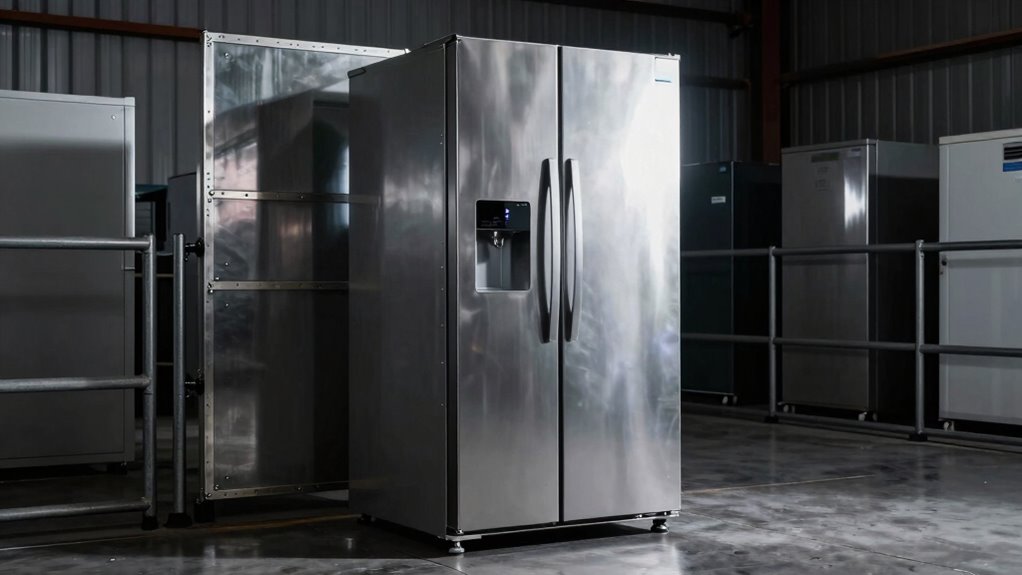

Ordinary refrigerators can be a hazard in environments with flammable gases or vapors because they aren’t designed to prevent sparks, static electricity, or heat buildup, which can ignite the atmosphere. In hazardous settings like chemical plants or labs, using standard units risks explosions or fires. Explosion-proof refrigerators are built with special materials and safety features to prevent these dangers, ensuring safe storage. To understand how these safety measures work, keep exploring the details.
Key Takeaways
- Ordinary refrigerators can generate sparks or static electricity, igniting flammable vapors in hazardous environments.
- They lack specialized safety features needed to prevent ignition in explosive atmospheres.
- Materials used in standard refrigerators are not resistant to corrosive or high-temperature conditions.
- Non-certified appliances may fail safety standards, increasing explosion risks in sensitive settings.
- Regular refrigerators are not designed for continuous operation amidst volatile substances, risking safety breaches.
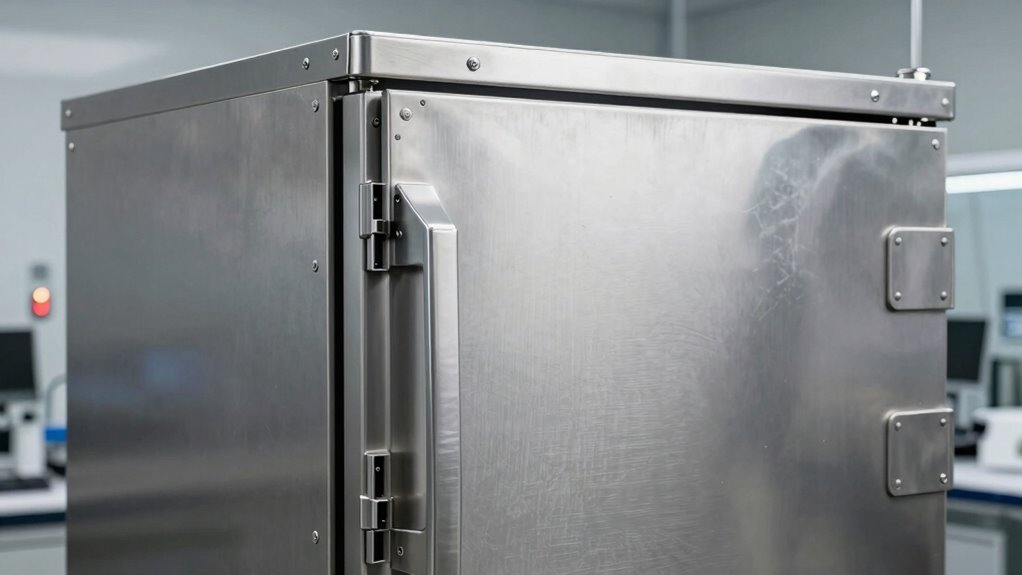
Have you ever wondered how certain refrigerators are designed to prevent explosions in hazardous environments? It’s a question that often goes unasked until you realize the potential dangers posed by ordinary refrigeration units in specialized settings. In environments like chemical plants, laboratories, or oil refineries, the risk of explosion isn’t just theoretical—it’s a real threat. That’s where explosion-proof refrigerators come into play. These units are built with strict adherence to safety standards that guarantee they can operate safely amidst volatile substances and explosive atmospheres. These safety standards mandate rigorous testing and certification processes, assuring that the refrigerator’s design minimizes any risk of ignition. They require components that resist sparks, static electricity, and heat buildup, preventing any accidental ignition sources from sparking a catastrophic event.
Material durability plays a critical role in these specialized refrigerators. Ordinary refrigerators aren’t designed to withstand harsh conditions or prevent sparks, but explosion-proof models use materials that are inherently resistant to corrosion, impact, and high temperatures. The exterior shells are often made from heavy-duty metals or composites that can contain any internal sparks or fires. Inside, the components are sealed and insulated to prevent the escape of flammable gases or vapors, which could otherwise ignite if exposed to a spark or heat. Every part, from the compressor to the electrical wiring, is carefully selected for its durability and safety compliance. Additionally, these refrigerators are designed with safety-critical components that meet strict industry standards, ensuring reliable operation in hazardous environments. This comprehensive approach to design considers explosive atmospheres and their unique challenges, further enhancing safety and reliability. Proper maintenance and regular inspections are also essential to ensure these refrigerators continue to operate safely over time, especially in environments with volatile substances. In such settings, adherence to safety standards is crucial for preventing accidents and ensuring safe operation. Moreover, advancements in material technology continue to improve the safety and efficiency of explosion-proof refrigerators, making them more reliable and easier to maintain.
explosion-proof refrigerator for chemical labs
As an affiliate, we earn on qualifying purchases.
As an affiliate, we earn on qualifying purchases.
Frequently Asked Questions
Are Explosion-Proof Refrigerators More Expensive Than Regular Ones?
Yes, explosion-proof refrigerators are generally more expensive than regular ones. You’ll find that the cost comparison favors standard models, which are more widely available and affordable. Explosion-proof units are specialized, designed for hazardous environments, and incorporate safety features that increase production costs. Market availability is also limited compared to regular refrigerators, making them a higher investment. If safety is a priority, however, the added expense is often justified.
How Often Do Explosion-Proof Refrigerators Require Maintenance?
You should schedule maintenance and safety inspections for explosion-proof refrigerators every 6 to 12 months. Regular maintenance frequency guarantees all safety features operate correctly and prevents potential hazards. During inspections, technicians check electrical components, seals, and ventilation systems. Staying consistent with these safety inspections helps maintain peak performance and reduces risks associated with malfunctioning parts. Keep a maintenance log to track service dates and promptly address any issues that arise.
Can Standard Refrigerators Be Converted to Explosion-Proof Models?
You can’t simply convert standard refrigerators into explosion-proof models. These conversions require specialized modifications, including enhanced refrigerator insulation and safety certifications, to meet safety standards. Without proper upgrades, a regular fridge lacks the necessary safety features, making it hazardous in sensitive environments. To guarantee safety, invest in professionally designed explosion-proof refrigerators rather than attempting DIY modifications, which can compromise safety and violate regulations.
What Are the Key Safety Standards for Explosion-Proof Refrigerators?
You need to guarantee explosion-proof refrigerators meet strict safety standards for hazard prevention and safety compliance. Look for certifications like UL (Underwriters Laboratories) or ATEX (European explosive atmospheres directive), which verify the appliance’s ability to prevent sparks and contain flammable vapors. These standards ensure the refrigerator’s design minimizes risks, protecting you and your environment from potential hazards related to explosive atmospheres.
Are Explosion-Proof Refrigerators Suitable for Residential Use?
Safety first, because a stitch in time saves nine. Explosion-proof refrigerators aren’t typically made for residential use, but they can enhance residential safety, especially in homes handling volatile chemicals. While the initial cost may seem high, a thorough cost-benefit analysis shows they can prevent dangerous accidents, making them suitable for specific residential setups. Consider your safety needs carefully, and consult experts to determine if they’re right for your home.
Conclusion
So, don’t put safety on the back burner. Ordinary refrigerators might seem fine, but they can turn into a ticking time bomb if they handle flammable substances or hazardous materials. Investing in an explosion-proof refrigerator isn’t just a smart move; it’s a necessity to keep yourself and your surroundings safe. Remember, it’s better to be safe than sorry—don’t wait until it’s too late to make the switch. Your safety depends on it!