Most educational science kits for teens split into two camps: quick wow-factor experiment boxes and true skill-building projects that take days to finish. The National Geographic Amazing Chemistry Set earns my best overall pick for balancing over 100 real experiments with genuinely usable lab equipment, while the Thames & Kosmos Structural Engineering kit stands out as the deepest long-term build for teens who like engineering over chemistry, and the Sillbird 12-in-1 Solar Robot offers the best value in robotics. The main tradeoff you’ll face is spectacle versus substance — magic-style kits thrill younger teens but get abandoned fast, whereas build-heavy kits demand patience. Read on for the full ranked breakdown.

Prime made for students and young adults
- Fast, free delivery for dorm and study essentials
- Prime Video and Amazon Music included
- Member-only deals
Key Takeaways
- Experiment-count marketing is misleading: the National Geographic kits repeat variations of the same core experiments, so 100+ activities often means about 15 genuinely distinct setups.
- Build-based kits (Thames & Kosmos bridges, Sillbird solar robot, Robot Arm kit) held attention far longer than consumable experiment kits because the finished project becomes a keepsake.
- Every chemistry-style kit in this lineup carries hidden costs — refills run out fast, and the cheapest option (UNGILINGA) has the thinnest instruction quality.
- Age labels on these kits skew young: a kit marked 8-12 typically tops out around age 11-12, so teens 13+ should jump straight to the engineering and robotics picks.
- The 4M crystal and geode kits are one-and-done experiences — great gifts, but poor value per dollar for a teen who wants to keep learning.
| 4M Crystal Growing Science Experimental Kit with Display Cases |  | Best Value Chemistry Intro | Brand: 4M | Age Range: 10 years and up | Number of Experiments: 7 crystal growth experiments | VIEW LATEST PRICE | See Our Full Breakdown |
| Stem Projects Toys for Boys Age 8-12, Build Your Own Bluetooth Speaker & FM Radio Science Kit |  | Best Electronics Starter | Age Range: 8-14 years | Number of Packs: 2 | Included Components: FM radio and Bluetooth speaker builds | VIEW LATEST PRICE | See Our Full Breakdown |
| 4M Kidzlabs Anti Gravity Magnetic Levitation Science Kit |  | Best Physics Demo | Brand: 4M | Age Range: 8 years and up | Number of Items: 1 kit | VIEW LATEST PRICE | See Our Full Breakdown |
| Robot Arm Kit for Kids and Teens – STEM Building Engineering Toy for Ages 8-16 |  | Best Engineering Build | Recommended Age: 8-16 years | Includes: Motors, PCB microcontroller, wires, wooden pieces | Batteries Needed: 6 AA batteries (not included) | VIEW LATEST PRICE | See Our Full Breakdown |
| National Geographic Science Magic Kit with 100+ Experiments for Kids 8-12 |  | Best Variety and Replay Value | Brand: Blue Marble / National Geographic | Age Range: 8 years and up | Experiments: 20 in-box plus 85+ bonus booklet activities | VIEW LATEST PRICE | See Our Full Breakdown |
| Thames & Kosmos Structural Engineering: Bridges & Skyscrapers Science & Engineering Kit |  | Best for Future Engineers | Number of Models: 20 | Building Pieces: 285+ | Manual Pages: 36 | VIEW LATEST PRICE | See Our Full Breakdown |
| Doctor Jupiter Ultimate Science Experiments Kit for Kids Ages 8+ |  | Best Value for Volume | Number of Experiments: 135+ | Bonus Experiments: 90+ | Recommended Age: 8+ | VIEW LATEST PRICE | See Our Full Breakdown |
| National Geographic Amazing Chemistry Set with 100+ Experiments for Ages 8-12 |  | Best Real Lab Experience | Brand: Blue Marble | Age Range: 8 years and up | Number of Experiments: 100+ | VIEW LATEST PRICE | See Our Full Breakdown |
| National Geographic Earth Science Kit with 100+ Activities for Kids 8-12 |  | Best for Earth Science Curiosity | Brand: Blue Marble | Age Range: 8 years and up | Number of Activities: 100+ | VIEW LATEST PRICE | See Our Full Breakdown |
| National Geographic Break Open 10 Premium Geodes for Kids Ages 8-12 |  | Best One-Session Wow Factor | Brand: Blue Marble | Age Range: 8 years and up | Geodes Included: 10 premium natural geodes | VIEW LATEST PRICE | See Our Full Breakdown |
| UNGILINGA 150 Experiments Science Kits for Kids – Chemistry Lab STEM Toy | 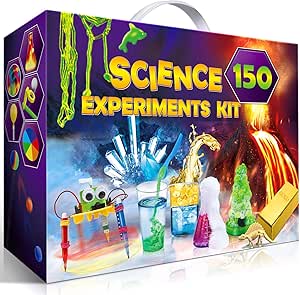 | Best for Experiment Variety | Brand: UNGILINGA | Age Range: 8 years and up (best suited to 10-14) | Number of Experiments: 150 | VIEW LATEST PRICE | See Our Full Breakdown |
| Sillbird 12-in-1 Solar Robot Building Kit |  | Best for Engineering-Minded Builders | Brand: Sillbird | Age Range: 8+ years (manufacturer recommends 10+) | Number of Models: 12-in-1 buildable robots | VIEW LATEST PRICE | See Our Full Breakdown |
| educational science kits for teen | Age Range | Brand |
|---|---|---|
| 4M Crystal Growing Science Exp | 10 years and up | 4M |
| Stem Projects Toys for Boys Ag | 8-14 years | — |
| 4M Kidzlabs Anti Gravity Magne | 8 years and up | 4M |
| Robot Arm Kit for Kids and Tee | — | — |
| National Geographic Science Ma | 8 years and up | Blue Marble / National Geographic |
| Thames & Kosmos Structural Eng | — | — |
| Doctor Jupiter Ultimate Scienc | — | — |
| National Geographic Amazing Ch | 8 years and up | Blue Marble |
| National Geographic Earth Scie | 8 years and up | Blue Marble |
| National Geographic Break Open | 8 years and up | Blue Marble |
| UNGILINGA 150 Experiments Scie | 8 years and up (best suited to 10-14) | UNGILINGA |
| Sillbird 12-in-1 Solar Robot B | 8+ years (manufacturer recommends 10+) | Sillbird |
More Details on Our Top Picks
4M Crystal Growing Science Experimental Kit with Display Cases
At under twenty dollars, this crystal growing kit delivers the strongest payoff-per-dollar of any chemistry option in this roundup. The seven experiments teach saturation and crystallization in a way that feels closer to real lab work than the showier National Geographic Science Magic Kit, where chemistry is dressed up as tricks. The included display domes are the quiet differentiator here — teens get a lasting artifact of their work rather than a one-time reaction that gets washed down the sink. Compared with the UNGILINGA 150 Experiments kit, the experiment count is tiny, but each crystal growth cycle takes days, which teaches patience and observation over a week or more. The tradeoff is longevity: once the seven experiments run out, the kit is finished, and you will need to buy refill powders to repeat anything.
Pros:- Very low price per experiment with real chemistry concepts
- Display domes turn results into lasting showpieces
- Multi-day growth cycles teach patience and observation
- Clear instructions suited to independent teen use
Cons:- Only seven experiments with no way to extend without refills
- Crystals are fragile and results vary with room conditions
- Requires adult supervision for powder handling
Best for: Budget-conscious buyers who want a slow-burn chemistry project with keepsake results rather than fast spectacle
Not ideal for: Teens who crave constant variety and novelty — seven experiments will feel thin next to 100+ activity kits
- Brand:4M
- Age Range:10 years and up
- Number of Experiments:7 crystal growth experiments
- Display:Includes display cases
- Manufacturer:Toysmith
- Model Number:5557
- Warranty:30 days against manufacturer defects
Our verdict“This pick makes the most sense for teens who want an inexpensive, genuine chemistry experience with results they can keep and display.”
Stem Projects Toys for Boys Age 8-12, Build Your Own Bluetooth Speaker & FM Radio Science Kit
Most kits in this roundup teach science through observation; this one teaches it through building something that actually works in daily life. Once assembled, the Bluetooth speaker and FM radio keep functioning long after the “experiment” ends — a durability of purpose the 4M Anti-Gravity Magnetic Levitation Kit can’t match, since its demos live and die on the tabletop. The electronics fundamentals here (circuit assembly, signal reception across the 88–108MHz FM band) map more directly to real engineering than the magic-trick framing of the National Geographic Science Magic Kit. The honest tradeoff: there are only two builds, so a motivated teen finishes in a weekend. And while assembly is described as easy, some buyers report the instructions assume prior comfort with small parts, so a screwdriver and an adult nearby are wise on day one.
Pros:- End result is a usable Bluetooth speaker and FM radio
- Teaches practical circuit and electronics fundamentals
- Non-toxic materials and parent-friendly co-build design
- Two separate projects extend the build time
Cons:- Only two builds, limiting long-term engagement
- Instructions can be confusing for first-time builders
- Requires a small Phillips screwdriver not included
Best for: Hands-on learners who want a functional gadget at the end and a first taste of practical electronics
Not ideal for: Teens expecting a broad experiment library — two builds will be done quickly with nothing left to explore
- Age Range:8-14 years
- Number of Packs:2
- Included Components:FM radio and Bluetooth speaker builds
- Material:Non-toxic
- Assembly:Easy; requires small Phillips screwdriver
- FM Broadcast Range:88-108MHz
Our verdict“This kit stands out for teens who would rather build a working device than watch a reaction fizz.”
4M Kidzlabs Anti Gravity Magnetic Levitation Science Kit
Levitation is the hook here — floating pencils and suspended screws create genuine “how does that work” moments that chemical-reaction kits like the National Geographic Amazing Chemistry Set can’t replicate. Where chemistry kits produce visible change, this one produces visible defiance of gravity, which makes it the better conversation piece for a teen who thinks science is boring. It’s also one of the few kits in this lineup that teaches a technology with real-world applications, since maglev trains use the same principles. The catch is depth: compared with the Robot Arm Kit, which builds an understanding of mechanics over hours of assembly, these experiments are quick demonstrations. Once a teen has floated every included object and read the explanation, the replay value drops sharply, and the small magnetic parts demand careful handling and storage or the kit loses pieces fast.
Pros:- Genuinely striking levitation demos that spark curiosity
- Connects directly to real maglev train technology
- All materials and instructions included in one box
- Affordable entry point into physics concepts
Cons:- Exhausts its novelty quickly with limited experiments
- Small parts are easy to lose and require careful handling
- Needs adult supervision for younger users
Best for: Curious teens who respond to wow-factor physics demos and want to understand maglev technology
Not ideal for: Buyers seeking weeks of engagement — the demonstrations are quick and replay value is limited
- Brand:4M
- Age Range:8 years and up
- Number of Items:1 kit
- Focus:Magnetic levitation experiments
- Included Components:All parts needed to complete science experiments, instructions
- Adult Supervision:Recommended for younger children
Our verdict“This option makes the most sense as a low-cost physics spark, not as a long-term project kit.”
Robot Arm Kit for Kids and Teens – STEM Building Engineering Toy for Ages 8-16
This is the closest thing in the roundup to a real engineering project scaled for teens. With motors, a PCB microcontroller, wiring, and laser-cut wooden pieces, it teaches the same mechanical principles as the Thames & Kosmos Bridges & Skyscrapers kit but adds an electronics layer — you’re not just building a structure, you’re building a machine that moves on command. The no-soldering design keeps it accessible compared with hobby-grade robotics, and the problem-solving demanded during assembly is exactly the skill development the Sillbird Solar Robot glosses over with its snap-together panels. Be clear-eyed about the downsides: batteries are not included (six AAs adds real cost), and the instructions can be sparse enough that younger builders will need an adult co-pilot. It’s a single-build kit too, so once the arm is done, the educational payload is delivered.
Pros:- Combines motors, microcontroller, and mechanical assembly in one build
- No soldering required, keeping it teen-accessible
- Develops genuine problem-solving and engineering skills
- Wide 8-16 age range suits siblings at different levels
Cons:- Six AA batteries not included, adding hidden cost
- Instructions lack detail and may require adult help
- Single build with no additional projects included
Best for: Teens ready for a multi-hour build combining mechanical and electronic engineering in one project
Not ideal for: Impatient builders or young kids working solo — sparse instructions and fiddly assembly invite frustration
- Recommended Age:8-16 years
- Includes:Motors, PCB microcontroller, wires, wooden pieces
- Batteries Needed:6 AA batteries (not included)
- Assembly Type:No soldering required
- Material:Wood and electronic components
- Skills Taught:Electronics, circuits, mechanical engineering
Our verdict“This model is better suited than any other here for a teen who wants to graduate from experiments to actual machine-building.”
National Geographic Science Magic Kit with 100+ Experiments for Kids 8-12
If sheer volume of activities is the priority, nothing else in this batch competes — 20 full magic experiments in the box plus a bonus booklet with 85+ more, for a claimed total north of 100. The framing is clever: teens learn the chemistry behind each trick, then perform it, which makes it a strong option for kids who find the 4M Crystal Kit’s slow pace dull. The brand backing matters too — National Geographic’s instructional quality and component consistency generally outperform generic multipacks like the UNGILINGA 150 Experiments kit. The honest tradeoff is depth versus breadth: any single experiment here involves less real science than one multi-day crystal growth cycle, and the magic framing can feel juvenile to a 14- or 15-year-old who wants to be treated like a serious student. Younger siblings will get far more from it than older teens will.
Pros:- Enormous activity count with 85+ bonus experiments in the booklet
- Trick-then-explanation format keeps reluctant learners engaged
- Trusted National Geographic branding and instruction quality
- Strong gift appeal for the 8-12 age range
Cons:- Each individual experiment is shallower than focused kits
- Magic presentation may feel babyish to teens over 13
- Some components are small and require adult supervision
Best for: Families wanting maximum activity count and a science-magic hybrid that entertains across sessions
Not ideal for: Older teens seeking serious lab-style chemistry — the magic-trick framing skews young
- Brand:Blue Marble / National Geographic
- Age Range:8 years and up
- Experiments:20 in-box plus 85+ bonus booklet activities
- Model Number:NGMEGAMAGIC
- Manufacturer:JMW Sales, Inc.
- Number of Packs:1
- Category:Toys & Games
Our verdict“This pick makes the most sense for younger teens who need entertainment baked into their science to stay engaged.”
Thames & Kosmos Structural Engineering: Bridges & Skyscrapers Science & Engineering Kit
Most kits in this roundup deliver quick chemical reactions or one-off activities, but this one builds something rarer: actual engineering intuition. With 20 working models spanning bridges and skyscrapers, teens learn how force, load, compression, and tension interact — concepts that directly feed into high school physics and potential STEM careers. Compared with the National Geographic Earth Science Kit, which favors spectacle over theory, this set rewards patience with durable, reusable structural pieces and a Parents’ Choice Gold Award pedigree. The tradeoff is real, though: assembly takes time, and teens without any existing interest in engineering may stall halfway through the 36-page manual. Where the Doctor Jupiter kit offers instant gratification, this one asks for sustained effort and pays it back with genuine understanding.
Pros:- Teaches genuine engineering concepts (force, load, compression, tension) rather than just entertainment
- 285+ pieces allow rebuilding and experimenting with 20 distinct models
- Award-winning quality with a thorough 36-page illustrated manual
- Pieces are reusable, so the kit supports repeated experimentation over years
Cons:- Assembly is time-consuming and may frustrate teens who want faster results
- Assumes some prior interest in engineering — not a hook for reluctant learners
Best for: Teens aged 12 and up who already enjoy building, physics, or LEGO-style construction and want a serious introduction to structural engineering
Not ideal for: Impatient buyers or younger kids expecting instant fizz-and-flash experiments — builds take time and assume some baseline interest in how structures work
- Number of Models:20
- Building Pieces:285+
- Manual Pages:36
- Award:Parents’ Choice Gold Award
- Core Concepts:Force, load, compression, tension
- Skill Level:Intermediate
Our verdict“The clear pick for a teen who thinks like a builder and is ready to trade quick experiments for real structural engineering fundamentals.”
Doctor Jupiter Ultimate Science Experiments Kit for Kids Ages 8+
If sheer quantity of activities is the goal, this kit is hard to beat: 135+ experiments plus 90 bonus activities, all with instructions simple enough that a teen can run them independently or with a parent. Compared with the National Geographic Amazing Chemistry Set, which covers similar ground with about 100 experiments, Doctor Jupiter wins on raw experiment count and cost-per-activity, and its leak-proof chemical bottles make storage and cleanup far less stressful. That said, the experiments lean toward the flashy, younger end of the spectrum — glowing water and magic potions will thrill a 9-year-old more than a 15-year-old. Teens on the older side will outgrow this faster than they would the Thames & Kosmos engineering kit, so it works best as a high-volume starter lab rather than a long-term companion.
Pros:- 225+ total experiments when bonus activities are included — exceptional value per activity
- Clear, kid-friendly instructions that work for independent or supervised play
- Chemicals come in leak-proof bottles for safer storage and handling
- Wide variety keeps kids engaged for months rather than a single weekend
Cons:- Some experiments require household items not included in the box
- Adult supervision is needed for safety despite the kid-friendly design
- Experiment depth is shallow compared with engineering-focused alternatives
Best for: Families and younger teens (8-12) who want maximum experiments per dollar and parent-child bonding activities
Not ideal for: Older teens seeking rigorous science — the experiments are accessible and fun but skew young and simple
- Number of Experiments:135+
- Bonus Experiments:90+
- Recommended Age:8+
- Materials:Chemical materials in leak-proof bottles
- Focus:STEM, creativity, parent-child bonding
- Instruction Style:Easy-to-follow, kid and parent friendly
Our verdict“The best bang-for-buck choice for younger teens who want endless experiments, provided a parent is willing to supervise and supply household extras.”
National Geographic Amazing Chemistry Set with 100+ Experiments for Ages 8-12
This set stands out for including actual laboratory equipment — test tubes, beakers, and real chemical reagents — which makes it feel like a genuine introduction to chemistry rather than a toy. Against the Doctor Jupiter kit, it offers fewer total experiments but a more authentic lab-workflow experience, teaching measurement and procedure the way a school science class would. The crystal-growing component gives it longevity that single-session kits lack, and the bonus guide with 85 extra household-item experiments softens the sting of any materials running out. The flip side: supplies are finite, so the kit has a natural end date, and parents of younger teens will need to stay involved. Compared with the geode kit from the same brand, this demands more setup but returns far more repeatable learning.
Pros:- Includes genuine lab tools like test tubes and beakers for authentic hands-on practice
- Crystal growing and color-changing reactions offer multi-day engagement
- Bonus guide adds 85 experiments using common household items
- Award-winning design with well-structured instruction materials
Cons:- Consumable chemicals mean the kit eventually runs out
- Requires adult supervision and some experiments need extra household materials
Best for: Teens curious about chemistry specifically who want real lab tools and structured experiments, not just visual tricks
Not ideal for: Households where nobody can supervise — the real chemicals and glassware make this unsuitable for fully unsupervised use
- Brand:Blue Marble
- Age Range:8 years and up
- Number of Experiments:100+
- Bonus Experiments:85 using household items
- Educational Objective:STEM / Chemistry
- Key Activities:Crystal growing, chemical reactions, color-changing solutions
- Included Tools:Test tubes, beakers, real chemical reagents
- Model Number:NGMEGACHEMAR
Our verdict“The closest thing to a real chemistry lab in this lineup — best for a teen who wants authentic equipment and won’t mind a parent nearby.”
National Geographic Earth Science Kit with 100+ Activities for Kids 8-12
While most kits in this roundup chase chemistry reactions, this one covers a broader spread of earth sciences — volcanoes, crystal growing, and geologic digs — making it the strongest fit for a teen whose curiosity runs toward geology and natural phenomena rather than test tubes. The full-color learning guide is more substantive than the bare-bones instruction sheets common in cheaper sets, and it’s structured for sharing, which makes it a solid pick for siblings or classroom-adjacent use. Compared with the Doctor Jupiter kit, it trades total experiment count for topical depth and better educational writing. The weaknesses are honest ones: many activities need supervision, some components won’t survive rough handling, and several experiments require supplies from your own pantry. It’s a guided tour of earth science, not a self-running babysitter.
Pros:- 100+ activities spanning volcanoes, crystals, and geologic digs for genuine topical variety
- Detailed full-color learning guide goes deeper than typical instruction sheets
- Well suited to group use with friends, siblings, or family
- Backed by strong manufacturer quality standards and customer support
Cons:- Some activities require adult supervision and additional household materials
- Durability of some components is uncertain with rough use
Best for: Teens fascinated by volcanoes, rocks, and geology who want breadth across earth science topics with strong educational reading material
Not ideal for: Buyers wanting a self-contained, zero-prep kit — several activities need household supplies and an adult helper
- Brand:Blue Marble
- Age Range:8 years and up
- Number of Activities:100+
- Key Activities:Volcano eruptions, crystal growing, geologic digs
- Educational Objective:STEM / Earth Science
- Learning Materials:Detailed full-color learning guide
- Warranty:Backed by manufacturer quality standards and support
Our verdict“The best choice for a teen drawn to the natural world rather than the chemistry table, as long as a parent is available for the messier experiments.”
National Geographic Break Open 10 Premium Geodes for Kids Ages 8-12
Every other kit here stretches across weeks; this one delivers a concentrated, single-afternoon thrill that few chemistry sets can match — cracking open real geodes to expose crystals no one has seen before. That unpredictability is the product: every geode is natural and unique, which gives it an authenticity the Earth Science Kit’s simulated volcano can’t replicate. The bundled safety goggles, magnifying glass, and display stand also mean the experience ends with a keepsake collection rather than a mess to clean up. The tradeoff is finality — each geode breaks once, so the kit is finished when the rocks are, making it poor value against multi-experiment sets like Doctor Jupiter’s. And younger teens will need an adult’s hammer arm, since some geodes resist determined kid effort. Think of it as a memorable event, not a curriculum.
Pros:- Real natural geodes with genuine, unique crystals inside every one
- Complete accessory set: safety goggles, magnifying glass, and display stand
- Includes a detailed learning guide explaining geode formation
- Produces a keepsake crystal collection rather than disposable results
Cons:- Single-use design means the kit has a hard end date
- Some geodes are genuinely difficult to crack and require adult strength and supervision
Best for: Families wanting a dramatic, shareable geology experience — birthday afternoons, rainy weekends, or gifting moments with real ‘wow’ payoff
Not ideal for: Buyers seeking long-term value — every geode is single-use, so the kit is complete after roughly ten breaks
- Brand:Blue Marble
- Age Range:8 years and up
- Geodes Included:10 premium natural geodes
- Accessories:Safety goggles, magnifying glass, display stand
- Learning Materials:Detailed learning guide on geode formation
- Educational Objective:STEM / Geology
- Model Number:NGGEO10
- Warranty:Supported by manufacturer warranty
Our verdict“A perfect one-time geology event with keepsake crystals — buy it for the experience, not for weeks of repeatable experiments.”
UNGILINGA 150 Experiments Science Kits for Kids – Chemistry Lab STEM Toy
Most kits in this roundup narrow their focus — the National Geographic Amazing Chemistry Set stays in one discipline, and the 4M Crystal Growing Kit covers a single project type. The UNGILINGA kit goes the opposite direction, packing 150 experiments across chemistry, physics, and earth science, which makes it the strongest option here for a teen who gets bored quickly or hasn’t figured out which branch of science actually interests them yet.
The tradeoff is depth. Where the Thames & Kosmos Structural Engineering kit teaches one subject thoroughly, UNGILINGA treats science more like a sampler buffet — each activity is shorter and less rigorous. Parents should also expect to supply some household items that aren’t in the box, and younger users will need an adult nearby for the chemistry activities.
Pros:- 150 experiments spanning three science disciplines — the widest variety in this roundup
- Includes quality lab tools and kid-safe materials right out of the box
- Great value per experiment compared to single-focus kits like the 4M Crystal Growing Kit
- Hands-on format keeps fidgety or easily bored teens engaged longer
Cons:- Individual experiments are shallow compared to focused kits like Thames & Kosmos Bridges & Skyscrapers
- Some activities require household items not included, which can stall the fun mid-session
- Younger users need adult supervision for chemistry activities
Best for: Teens (roughly 10-14) who lose interest in single-topic kits and want to sample chemistry, physics, and earth science before committing to one
Not ideal for: Families wanting a deep, curriculum-style dive into one discipline — this kit trades depth for breadth, and some experiments require extra household supplies
- Brand:UNGILINGA
- Age Range:8 years and up (best suited to 10-14)
- Number of Experiments:150
- Subjects Covered:Chemistry, physics, earth science
- Includes:Science experiment tools and materials
- Best Sellers Rank:#2,545 in Toys & Games; #24 in Educational Science Kits
Our verdict“Pick this if your teen wants maximum variety and experiment count per dollar; skip it if you want deep, single-subject learning.”
Sillbird 12-in-1 Solar Robot Building Kit
Where the UNGILINGA kit is about watching reactions happen, the Sillbird 12-in-1 is about building the machine yourself. With 190 parts that reassemble into a dozen robot configurations of rising difficulty, this kit rewards patience and mechanical thinking in a way no chemistry set in this roundup can match. It’s the closest thing here to a true engineering project short of the Robot Arm Kit, which costs more and builds only one model.
The solar-powered design doubles as a lesson in renewable energy, but it’s also the kit’s biggest constraint: cloudy days mean a robot that won’t move unless you hold a lamp over it. Compared with battery-powered building kits, that friction is real. Part count also means this suits an older, detail-oriented teen rather than an impatient 8-year-old.
Pros:- 12 buildable models with escalating difficulty gives months of reuse, not a one-weekend kit
- Solar power teaches renewable energy alongside mechanical engineering
- Stronger engineering focus than experiment kits like National Geographic’s chemistry sets
- Clear, step-by-step instructions that independent builders can follow alone
Cons:- Solar-only power makes performance weather-dependent and frustrating indoors without bright light
- 190 small parts are challenging for younger or less patient builders
- No electronics or coding layer, unlike the Bluetooth Speaker STEM kit in this lineup
Best for: Teens 10-13 who love construction toys and mechanical problem-solving more than mixing chemicals, and who have the patience for 190-part assembly
Not ideal for: Kids who want instant results or live in gloomy climates — solar-only power means the robots need strong light to actually run
- Brand:Sillbird
- Age Range:8+ years (manufacturer recommends 10+)
- Number of Models:12-in-1 buildable robots
- Number of Parts:190
- Power Source:Solar (no batteries required)
- Model Number:US-SB-SolarRobot
- Manufacturer:Sillbird
Our verdict“This is the pick for a builder-brained teen who’d rather engineer a working robot than watch a chemical reaction — as long as you have sunlight.”

How We Picked
I ranked these kits on four factors that matter most to parents and gift-givers: instructional depth (does the manual explain the science or just the steps), replay value (how many hours before the box is exhausted), independence (can a teen complete it without an adult hovering), and cost per hour of engagement. Kits that teach transferable concepts — chemical reactions, structural load, circuits, renewable energy — ranked above kits that produce a single visual spectacle.
The ranking also accounts for age-appropriateness for teens specifically, since most of these products are labeled 8-12. Kits offering complexity ceilings a 13- or 14-year-old can grow into scored higher. Consumable-heavy kits were penalized when refills are expensive or unavailable, and build kits lost points for fragile parts or unclear assembly diagrams.
Factors to Consider When Choosing Educational Science Kits For Teens
Before picking a kit, it helps to understand how this category really works — the marketing often obscures what you’re actually buying.Read the Age Range With Skepticism
Manufacturers label conservatively low to maximize the gift market, so a kit stamped ages 8-12 usually peaks in difficulty around age 11. For a 13- or 14-year-old, that chemistry box may feel babyish within an hour. A better approach: match the kit type to your teen’s maturity rather than the box label. Teens 13 and up generally do better with engineering and robotics builds, which reward precision and patience, while younger teens still enjoy visible-reaction chemistry. If you buy under-age on purpose, expect to supervise more and accept that some steps will be beyond their fine motor skills.
Consumable Kits vs. Reusable Builds
This is the single biggest cost decision. Experiment kits burn through chemicals, powders, and geodes — once they’re gone, the kit is dead weight unless refills are cheap and available. Build kits like robot arms and solar models cost more upfront but remain playable indefinitely and can be disassembled and rebuilt. A common mistake is comparing price tags directly: a $35 consumable kit delivering 6 hours of use is worse value than a $45 build kit delivering 30 hours. Check whether refills exist before buying any chemistry-style kit, because several major brands discontinue them quietly.
Instruction Quality Determines Independence
The gap between a teen using a kit alone and a parent running the whole show comes down to the manual. Look for guides that explain the underlying science, not just step-by-step visuals — the difference between ‘pour this into that’ and ‘this reaction occurs because of X’. Brands with a track record in educational publishing (Thames & Kosmos, National Geographic) consistently write better manuals than generic import brands. Poorly translated or diagram-only instructions are the most common complaint in this category, and they turn a gift into a frustration. If your teen reads reluctantly, prioritize kits with video instruction available online.
Hidden Costs and Required Supplies
Many kits assume household items you may not have: batteries, vinegar, food coloring, measuring cups, or a well-ventilated workspace. Some robotics kits require screwdrivers and AA batteries that aren’t included, adding $10-15 to the true cost. Chemistry kits may need adult-supervised setups involving heat or diluted acids even when labeled kid-safe. Read the ‘what you need’ section before buying, and budget for batteries in any motorized build. The solar-powered options sidestep the battery problem entirely, which is one reason they rank well for independent play.
Match the Kit to the Teen, Not the Curriculum
Parents often buy kits to ‘fix’ a weak science grade, but teens abandon kits that feel like homework. A teen obsessed with music may engage more with a build-your-own-speaker kit than a perfect chemistry set, because the payoff is personal. Watch what your teen already gravitates toward — taking things apart, mixing things, building structures — and buy into that interest. The best educational outcome in this category comes from kits teens choose to return to voluntarily. Novelty matters less than you think; depth and a satisfying finished product matter more.
Safety and Supervision Reality Check
Even ‘safe’ chemistry kits involve powders that stain, reactions that fizz over, and small parts that shouldn’t reach younger siblings. Kits labeled 8+ generally use household-grade chemicals, but a few experiments in the larger sets recommend goggles and an outdoor workspace. Check whether the kit includes safety gear or expects you to supply it, and confirm your teen will actually follow the precautions — the injury risk is low, but the mess risk is not. Robotics builds pose different issues, mainly small screws and pinch points. Neither type requires a science background from parents, which is worth knowing if you’re gifting to a household without one.
Frequently Asked Questions
Are these kits actually educational for teens, or just entertainment?
It depends heavily on the kit type. Experiment-count boxes often teach one concept through ten visual variations, while engineering builds like the Thames & Kosmos bridges kit teach structural principles a teen will meet again in physics class. The most educational kits explain why a reaction or structure works in their manuals, not just how to perform it. If education is the priority, look at whether the manual includes real scientific explanations and follow-up experiments to try independently. Pure spectacle kits — geodes, magic tricks, crystals — are fun gateways but rarely produce retained knowledge on their own.
What’s the best kit for a 13- or 14-year-old when most say ages 8-12?
Skip the chemistry and magic boxes entirely at that age and go for the robotics and engineering options: the Robot Arm kit, the Sillbird solar robot, or the Thames & Kosmos structures kit. These involve assembly complexity, spatial reasoning, and mechanical troubleshooting that genuinely challenge a teen, and they don’t read as childish. The Bluetooth speaker build also works well because the payoff — a working speaker — feels age-appropriate. If your teen is set on chemistry, the National Geographic Amazing Chemistry set is the least juvenile of the experiment kits thanks to its real lab glassware feel.
Which kit gives the most hours of use per dollar?
Build kits win on cost per hour, almost without exception. The Sillbird 12-in-1 solar robot offers twelve distinct models from one set of parts, and the Robot Arm stays playable long after assembly. Among experiment kits, the Doctor Jupiter and National Geographic boxes deliver solid value only if your teen works through the full manual rather than cherry-picking the flashy experiments. Crystal and geode kits are the worst value — expect one to three hours total. If budget is tight, one good build kit beats two cheap experiment boxes.
Do these kits require parental supervision?
Build kits generally don’t — a competent reader can assemble a robot arm or bridge model solo, though younger teens may need help with tight screws. Chemistry kits sit in a middle zone: most experiments are safe for independent work, but anything involving heat, colorants, or fizzing reactions deserves a kitchen counter and a quick adult check-in. The geode-breaking kit needs supervision for the hammering step regardless of age. If you’re gifting to a household where no adult will be available, the solar robot and speaker builds are the safest independent choices.
Can chemicals or parts be replaced once the kit runs out?
Refill availability varies sharply by brand, and it’s worth checking before purchase rather than after. National Geographic and Doctor Jupiter use mostly household-substitute chemicals, so many experiments can be repeated with baking soda, vinegar, and food coloring from a grocery store. Generic brands like UNGILINGA often have no refill ecosystem at all, which makes their low price less attractive over time. For build kits, lost small parts are the real risk — some manufacturers sell spares, but many don’t, so a parts organizer is a smart add-on gift. Treat any kit without refills as a one-season purchase.
Conclusion
The right pick here depends less on price and more on what kind of teen is unwrapping it. For best overall, the National Geographic Amazing Chemistry Set delivers the widest range of real experiments with the best instruction quality in the lineup. The Sillbird 12-in-1 Solar Robot takes best value — twelve builds, no batteries, and endless rebuilds for a mid-range price. For a premium gift that a serious teen will respect, the Thames & Kosmos Structural Engineering kit is the deepest learning experience here. Beginners and younger teens get the friendliest start with the Doctor Jupiter kit or the Earth Science box, both low-risk and heavily guided. And for specific interests: the Robot Arm and Bluetooth speaker builds suit mechanically and musically inclined teens, the geode and crystal kits make great one-off gifts, and the UNGILINGA box works only for tight budgets with tolerant expectations. Match the kit to the kid, and even a mid-priced choice will outperform an expensive mismatch.
Fall Picks
fall essentials
As an affiliate, we earn on qualifying purchases.