Searching for the best educational chemistry reference books can feel overwhelming with so many options available. The top pick, Chemistry Made Easy, stands out for its clear illustrations and approachable explanations, perfect for learners at all levels. Chemistry For Dummies, 2nd Edition offers a comprehensive overview ideal for beginners, while Electronic Structure and the Periodic Table provides in-depth self-teaching for more advanced students. Each book balances depth with accessibility, but tradeoffs include price, focus, and learning style. Keep reading for a detailed comparison to find the right fit for your chemistry journey.

Prime made for students and young adults
- Fast, free delivery for dorm and study essentials
- Prime Video and Amazon Music included
- Member-only deals
Key Takeaways
- The most effective reference books balance clarity with depth, catering to different learning stages.
- Laminated quick-reference guides excel for quick lookups but lack comprehensive explanations.
- Self-teaching guides often prioritize conceptual understanding over rote memorization, aiding long-term retention.
- Price varies significantly; investing in a well-reviewed comprehensive guide often pays off for serious learners.
- Specialized books like reaction handbooks complement core textbooks but are less suitable for beginners.
| Chemistry Made Easy: An Illustrated Study Guide for Students to Learn Chemistry |  | Best for Visual Learners and Beginners | Format: Paperback | Pages: 160 | Intended Audience: Students new to chemistry | VIEW LATEST PRICE | See Our Full Breakdown |
| Chemistry For Dummies, 2nd Edition |  | Best for Absolute Beginners and Refreshers | Format: Paperback | Pages: 384 | Level: Beginner to intermediate | VIEW LATEST PRICE | See Our Full Breakdown |
| Electronic Structure and the Periodic Table: Essential Chemistry Self-Teaching Guide (Essential Chemistry Self-Teaching Guides Book 1) | 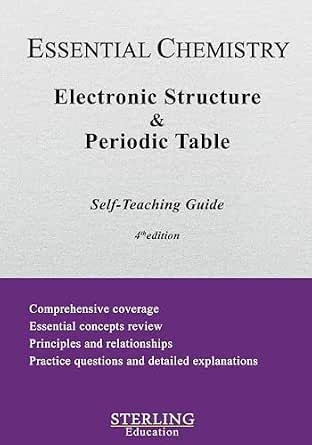 | Best for Self-Directed Learners Focused on Atomic Structure | Format: Paperback | Pages: 120 | Level: Beginner | VIEW LATEST PRICE | See Our Full Breakdown |
| Chemistry Terminology: A QuickStudy Laminated Reference Guide |  | Best for Quick Reference and On-the-Go Study | Format: Laminated reference guide | Size: 5 x 8 inches | Pages: 6 pages | VIEW LATEST PRICE | See Our Full Breakdown |
| AP Chemistry Premium 2027: Prep Book with 6 Practice Tests, Review, and Online Practice |  | Best for AP Exam Preparation with Practice Resources | Format: Paperback | Pages: 400 | Practice Tests: 6 full-length | VIEW LATEST PRICE | See Our Full Breakdown |
| Barron’s Science 360: A Complete Study Guide to Chemistry with Online Practice | 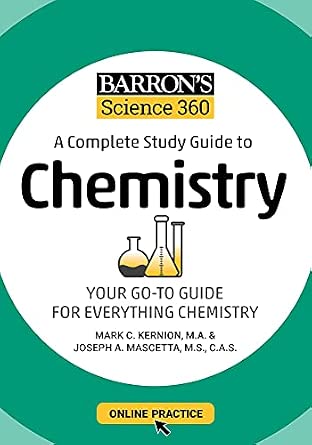 | Best Overall for Exam Preparation | Coverage: Chemistry concepts and topics | Features: Online practice tests | Intended Audience: Exam-focused students | VIEW LATEST PRICE | See Our Full Breakdown |
| Chemistry: Concepts and Problems, A Self-Teaching Guide, 3rd Edition |  | Best for Self-Study and Conceptual Clarity | Format: Self-teaching guide | Edition: 3rd Edition | Content: Concepts and practice problems | VIEW LATEST PRICE | See Our Full Breakdown |
| Chemistry Essentials For Dummies |  | Best for Absolute Beginners | Level: Introductory | Content Coverage: Basic chemistry principles | Features: Plain language explanations | VIEW LATEST PRICE | See Our Full Breakdown |
| Everything You Need to Ace Chemistry in One Big Fat Notebook |  | Best for Engaging, Student-Friendly Learning | Coverage: Key chemistry topics | Format: Big Fat Notebook style | Audience: Middle to high school students | VIEW LATEST PRICE | See Our Full Breakdown |
| Chemistry Made Simple – A Comprehensive Course for Self-Study and Review |  | Best for Self-Study and Fundamental Review | Content: Basic chemistry principles | Format: Self-study guide | Coverage: Fundamental topics | VIEW LATEST PRICE | See Our Full Breakdown |
| 101 Chemical Reactions: The Ultimate Molecular Handbook |  | Best Overall Reference for Chemical Reactions | Coverage: Chemical reactions, mechanisms, reactants, products | Target Audience: High school and college students | Content Type: Hardcover, detailed explanations | VIEW LATEST PRICE | See Our Full Breakdown |
| A Visual Analogy Guide to Chemistry, 2nd Edition |  | Best Visual Learning Aid for Complex Concepts | Content Type: Visual analogies, illustrations, simplified explanations | Target Audience: Beginners, visual learners | Coverage: Basic chemistry concepts, periodic table, bonding | VIEW LATEST PRICE | See Our Full Breakdown |
| AP Chemistry: QuickStudy Laminated Reference Guide |  | Best Portable Study Aid for Exam Preparation | Format: Laminated, portable reference | Content Coverage: Key formulas, concepts, definitions | Target Audience: AP Chemistry students | VIEW LATEST PRICE | See Our Full Breakdown |
| Organic Chemistry Fundamentals: QuickStudy Laminated Reference Guide |  | Best Quick Reference for Organic Chemistry Basics | Format: Laminated, pocket-sized | Coverage: Organic chemistry basics, functional groups, reaction types | Intended Use: Quick review, study aid | VIEW LATEST PRICE | See Our Full Breakdown |
| educational chemistry reference book | Format | Coverage |
|---|---|---|
| Chemistry Made Easy: An Illust | Paperback | Basic chemistry concepts |
| Chemistry For Dummies | Paperback | Fundamental chemistry concepts |
| Electronic Structure and the P | Paperback | — |
| Chemistry Terminology: A Quick | Laminated reference guide | Chemistry terms and definitions |
| AP Chemistry Premium 2027: Pre | Paperback | — |
| Barron’s Science 360: A Comple | Study guide with online resources | Chemistry concepts and topics |
| Chemistry: Concepts and Proble | Self-teaching guide | — |
| Chemistry Essentials For Dummi | Printed book | — |
| Everything You Need to Ace Che | Big Fat Notebook style | Key chemistry topics |
| Chemistry Made Simple | Self-study guide | Fundamental topics |
| 101 Chemical Reactions: The Ul | — | Chemical reactions, mechanisms, reactants, products |
| A Visual Analogy Guide to Chem | Paperback, illustrated | Basic chemistry concepts, periodic table, bonding |
| AP Chemistry: QuickStudy Lamin | Laminated, portable reference | — |
| Organic Chemistry Fundamentals | Laminated, pocket-sized | Organic chemistry basics, functional groups, reaction types |
More Details on Our Top Picks
Chemistry Made Easy: An Illustrated Study Guide for Students to Learn Chemistry
This book stands out for its simple, illustrated approach that breaks down chemistry concepts into visual, easy-to-understand explanations, making it ideal for students new to the subject. Unlike Chemistry For Dummies, which covers more ground and offers a broader overview, this guide prioritizes clarity over breadth, making it perfect for beginners who need a gentle introduction. However, it doesn’t delve into advanced topics or offer digital resources, limiting its usefulness for more serious study or self-directed learners seeking comprehensive content. Its strength lies in simplifying complex ideas through visuals, but it might leave advanced students wanting more depth.
Pros:- Clear, illustrated explanations that aid visual learners
- Great for students new to chemistry who need simplified concepts
- Focuses on breaking down complex topics into manageable parts
Cons:- Lacks coverage of advanced or in-depth chemistry topics
- No digital or online resources to supplement learning
Best for: High school students or college freshmen needing a visually oriented, easy-to-grasp introduction to chemistry
Not ideal for: Students seeking detailed coverage of advanced topics or digital tools for self-study
- Format:Paperback
- Pages:160
- Intended Audience:Students new to chemistry
- Illustrations:Numerous visual aids
- Coverage:Basic chemistry concepts
- Digital Resources:None
Our verdict“This book is perfect for beginners who prefer visual learning and straightforward explanations but isn’t suited for advanced or self-directed study.”
Chemistry For Dummies, 2nd Edition
This edition of Chemistry For Dummies offers a broad, accessible overview of fundamental chemistry principles, making it ideal for students who want a solid foundation or need a refresher. Compared with Electronic Structure and the Periodic Table, which provides more focused, technical content, this book covers a wider range of basic topics in an easy-to-understand manner. It may, however, lack the depth required for advanced coursework, and it doesn’t include online resources, which some learners might find limiting. Its straightforward language makes complex ideas approachable, but it might not satisfy those seeking detailed explanations or specialized content.
Pros:- Accessible, easy-to-understand explanations for beginners
- Covers a wide array of fundamental chemistry topics
- Useful as a quick reference or study aid for exam prep
Cons:- Lacks detailed examples for advanced learners
- No online resources or interactive content
Best for: High school students, college freshmen, or anyone needing a clear, comprehensive overview of basic chemistry
Not ideal for: Students pursuing advanced or highly detailed chemistry studies requiring in-depth material
- Format:Paperback
- Pages:384
- Level:Beginner to intermediate
- Coverage:Fundamental chemistry concepts
- Online Resources:None
- Author:John T. Moore
Our verdict“Ideal for beginners or those needing a straightforward, broad overview but not suited for advanced or specialized chemistry study.”
Electronic Structure and the Periodic Table: Essential Chemistry Self-Teaching Guide (Essential Chemistry Self-Teaching Guides Book 1)
This guide excels at explaining the electronic structure of atoms and the periodic table, making it especially useful for self-study learners who want to understand these core concepts in depth. Unlike Chemistry Made Easy, which covers broad topics visually, this book concentrates on fundamental atomic principles and offers exercises for reinforcement, making it highly suitable for independent learners. It’s less effective for those seeking a full chemistry curriculum or advanced topics since it doesn’t include detailed examples or digital resources. Its clear explanations and practice questions make it a strong choice for mastering atomic structure fundamentals.
Pros:- Clear and focused explanations of electronic structure and periodic trends
- Ideal for self-study with practice exercises included
- Suitable for beginners and those new to atomic theory
Cons:- Limited scope, not covering broader chemistry topics
- No digital or online resources for additional practice
Best for: Self-motivated students or learners focusing on atomic and periodic table fundamentals
Not ideal for: Students needing a comprehensive chemistry textbook or advanced content with detailed examples
- Format:Paperback
- Pages:120
- Level:Beginner
- Focus:Electronic structure, periodic table
- Exercises:Included
- Digital Resources:None
Our verdict“A focused, well-structured guide for learners who want to master atomic and periodic table basics independently, but not for those seeking a complete chemistry course.”
Chemistry Terminology: A QuickStudy Laminated Reference Guide
This laminated guide excels at providing instant access to key chemistry terms and definitions, making it a highly portable and durable study aid. Unlike comprehensive textbooks like AP Chemistry Premium 2027, which offer extensive review and practice, this quick reference is designed for quick look-ups during study sessions or exams. Its limited scope—focused solely on terminology—means it won’t help with understanding concepts or solving problems but is invaluable for clarifying terminology quickly. Its durable laminated design ensures it withstands frequent handling, perfect for students who need a portable reference for quick clarifications.
Pros:- Durable laminated design withstands frequent use
- Concise, comprehensive chemistry terminology
- Portable for study anywhere
Cons:- Limited to definitions, no explanations or examples
- Not suitable for in-depth learning or problem solving
Best for: Students and educators needing a quick, portable glossary of chemistry terms for study sessions or exams
Not ideal for: Learners seeking in-depth explanations, practice problems, or conceptual understanding
- Format:Laminated reference guide
- Size:5 x 8 inches
- Pages:6 pages
- Coverage:Chemistry terms and definitions
- Durability:Laminated
- Use case:Quick study aid
Our verdict“A perfect quick-reference tool for students who need to clarify terminology on the fly but not for comprehensive study or detailed understanding.”
AP Chemistry Premium 2027: Prep Book with 6 Practice Tests, Review, and Online Practice
This prep book offers a thorough review of key AP Chemistry concepts, complemented by six practice tests and online resources, making it ideal for students aiming to excel on the exam. Compared with Chemistry For Dummies, which provides a broad overview, this guide is more targeted, with a focus on exam-specific skills and practice questions. However, the lack of detailed information on the difficulty level of practice tests or specific edition updates could be a drawback for students seeking tailored or the most current prep materials. Its comprehensive review and multiple practice opportunities make it a strong choice for focused exam prep.
Pros:- Six full-length practice tests for exam readiness
- Includes online practice resources for flexible studying
- Comprehensive review content focused on AP exam topics
Cons:- No details on the difficulty level of practice tests
- Lacks specific edition information for the latest exam format
Best for: High school students preparing for the AP Chemistry exam who need practice tests and review material
Not ideal for: Students seeking a general chemistry textbook or in-depth theoretical explanations for college coursework
- Format:Paperback
- Pages:400
- Practice Tests:6 full-length
- Online Resources:Yes
- Focus:AP Chemistry exam prep
- Edition:2027
Our verdict“This guide is best suited for AP Chemistry students who want extensive practice and targeted review, but it may be less useful for non-exam-focused learners.”
Barron’s Science 360: A Complete Study Guide to Chemistry with Online Practice
This comprehensive guide stands out for its extensive coverage of chemistry topics combined with online practice tests, making it ideal for students aiming to boost their test scores. Compared to Everything You Need to Ace Chemistry in One Big Fat Notebook, it offers a more structured approach to exam prep, though it lacks detailed explanations for advanced topics. Its online resources provide valuable reinforcement, but the absence of recent editions may limit its relevance for current curricula. This pick is perfect for high school students preparing for standardized tests or exams needing a thorough review.
Pros:- Includes online practice tests for exam readiness
- Comprehensive coverage of core chemistry topics
- Designed specifically for exam preparation
Cons:- No specific edition or publication date provided, risking outdated content
- Lacks detailed explanations for complex concepts
Best for: Students seeking a structured, exam-focused chemistry review with online practice tests
Not ideal for: Learners looking for in-depth conceptual explanations or advanced chemistry content
- Coverage:Chemistry concepts and topics
- Features:Online practice tests
- Intended Audience:Exam-focused students
- Format:Study guide with online resources
- Edition:Not specified
Our verdict“Best suited for students needing an all-in-one review resource with practical online testing tools.”
Chemistry: Concepts and Problems, A Self-Teaching Guide, 3rd Edition
This guide excels at breaking down chemistry concepts into clear, manageable explanations, making it a strong choice for independent learners. Unlike Basic Chemistry Made Simple, which offers a broad overview, this book provides targeted practice problems to reinforce understanding. Its self-teaching approach is ideal for motivated students, but the lack of reviews or ratings may raise questions about its current effectiveness. This option makes the most sense for self-learners or students needing a step-by-step conceptual foundation.
Pros:- Clear explanations of chemistry principles
- Includes practice problems for reinforcement
- Ideal for self-paced learning
Cons:- No detailed specifications or recent reviews available
- Limited in scope for advanced or specialized topics
Best for: Self-motivated students or adult learners seeking a thorough, self-guided chemistry introduction
Not ideal for: Students who prefer interactive or multimedia learning resources, or need detailed digital content
- Format:Self-teaching guide
- Edition:3rd Edition
- Content:Concepts and practice problems
- Target Audience:Self-learners, beginners
- Supplementary Materials:None indicated
Our verdict“Best suited for learners who want straightforward explanations and self-assessment opportunities without digital distractions.”
Chemistry Essentials For Dummies
This book offers straightforward, accessible explanations of fundamental chemistry principles, making it an excellent starting point for newcomers. When compared to Organic Chemistry Fundamentals, which covers niche topics, this guide stays at an introductory level, limiting depth but maximizing clarity. Its simplicity is a double-edged sword—great for beginners, but not suited for students seeking advanced content or detailed examples. This makes it ideal for high school students or adults just beginning their chemistry journey.
Pros:- Easy-to-understand explanations
- Good for beginners with no prior chemistry background
- Covers fundamental principles thoroughly
Cons:- Lacks coverage of advanced or specialized topics
- No interactive features or digital content
Best for: Beginners or students new to chemistry who need simple, easy-to-understand explanations
Not ideal for: Advanced students or those needing comprehensive coverage of complex topics
- Level:Introductory
- Content Coverage:Basic chemistry principles
- Features:Plain language explanations
- Intended Audience:Beginners, high school students
- Format:Printed book
Our verdict“Ideal for absolute beginners seeking a clear, uncomplicated introduction to chemistry concepts.”
Everything You Need to Ace Chemistry in One Big Fat Notebook
This book combines engaging lessons, notes, and practice problems, making chemistry accessible and manageable for students. Compared to Chemistry Made Simple, which provides straightforward overviews, this resource emphasizes an engaging, student-friendly format that can motivate reluctant learners. However, it falls short on detailed explanations for complex or advanced topics, which limits its usefulness for higher-level coursework. This pick is perfect for middle or high school students preparing for exams and needing a friendly, comprehensive review.
Pros:- Engaging and approachable format
- Covers key chemistry topics comprehensively
- Includes practice problems and notes
Cons:- Lacks detailed explanations for complex concepts
- No interactive or digital features
Best for: Students looking for an engaging, easy-to-understand chemistry review for exam prep
Not ideal for: Advanced students needing in-depth, detailed explanations or digital resources
- Coverage:Key chemistry topics
- Format:Big Fat Notebook style
- Audience:Middle to high school students
- Features:Notes and practice problems
- Digital Content:None
Our verdict“Best suited for students who prefer a lively, accessible review to solidify foundational chemistry knowledge.”
Chemistry Made Simple – A Comprehensive Course for Self-Study and Review
This book offers a straightforward overview of chemistry, focusing on fundamental principles suitable for self-study. Compared with Chemistry Essentials For Dummies, which emphasizes simplicity for beginners, this guide aims at a broader review, including basic concepts and fundamental principles. Its clear explanations make it accessible, but the lack of detailed examples or advanced content could leave more advanced students wanting. This is an excellent choice for students needing a solid, basic review to reinforce their understanding.
Pros:- Clear and easy-to-understand explanations
- Suitable for self-study and review
- Covers a broad range of chemistry topics
Cons:- Lacks detailed examples or advanced content
- May be too basic for higher-level students
Best for: Students reviewing for exams or self-studying basic chemistry fundamentals
Not ideal for: Students seeking detailed explanations, advanced topics, or multimedia content
- Content:Basic chemistry principles
- Format:Self-study guide
- Coverage:Fundamental topics
- Audience:Self-learners, review students
- Features:Clear explanations
Our verdict“Ideal for learners needing a simple, comprehensive review of fundamental chemistry concepts.”
101 Chemical Reactions: The Ultimate Molecular Handbook
This comprehensive guide stands out for its extensive coverage of chemical reactions, making it an essential resource for high school and college students alike. Unlike AP Chemistry: QuickStudy Laminated Reference Guide, which offers quick facts, this book provides detailed explanations that deepen understanding of reaction mechanisms. However, it falls short in offering digital content or interactive features, which some learners might find limiting. Its clarity and thoroughness make it ideal for students needing a solid foundation in chemical reactions, though those seeking quick, portable summaries may prefer a laminated guide. Compared to other reaction books, it balances breadth with clarity, but tradeoffs include less interactivity and fewer real-world examples.
Pros:- Extensive coverage of chemical reactions and mechanisms
- Suitable for both high school and college students
- Clear, detailed explanations facilitate deep understanding
Cons:- Lacks detailed real-world examples for some reactions
- No digital or interactive content included
- Can be overwhelming for beginners seeking quick summaries
Best for: Students seeking a detailed, comprehensive understanding of chemical reactions for coursework or exams
Not ideal for: Learners preferring quick, portable reference sheets or digital resources with interactive content
- Coverage:Chemical reactions, mechanisms, reactants, products
- Target Audience:High school and college students
- Content Type:Hardcover, detailed explanations
- Size:Standard textbook size
- Illustrations:Basic reaction diagrams
- Digital Content:None
Our verdict“This book is perfect for students who need an in-depth, reliable reference on chemical reactions and aren’t concerned with portability or digital features.”
A Visual Analogy Guide to Chemistry, 2nd Edition
This book excels at translating abstract chemistry concepts into visual analogies, making it ideal for visual learners. Unlike AP Chemistry: QuickStudy Laminated Reference Guide, which offers quick facts, this guide emphasizes understanding through engaging illustrations and analogies. However, it lacks detailed textual explanations and doesn’t extensively cover advanced topics, making it less suitable for students needing in-depth or comprehensive coverage. It’s best suited for beginners or students struggling with conceptual understanding, but not for those requiring detailed technical content.
Pros:- Provides clear visual explanations for complex concepts
- Engaging illustrations aid understanding and retention
- Helpful for students new to chemistry or those who learn visually
Cons:- Limited detailed textual explanations
- Does not cover all advanced topics
- Focuses mainly on visual learning style, less on textual info
Best for: Visual learners or beginners struggling with conceptual understanding of chemistry topics
Not ideal for: Advanced students or those needing detailed explanations and extensive coverage of chemistry topics
- Content Type:Visual analogies, illustrations, simplified explanations
- Target Audience:Beginners, visual learners
- Coverage:Basic chemistry concepts, periodic table, bonding
- Format:Paperback, illustrated
- Digital Content:None
- Ideal Use:Conceptual understanding and visual learning
Our verdict“This guide is ideal for students who learn best through visuals and need to grasp foundational chemistry concepts easily.”
AP Chemistry: QuickStudy Laminated Reference Guide
This laminated guide offers a compact, durable overview of key AP Chemistry topics, making it excellent for on-the-go review. Compared to 101 Chemical Reactions: The Ultimate Molecular Handbook, which provides in-depth coverage, this guide is more suited to quick lookups and memorization. Its brevity means it lacks detailed explanations or comprehensive coverage of advanced topics, which could limit its usefulness as a primary study resource. Nevertheless, its portability and durability make it ideal for last-minute review or quick refreshers before exams. It’s best for students needing a quick, reliable reference during intensive study sessions, not for deep learning.
Pros:- Compact and highly portable for on-the-go studying
- Laminated for durability in frequent use
- Concise overview of formulas, key concepts, and definitions
Cons:- Lacks detailed explanations and contextual understanding
- Limited coverage of advanced topics
- Primarily a quick reference, not a teaching resource
Best for: Students preparing for AP Chemistry exams who need a portable, quick reference tool
Not ideal for: Learners seeking detailed explanations or comprehensive coursework coverage
- Format:Laminated, portable reference
- Content Coverage:Key formulas, concepts, definitions
- Target Audience:AP Chemistry students
- Durability:Laminated for frequent handling
- Size:Small, pocket-sized
- Digital Content:None
Our verdict“This laminated guide is perfect for quick reviews and last-minute exam prep but isn’t suitable as a primary learning resource.”
Organic Chemistry Fundamentals: QuickStudy Laminated Reference Guide
This laminated guide provides a straightforward overview of essential organic chemistry concepts, making it a handy tool for quick review. Unlike 101 Chemical Reactions, which covers a broad range of reactions, this guide focuses narrowly on fundamental organic principles, making it more accessible for beginners. Yet, its brevity means it lacks depth for advanced organic topics, limiting its utility for in-depth study or complex problem-solving. Its durable, compact design makes it ideal for quick reference during lab or exam prep, but students seeking detailed explanations should look elsewhere. It makes the most sense for students needing a quick, easy-to-carry refresher on organic fundamentals.
Pros:- Concise and easy-to-reference format
- Laminated for durability and frequent use
- Helpful for quick review and concept reinforcement
Cons:- Limited depth for complex organic topics
- No detailed explanations or problem-solving guidance
- Focuses mainly on basic concepts, not advanced material
Best for: Organic chemistry students needing a quick, portable review of basic concepts
Not ideal for: Advanced organic chemistry learners or those requiring detailed, comprehensive coverage
- Format:Laminated, pocket-sized
- Coverage:Organic chemistry basics, functional groups, reaction types
- Intended Use:Quick review, study aid
- Durability:Laminated
- Size:Small
- Digital Content:None
Our verdict“This guide is ideal for students who want a quick, portable refresher on organic chemistry fundamentals without the bulk of detailed textbooks.”

How We Picked
I evaluated the selected books based on their clarity, accuracy, comprehensiveness, and usability. The ranking considers how well each book simplifies complex concepts, their suitability for different experience levels, and the quality of supplementary features like practice questions or visual aids. Price and user feedback also played critical roles in determining overall value. By focusing on these factors, I aimed to highlight resources that genuinely support learning, from introductory guides to advanced self-teaching materials.Factors to Consider When Choosing Educational Chemistry Reference Books
Choosing the right educational chemistry reference book depends on your current knowledge level, learning goals, and preferred format. While a beginner might prioritize clarity and visual aids, an advanced student may seek detailed explanations and comprehensive coverage. Considering these factors can help you avoid common pitfalls, like overpaying for features you won’t use or selecting a book that’s too advanced or too simplistic. Below are key considerations to keep in mind when making your choice.Learning Level and Content Depth
Assess whether you need an introductory overview or an in-depth resource. Beginners should look for books that simplify concepts and include plenty of visuals, while more advanced learners might require detailed explanations and problem-solving guides. Picking a book that matches your current understanding helps prevent frustration and maximizes learning efficiency.
Format and Usability
Consider whether you prefer a printed book, a laminated quick-reference guide, or digital access. Laminated guides are excellent for quick lookups during practice but lack depth. Full textbooks or self-study guides offer comprehensive explanations but may be less portable. Your choice should align with how you plan to study and review material regularly.
Visual Aids and Illustrations
Visuals like diagrams, charts, and illustrations significantly enhance understanding, especially for complex topics like molecular structures or reaction mechanisms. Books with rich visuals can make abstract concepts more tangible, but they might also increase the price. Decide how much visual support you need based on your learning style.
Supplementary Features
Look for resources that include practice questions, online quizzes, or downloadable content. These features reinforce learning and help assess your progress. Be cautious of overly commercial guides that rely heavily on practice tests at the expense of foundational explanations—balance is key.
Price and Value
Prices for educational guides vary widely. While investing in a comprehensive, well-reviewed resource can pay off, there are affordable options that cover essentials effectively. Beware of overly cheap books that lack accuracy or depth, and avoid overspending on features that won’t improve your understanding.
Frequently Asked Questions
Should I choose a quick-reference guide or a full textbook?
This depends on your learning goals. Quick-reference guides are excellent for review and on-the-spot lookups, making them ideal for students who already have a foundational understanding. Full textbooks or comprehensive guides are better suited for building a deep understanding from scratch or for self-study over time. If you’re just starting out, a full guide provides essential context, but experienced learners may prefer quick-reference tools for revision.
Are laminated reference guides worth the extra cost?
Laminated guides are highly durable and designed for quick, frequent use, making them perfect for lab work, exams, or field studies. However, they typically lack detailed explanations and are best used alongside more comprehensive resources. If you need a portable, durable quick lookup, they can be a worthwhile investment, but they shouldn’t replace full textbooks for in-depth learning.
What features should I prioritize for self-study?
For self-study, look for books that combine clear explanations with practice questions and solutions. Visual aids, summaries, and self-assessment tools enhance retention and understanding. Avoid guides that rely heavily on rote memorization without providing conceptual context. The goal is to find a resource that guides you through concepts while offering opportunities to test your knowledge effectively.
Is it better to buy a book specifically for organic chemistry or general chemistry?
If your focus is on general chemistry, choose a comprehensive guide covering broad topics like atomic structure, bonding, and reactions. For organic chemistry, specialized guides will delve into reaction mechanisms and structures more deeply. Selecting the right focus ensures you don’t pay for unnecessary content and get targeted help for your current studies.
How much should I expect to spend on a good educational chemistry reference book?
Prices vary based on scope and quality, ranging from around $10 for laminated quick-reference guides to $50 or more for detailed textbooks with supplementary features. Investing in a well-reviewed, comprehensive resource often offers better long-term value, especially if you’re committed to mastering chemistry. Avoid overly cheap options that may compromise accuracy or clarity, but also be wary of overspending on features that won’t enhance your learning experience.
Conclusion
For newcomers, Chemistry For Dummies, 2nd Edition provides an accessible entry point with clear explanations. Serious learners or those self-studying for exams may find AP Chemistry Premium 2027 or Barron’s Science 360 to deliver the best value through practice tests and comprehensive coverage. If you need quick reference during labs or exams, laminated guides like AP Chemistry QuickStudy are ideal. For advanced students seeking in-depth understanding, Electronic Structure and the Periodic Table stands out. Ultimately, your choice depends on your current knowledge, study style, and budget, but selecting the right resource makes a significant difference in your chemistry journey.