
The right science experiment kit can turn a student’s curiosity into real understanding — but the category is crowded with sets that promise “150 experiments” and deliver a pile of plastic and one impressive demo. After comparing six popular options side by side, the National Geographic Amazing Chemistry Set stands out as the best overall pick for students aged 8–12, thanks to genuine experiment variety and well-written instructions that teach the science behind each reaction. Budget shoppers should look at The Everything Kids’ Science Experiments Book, which trades lab equipment for household-based experiments at a fraction of the price. The main tradeoff in this category is experiment count versus experiment quality, along with how much adult supervision each kit realistically requires. Keep reading for the full breakdown, including which kits are worth skipping and which deliver real classroom-ready learning.

Prime made for students and young adults
- Fast, free delivery for dorm and study essentials
- Prime Video and Amazon Music included
- Member-only deals
Key Takeaways
- The National Geographic Amazing Chemistry Set earned the top spot because its 100+ experiments are genuinely distinct activities with real chemical reactions, not repeated variations of the same color-change demo.
- The Everything Kids’ Science Experiments Book is the cheapest path to hands-on science, but it requires parents to source materials from the kitchen — a fair trade for households that already stock basic supplies.
- UNGILINGA wins on raw experiment count (150), but a higher share of those experiments are simple demonstrations suited to younger students, so middle-schoolers may outgrow it faster.
- The Science Magic Kit is the best engagement tool for reluctant learners: framing experiments as magic tricks gets hesitant students to participate, though the science explanations run shallower than the chemistry set’s.
- Carson Dellosa STEM Challenges is the only option here built around engineering design rather than chemistry, making it the right pick for students who prefer building and problem-solving over reactions and mixtures.
| National Geographic Amazing Chemistry Set with 100+ Experiments for Kids Ages 8-12 |  | Best Overall | Number of Experiments: 100+ | Bonus Experiments: 85 (using household items) | Age Range: 8-12 years | VIEW LATEST PRICE | See Our Full Breakdown |
| The Everything Kids’ Science Experiments Book: Boil Ice, Float Water, Measure Gravity | 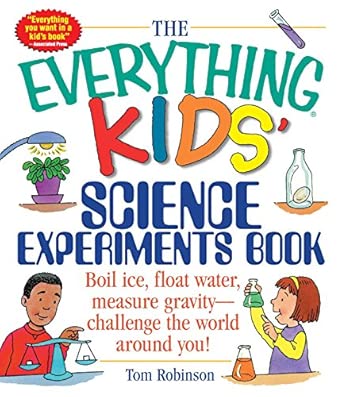 | Best Budget Pick | Format: Paperback activity book | Materials Required: Common household items | Activity Examples: Boiling ice, floating water, measuring gravity | VIEW LATEST PRICE | See Our Full Breakdown |
| UNGILINGA 150 Experiments Science Kits for Kids Chemistry Lab STEM Toys | 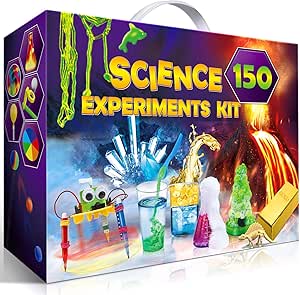 | Best Experiment Variety | Number of Experiments: 150 | Science Disciplines: Chemistry, physics, earth science | Educational Focus: STEM | VIEW LATEST PRICE | See Our Full Breakdown |
| National Geographic Science Magic Kit with 100+ Experiments for Kids 8-12 |  | Best for Reluctant Scientists | Number of Experiments: 100+ | Age Range: 8-12 years | Format: Magic-trick-based science demonstrations | VIEW LATEST PRICE | See Our Full Breakdown |
| Carson Dellosa STEM Challenges, Hands-On Science Kits |  | Best for Classrooms and Homeschool | Number of Activity Cards: 30 | Grade Level: 2-5 | Science Domains: Physical, life, earth, and space science | VIEW LATEST PRICE | See Our Full Breakdown |
| National Geographic Mega Science Lab with 75 Experiments for Kids 8-12 |  | Best Variety Pick | Number of Experiments: 75 (45 kit-based, 30 using household items) | Age Range: 8-12 years | Science Subjects: Earth science, chemistry, science magic | VIEW LATEST PRICE | See Our Full Breakdown |
| science experiment kits for student | Number of Experiments | Age Range |
|---|---|---|
| National Geographic Amazing Ch | 100+ | 8-12 years |
| The Everything Kids’ Science E | — | — |
| UNGILINGA 150 Experiments Scie | 150 | — |
| National Geographic Science Ma | 100+ | 8-12 years |
| Carson Dellosa STEM Challenges | — | — |
| National Geographic Mega Scien | 75 (45 kit-based, 30 using household items) | 8-12 years |
More Details on Our Top Picks
National Geographic Amazing Chemistry Set with 100+ Experiments for Kids Ages 8-12
This chemistry set earns the top spot because it strikes the best balance between experiment volume and real scientific equipment. Where the UNGILINGA kit leans on quantity with 150 experiments, this option includes actual test tubes, beakers, and pipettes, which makes students feel like they’re working in a genuine lab rather than playing with toys. The bonus guide with 85 additional household-item experiments effectively pushes the total well past 185 activities, extending the kit’s lifespan far beyond the box contents.
The tradeoff is mess and logistics: bubbling solutions and color-changing liquids mean a parent needs to be nearby, and some experiments require supplies you’ll have to raid from the kitchen. Compared with the Everything Kids’ book, the payoff is far richer, but the setup cost in supervision time is real.
Pros:- Real lab tools (test tubes, beakers, pipettes) create an authentic science experience
- 185+ total experiments counting the bonus household-item guide
- Strong fit for the 8-12 age range with genuinely engaging chemistry
- Trusted National Geographic brand with clear educational framing
Cons:- Requires adult supervision, especially for younger users
- Some experiments need household items not included in the box
- Liquid and chemical experiments can be messy to clean up
Best for: Parents of curious 8-12 year olds who want a long-lasting kit with authentic lab tools and don’t mind supervising messy experiments
Not ideal for: Households wanting a self-directed, low-mess activity — this set needs an adult present and can be genuinely messy
- Number of Experiments:100+
- Bonus Experiments:85 (using household items)
- Age Range:8-12 years
- Included Tools:Test tubes, beakers, pipettes
- Experiment Types:Bubbling solutions, color-changing liquids, glowing test tubes
- Brand:National Geographic
Our verdict“If you want one kit that can carry a student through months of genuine chemistry learning, this is the one to buy.”
The Everything Kids’ Science Experiments Book: Boil Ice, Float Water, Measure Gravity
Not every science resource needs a box of chemicals. This book is the cheapest entry point in the lineup, and its whole value proposition is that every experiment runs on household materials — no kits, no consumables, no restocking. Compared with the Carson Dellosa STEM Challenges cards, it covers similar DIY territory but in a longer-form book format that works better for independent readers who like to browse.
Those strengths are also its limits. Some experiments lack the detailed step-by-step instructions younger students need, and the content skews basic, so a sixth grader working through the National Geographic Chemistry Set will find this beneath their level. Think of it as a gateway product: cheap, safe, and self-contained, but with a ceiling you’ll hit within a year or two.
Pros:- Extremely affordable compared with physical kits
- All experiments use common household materials
- Safe activities with no chemicals or small parts to worry about
- Encourages independent reading alongside hands-on learning
Cons:- Some experiments lack detailed instructions
- No stated age range, making it hard to match to a student’s level
- Content may be too basic for older children
Best for: Budget-conscious families and independent readers ages 7-10 who want safe, low-cost experiments using items already at home
Not ideal for: Older or advanced students — the content is too basic, and vague instructions frustrate kids who need structured guidance
- Format:Paperback activity book
- Materials Required:Common household items
- Activity Examples:Boiling ice, floating water, measuring gravity
- Safety Level:Simple, safe activities
- Reading Level:Early independent readers
- Consumables Included:None — book only
Our verdict“The right pick when budget is tight and you want screen-free science that costs almost nothing beyond the book itself.”
UNGILINGA 150 Experiments Science Kits for Kids Chemistry Lab STEM Toys
If sheer volume is the priority, this kit wins the numbers game with 150 experiments — fifty more than the National Geographic Chemistry Set and double the Mega Science Lab’s 75. What makes it more than a count is the breadth across disciplines: chemistry, physics, and earth science all get coverage, which suits students who haven’t settled on a favorite branch of science yet.
The catch is that quantity comes with uneven polish. The tools are kid-friendly rather than genuinely scientific, so it feels less like a real lab than the National Geographic set, and small parts make it a poor fit for homes with toddlers. Instructions are easy to follow, but supervision is still expected. This pick makes the most sense for families who value variety and replay value over lab-grade authenticity.
Pros:- Largest experiment count in the roundup at 150 activities
- Covers three science disciplines rather than chemistry alone
- Easy-to-follow instructions suited to independent exploration
- Kid-friendly materials designed with safety in mind
Cons:- Tools are toy-grade, less authentic than National Geographic’s lab equipment
- Small parts present a choking hazard for very young siblings
- Some experiments require household items not included
Best for: Families with kids who sample everything and want the widest mix of chemistry, physics, and earth science in one box
Not ideal for: Homes with children under 4 — small parts pose a choking hazard — or buyers wanting professional-quality lab equipment
- Number of Experiments:150
- Science Disciplines:Chemistry, physics, earth science
- Educational Focus:STEM
- Instructions:Easy-to-follow included guide
- Tools Included:Kid-friendly tools and experiment materials
- Supervision:Adult supervision recommended
- Safety Note:Contains small parts
Our verdict“Buy this when experiment variety and keeping a distractible kid engaged matter more than authentic lab tools.”
National Geographic Science Magic Kit with 100+ Experiments for Kids 8-12
This kit takes a different motivational angle than anything else here: it frames science as magic tricks to perform, which is a proven hook for kids who claim to hate science. The same 8-12 age range as the Amazing Chemistry Set gets a very different experience — less formal lab procedure, more wow-factor demonstrations that end with an explanation of the science behind the trick. That performance loop makes it exceptional for building confidence in skeptical learners.
The tradeoff is transparency. Product details are thin on which specific experiments are included, so you’re trusting the brand more than the spec sheet — a real weakness compared with the clearly documented UNGILINGA kit. It also won’t teach systematic lab skills the way the Chemistry Set does, since the emphasis stays on spectacle over procedure.
Pros:- 100+ experiments framed as magic tricks that kids can perform for others
- Award-winning kit from a reputable brand
- Strongly fosters imagination and creativity alongside education
- Backed by a dedicated U.S.-based support team
Cons:- Limited published detail on the specific experiments included
- Spectacle-focused approach teaches less formal lab methodology than the Chemistry Set
Best for: Parents of kids ages 8-12 who resist traditional science learning but respond to magic tricks and performance
Not ideal for: Buyers who want documented experiment lists and rigorous lab-skill development — the emphasis here is showmanship over procedure
- Number of Experiments:100+
- Age Range:8-12 years
- Format:Magic-trick-based science demonstrations
- Brand Recognition:Award-winning National Geographic product
- Support:Dedicated U.S. support team
- Educational Focus:Education, imagination, creativity
Our verdict“The smart choice for converting a science skeptic into an enthusiast through performance and wonder.”
Carson Dellosa STEM Challenges, Hands-On Science Kits
This is the only option in the lineup built specifically for structured educational settings. Instead of a boxed kit, you get 30 durable activity cards spanning physical, life, earth, and space science, each with instructions, a materials list, and a challenge explanation — exactly the format teachers and homeschool parents need for lesson planning and learning centers. Compared with the Everything Kids’ book, the card format is far easier to distribute to small groups and reuse across multiple school years.
The obvious tradeoff: nothing physical comes in the box. Every material must be sourced separately, which means planning ahead rather than opening a kit and starting immediately like the UNGILINGA or National Geographic sets. It’s also locked to grades 2-5, so middle schoolers are out of range. For educators, though, that constraint is a feature — the challenges are precisely calibrated to that band.
Pros:- 30 durable, reusable cards designed for classrooms, homeschool, and learning centers
- Each card includes instructions, materials list, and challenge explanation
- Compact card box stores and travels easily
- Spans four science domains: physical, life, earth, and space
Cons:- Includes no physical materials — everything must be sourced separately
- Strictly limited to grades 2-5 with no stretch beyond
Best for: Teachers and homeschool parents of grades 2-5 who need reusable, curriculum-friendly science activities for groups
Not ideal for: Families wanting an open-and-go experience — every material must be gathered separately, and the content ends at grade 5
- Number of Activity Cards:30
- Grade Level:2-5
- Science Domains:Physical, life, earth, and space science
- Card Dimensions:7.75 x 5.5 inches
- Divider Dimensions:7.75 x 8 inches
- Materials Included:None — common household/classroom materials required
- Settings:Classroom, homeschool, learning centers
Our verdict“The clear pick for educators who plan lessons in advance and want a reusable resource that survives multiple school years.”
National Geographic Mega Science Lab with 75 Experiments for Kids 8-12
Most kits in this roundup dig deep into a single discipline, but this one takes the opposite approach: breadth over depth. Where the National Geographic Amazing Chemistry Set stays laser-focused on chemical reactions, the Mega Science Lab spreads its 75 experiments across earth science, chemistry, and science magic — so a kid who tires of one topic always has another lane to explore. The inclusion of real rock, mineral, and crystal specimens is what separates it from cheaper alternatives like the UNGILINGA kit, which leans on generic lab tools rather than authentic samples. The tradeoff is real, though: because half of the experiments depend on household items you supply yourself, the out-of-box experience is smaller than the headline number suggests. This pick makes the most sense for families who value a sampler-style introduction over specialization.
Pros:- 75 experiments spanning earth science, chemistry, and magic keep kids engaged across interests
- Real rock, mineral, and crystal specimens add genuine educational value most kits lack
- Household-item experiments extend the kit’s life beyond the included supplies
- Trusted National Geographic branding with reliably clear instruction materials
Cons:- Roughly 30 of the 75 experiments require you to source your own household materials
- Some experiments need adult supervision, so it isn’t a fully independent-play option
- Spreads thin across three disciplines rather than building mastery in one
Best for: Parents of curious 8-12 year olds who want a broad, multi-subject introduction to science rather than a single-discipline deep dive
Not ideal for: Families seeking a tightly focused chemistry program — the Amazing Chemistry Set delivers more depth in that one area
- Number of Experiments:75 (45 kit-based, 30 using household items)
- Age Range:8-12 years
- Science Subjects:Earth science, chemistry, science magic
- Included Materials:Rock, mineral, and crystal specimens
- Signature Activities:Volcano building, crystal growing, water tornadoes
- Brand:National Geographic
Our verdict“Choose this if your student wants to sample many branches of science in one box; skip it if you’d rather have concentrated depth in chemistry or earth science alone.”

How We Picked
I evaluated each kit against four buyer-focused criteria: experiment quality (are the experiments distinct, repeatable, and educationally meaningful, or padded variations?), instruction clarity (can a student follow along independently, and does the guide explain the science?), materials and value (what’s included versus what parents must supply, and does the price per real experiment hold up?), and safety and supervision level (age-appropriateness of chemicals and how much adult help is realistic). I also weighed longevity — whether a student returns to the kit after the first week.
The ranking favors kits that balance educational depth with independent usability. That’s why the National Geographic chemistry sets ranked highly: their instruction manuals treat students as learners, not just spectators. Sets with inflated experiment counts were ranked lower than their marketing suggests, because a buyer who pays for 150 experiments and gets 30 real ones is getting a worse deal than the box admits.
Factors to Consider When Choosing Science Experiment Kits For Students
Before picking a kit, it helps to understand what actually separates a good science set from a disappointing one. These are the factors that shaped this comparison — and the mistakes I see buyers make most often.
Experiment Count Is Often Inflated
The most common marketing trick in this category is counting variations of the same experiment as separate activities. A kit advertising “100+ experiments” may contain ten core activities, each with nine color or quantity variations. Before buying, check whether the manufacturer lists actual distinct experiments or just a number on the box. A set with 30 genuinely different activities almost always beats one with 150 repetitive demos, because variety is what sustains a student’s interest past the first weekend. Read reviews specifically looking for comments about repetition — parents usually call this out quickly. In this comparison, the gap between advertised and real experiment counts was the single biggest quality differentiator.
Hidden Supplies and Ongoing Costs
Most kits are not fully self-contained, and the fine print matters. Chemistry sets commonly require household additions like vinegar, baking soda, or measuring cups, while book-based options like The Everything Kids’ series assume you’ll source nearly everything yourself. That’s not necessarily bad — household chemicals are safe and cheap — but a $20 kit that needs $30 of supplies isn’t a budget kit anymore. Before purchasing, scan the product description for phrases like “common household items required” and estimate what you’d actually need to buy. Families who do weekly experiments should also check whether consumables can be refilled, since a kit that works once is poor value compared to one students can revisit.
Age Ratings Are Suggestions, Not Rules
Manufacturer age ranges are usually calibrated for safety and dexterity, not interest level, which cuts both ways. An advanced 7-year-old with strong reading skills may thrive with a kit rated 8–12, while a 10-year-old who struggles with multi-step directions may need a simpler set regardless of the label. The bigger issue is the upper bound: many kits marketed to age 12 have content that engaged 10-year-olds finish quickly. If you’re buying for a student on the older end of a range, favor kits with deeper explanations or open-ended engineering challenges, like the Carson Dellosa STEM set, rather than demo-driven chemistry boxes. Matching the kit to the student’s actual reading level and attention span beats matching it to their birthday.
Supervision Requirements Vary Widely
Some experiments can run solo at the kitchen table; others genuinely need an adult present for safety or because the instructions are written at a parent’s reading level. Chemistry kits with reaction-based experiments, including the National Geographic sets here, sit in the middle: safe with common sense, but better with supervision for younger students. Book-based experiment collections using household materials typically allow the most independence. If you’re buying a kit to occupy a student while you work or cook, be honest about how much supervision you can provide — a kit that requires you but arrives when you’re busy becomes a drawer ornament. Check whether the instruction guide is written to the student or to the parent, since that’s the clearest signal of independent usability.
Learning Style Should Drive the Choice
Chemistry kits, magic-trick kits, engineering challenges, and experiment books teach science through completely different formats, and the best choice depends on the student. Students who love reactions and visible results gravitate toward chemistry sets. Reluctant learners who resist anything labeled “educational” often engage more with magic-framed kits, where the science is revealed after the trick lands. Builders and tinkerers get more from engineering design challenges than from mixing solutions. And strong readers who like asking their own questions often get the most from a structured experiment book, which invites forming hypotheses rather than following a script. Buying against a student’s natural learning style is the most common — and most avoidable — mistake in this category.
Frequently Asked Questions
Which kit is best if my child has never done science experiments before?
Beginners do best with kits that have forgiving, low-stakes experiments and very clear instructions. The Everything Kids’ Science Experiments Book is a strong starting point because it uses familiar household materials, so a failed experiment costs nothing and can simply be repeated. The National Geographic Science Magic Kit is another good entry option, since the magic framing lowers the intimidation factor for students who think science is “hard.” I’d hold off on larger chemistry sets until a student has the patience for multi-step directions and careful measuring, which usually develops around age 8 or 9. The goal with a first kit is building confidence and curiosity, not maximizing experiment count.
Are these kits safe for students to use without adult supervision?
It depends on the kit and the student’s age, but plan on at least partial supervision for the chemistry-based options. The National Geographic and UNGILINGA sets use child-safe chemicals, but reactions involving heat, fizzing, or color changes still warrant an adult nearby, especially for students under 10. Book-based experiments with kitchen ingredients are the most independent-friendly, though anything involving boiling water or stovetops needs a parent. A practical rule: if the kit includes safety goggles, treat supervision as expected rather than optional. Beyond safety, an adult asking “why do you think that happened?” doubles the educational value of most experiments.
Is a book of experiments really as good as a physical kit?
For many students, yes — and sometimes better. A book like The Everything Kids’ Science Experiments Book costs a quarter of a physical kit and covers fundamental concepts like density, gravity, and states of matter using supplies you already own. The tradeoff is convenience: physical kits arrive with pre-measured chemicals and equipment, which removes friction and makes it more likely experiments actually happen. Books also demand more from parents on the supply side. If your household cooks regularly and keeps basic pantry staples, a book is excellent value. If getting experiments done depends on everything being in one box, a physical kit will get more use.
What age is too old for these science kits?
Most kits in this comparison target ages 8–12, and motivated middle-schoolers at the top of that range may finish them quickly. For students 12 and up, look for kits with real lab equipment, more sophisticated chemistry, or open-ended engineering challenges with multiple solutions — the Carson Dellosa STEM Challenges set scales best into older ages because design problems don’t have a single scripted outcome. A student who has already worked through a general chemistry set will get bored with another demo-driven box. At that point, subject-specific kits (electronics, forensics, microscope sets) sustain interest far better than another all-in-one sampler.
Which kit offers the most experiments for the money?
On paper, the UNGILINGA 150-experiment set has the lowest cost per experiment, but the real answer depends on how you count. If you only count distinct, repeatable activities, the National Geographic Amazing Chemistry Set often delivers better value because fewer of its experiments are variations of one another. The book option wins outright on absolute cost — you’ll pay less than $15 for over 50 experiments, provided you already have the supplies. My advice: divide the price by the number of experiments your student will realistically do twice, not the number on the box. That math usually favors quality over quantity.
Conclusion
Best overall goes to the National Geographic Amazing Chemistry Set, which balances experiment variety, clear educational explanations, and strong replay value better than anything else in this lineup. Best value is The Everything Kids’ Science Experiments Book — nothing else comes close on cost, as long as you’re willing to source household supplies. Best for beginners is the Science Magic Kit, whose trick-based format pulls in students who resist traditional science activities. Best premium pick is the National Geographic Mega Science Lab, which mixes chemistry, earth science, and physics for families wanting broader subject coverage in one box. For specific needs: choose UNGILINGA for younger students who want maximum experiment volume on a mid-range budget, and pick Carson Dellosa STEM Challenges for builders and tinkerers who prefer engineering design over chemical reactions. Whatever you choose, match the kit to the student’s reading level, attention span, and natural curiosity — that decision matters more than any number printed on the box.