
Environmental chemistry kits and ecology experiments help students investigate water quality, pollution, filtration, biodiversity, and aquatic life through hands-on activities. My best overall pick is Innovating Science Environmental Chemistry: Nitrates, Phosphates, and Eutrophication Hands-On Kit because it links measurable water chemistry to ecosystem effects; the WaterWorks Classroom Water Testing Kit stands out for broader classroom testing, while the Leaf Pack Experiments Stream Ecology Kit adds a field-based ecology perspective. The main tradeoff is focus: some kits teach a clear experiment with simple materials, while others provide more testing breadth or deeper classroom investigation. Match the kit to your learners, group size, and desired level of data interpretation. Read on for the full breakdown and a guide to choosing the right fit.

Prime made for students and young adults
- Fast, free delivery for dorm and study essentials
- Prime Video and Amazon Music included
- Member-only deals
Key Takeaways
- The strongest chemistry-to-ecology connection comes from the nitrate, phosphate, and eutrophication kit: it gives learners a direct path from nutrient measurements to ecosystem consequences.
- Classroom scale and investigation depth are separate strengths: Innovating Science Environmental Testing Kit for 30 Students is built around group use, while the Carolina AP kits focus on structured topics such as biodiversity loss and wastewater treatment.
- Water-testing kits differ in scope: WaterWorks and LaMotte Urban Water Quality address broader water-quality investigations, while the ammonia-nitrogen PK50 centers on a single parameter.
- Not every ecology experiment is a chemistry kit: the Leaf Pack and Spirulina kits focus on stream organisms or algae culture, making them better for biological questions than broad water analysis.
- Beginner-friendly demonstrations trade measurement depth for accessibility: the 4M, Fun Express, and DIY purifier kits suit introductory exploration, but they are less suited to detailed environmental sampling.
| 4M Clean Water Science – Climate Change, Global Warming, Lab – STEM Educational Toy for Kids & Teens |  | Best for Younger Learners | Brand: 4M | Age range: 8 years and up | Included components: Filter system, active carbon, sand, rock, filter paper, instructions | VIEW ON AMAZON | See Our Full Breakdown |
| Innovating Science Environmental Chemistry: Water Treatment & Filtration Experiment Kit |  | Best for Water-Treatment Lessons | Brand: ALDON | Manufacturer: Innovating Science | Age range: Adult | VIEW ON AMAZON | See Our Full Breakdown |
| Industrial Test Systems WaterWorks Classroom Water Testing Kit |  | Best for Water-Quality Measurements | Manufacturer: Industrial Test Systems, Inc (Sensafe) | Model number: 487995 | Class capacity: 30 students | VIEW ON AMAZON | See Our Full Breakdown |
| Carolina Investigations® for AP® Environmental Science: Loss of Biodiversity 8-Station Kit |  | Best for Biodiversity and Ecology | Brand: Carolina | Set name: Loss of Biodiversity | Theme: Biodiversity | VIEW ON AMAZON | See Our Full Breakdown |
| Innovating Science Environmental Testing Kit for 30 Students |  | Best for Multi-Test Classroom Labs | Age range: 18 years and up | Class capacity: 30 students | Number of tests: 9 | VIEW ON AMAZON | See Our Full Breakdown |
| Water Test Kit for Ammonia Nitrogen, PK50 |  | Best for Focused Ammonia Testing | Analyte: Ammonia nitrogen | Container type: Bottle | Bottle quantity: 50 | VIEW ON AMAZON | See Our Full Breakdown |
| Innovating Science Environmental Chemistry: Nitrates, Phosphates, and Eutrophication Hands-On Kit |  | Best for Teaching Eutrophication | Brand: Aldon | Manufacturer: Innovating Science | Model number: IS9701 | VIEW ON AMAZON | See Our Full Breakdown |
| LaMotte 5918 Urban Water Quality Test Kit |  | Best Overall for Broad Water Surveys | Brand: LaMotte | Model number: 5918 | Set name: Urban Water Quality Test Kit | VIEW ON AMAZON | See Our Full Breakdown |
| Fun Express STEAM Water Science Kit – Discover & Explore Water Purification with Engaging Experiments for Kids |  | Best for Young Beginners | Brand: Fun Express | Product name: Clean Water Science Kit | Educational objective: STEM | VIEW ON AMAZON | See Our Full Breakdown |
| Algae Research Supply Algae Culture Kit Spirulina for Science Projects |  | Best for Algae Growth Investigations | Culture volume: 50 ml | Inoculum: 1 ml | Nutrient media: f/2 modification with NaNO3 and NaPO4 | VIEW ON AMAZON | See Our Full Breakdown |
| Lamotte Company Leaf Pack Experiments Stream Ecology Kit | 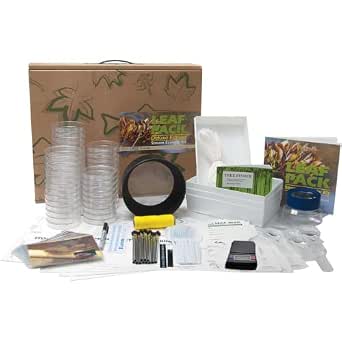 | Best for Stream Ecology | Brand: Lamotte Company | Model number: 5882 | Kit focus: Stream ecology and water quality assessment | VIEW ON AMAZON | See Our Full Breakdown |
| DIY Water Purifier Filtration Experiment Kit |  | Best Portable Filtration Demonstration | Material: Plastic | Size: 18 cm × 7 cm × 7 cm (7.07 in × 2.75 in × 2.75 in) | Package includes: 1 DIY Water Purifier Filtration Experiment Kit | VIEW ON AMAZON | See Our Full Breakdown |
| Carolina Investigations® for AP® Environmental Science: Wastewater Treatment Kit |  | Best for Advanced Classroom Groups | Curriculum: AP Environmental Science and IB Biology | Treatment stages: Primary, secondary, and tertiary | Materials for: 32 students | VIEW ON AMAZON | See Our Full Breakdown |
| environmental chemistry kits ecology experiment | Brand |
|---|---|
| 4M Clean Water Science | 4M |
| Innovating Science Environment | ALDON |
| Industrial Test Systems WaterW | — |
| Carolina Investigations® for A | Carolina |
| Innovating Science Environment | — |
| Water Test Kit for Ammonia Nit | — |
| Innovating Science Environment | Aldon |
| LaMotte 5918 Urban Water Quali | LaMotte |
| Fun Express STEAM Water Scienc | Fun Express |
| Algae Research Supply Algae Cu | — |
| Lamotte Company Leaf Pack Expe | Lamotte Company |
| DIY Water Purifier Filtration | — |
| Carolina Investigations® for A | — |
More Details on Our Top Picks
4M Clean Water Science – Climate Change, Global Warming, Lab – STEM Educational Toy for Kids & Teens
4M Clean Water Science makes water purification approachable for children starting environmental chemistry. Its filter system combines active carbon, sand, rock, and filter paper, giving learners tangible materials to explore how filtration works, alongside an activity about extracting salt from seawater. Compared with the more classroom-oriented Innovating Science Environmental Chemistry: Water Treatment & Filtration Experiment Kit, this kit is a simpler, child-focused introduction rather than a small-group treatment lab. That simplicity is its strength for younger experimenters, but it also limits the depth available to teens ready to investigate multiple water-quality measures. Buyers should plan to supply water, and some children may need help following the assembly instructions. I’d choose it for a first guided exploration, not as a substitute for a broader testing kit.
Pros:- Combines filtration materials for a hands-on look at water purification.
- Includes instructions and the components needed for the listed activities.
- Designed for children aged 8 and up who are beginning environmental science.
Cons:- Requires water beyond the kit components.
- The activities may feel basic to older children and adults.
- Assembly instructions may require help from an adult.
Best for: Families introducing children aged 8 and up to filtration and seawater desalination with a hands-on kit.
Not ideal for: Older students seeking multiple water-quality measurements or classroom groups needing materials for many learners.
- Brand:4M
- Age range:8 years and up
- Included components:Filter system, active carbon, sand, rock, filter paper, instructions
- Model number:4572
- Number of items:1
- Item type:Science Kit
Our verdict“Choose this for a child’s first guided filtration and desalination activities, but pick a classroom kit for broader testing or group work.”
Innovating Science Environmental Chemistry: Water Treatment & Filtration Experiment Kit
For learners who need to follow a water-treatment process rather than just assemble a basic filter, Innovating Science Water Treatment & Filtration is the more lesson-oriented choice. It simulates treatment on a small scale and supplies instructions, worksheets, and materials for multiple groups, which can help a teacher or remote-learning organizer structure the activity. By comparison, the 4M Clean Water Science kit is aimed at younger children and offers a simpler entry point; this one better fits adult learners and organized instruction. Its limits are equally clear: small-scale treatment models do not replicate real-world water systems, and some materials may need replenishing after use. Younger students will also need adult supervision. I’d rank it for guided process learning, not for broad contaminant testing like the WaterWorks classroom kit.
Pros:- Models water treatment and filtration through hands-on work.
- Includes worksheets and instructions to support guided learning.
- Materials are described as suitable for multiple groups.
- Its instructional focus offers more structure than the child-oriented 4M kit.
Cons:- Experiments are small-scale simulations, not real-world treatment applications.
- Some materials may need replenishing after use.
- Younger learners require adult supervision.
Best for: Teachers, homeschool instructors, and adult learners running structured water-treatment activities for several small groups.
Not ideal for: Young children working independently or buyers seeking a reusable, broad-spectrum water-testing program.
- Brand:ALDON
- Manufacturer:Innovating Science
- Age range:Adult
- Educational objective:Exploratory Skills
- Set name:Environmental Chemistry: Water Treatment & Filtration
- Model number:IS9700-SGL
- Dimensions:10.25 x 10.5 x 5.55 inches
Our verdict“Pick this for structured lessons about treatment steps, while choosing WaterWorks if measuring several water parameters is the priority.”
Industrial Test Systems WaterWorks Classroom Water Testing Kit
WaterWorks Classroom Water Testing Kit earns its place through breadth: students can investigate chlorine, iron, copper, nitrate, nitrite, pH, alkalinity, and hardness. That range makes it a stronger fit for comparing water samples across several chemical indicators than the 4M Clean Water Science kit, which centers on filtration and salt extraction. Supplies for 30 students and an activity CD-ROM also give teachers a clear route to group activities. The tradeoff is that this is a measurement-focused classroom kit, not a model of the treatment process offered by Innovating Science Water Treatment & Filtration. Product details do not specify test-strip lifespan, so repeat use may depend on how quickly the testing materials are consumed. I’d favor it when students need to collect and compare water-quality results.
Pros:- Covers eight listed water measures, from pH and hardness to nitrate and copper.
- Includes materials for 30 students.
- Activity CD-ROM supports classroom instruction.
- Supports sample comparison more directly than filtration-focused kits.
Cons:- The product details do not specify how long test materials last.
- It measures water parameters rather than demonstrating a full treatment process.
- Its classroom scale may be more than a single learner needs.
Best for: Teachers leading a class of up to 30 students through comparisons of common water-quality indicators.
Not ideal for: Families seeking a simple filtration activity, or instructors whose main lesson is how treatment systems operate.
- Manufacturer:Industrial Test Systems, Inc (Sensafe)
- Model number:487995
- Class capacity:30 students
- Water measures:Chlorine, iron, copper, nitrate, nitrite, pH, alkalinity, hardness
- Included learning resource:Activity CD-ROM
- Dimensions:14.1 x 10.3 x 2.2 inches
Our verdict“Choose WaterWorks for class-wide testing across multiple water indicators, not for a hands-on filtration demonstration.”
Carolina Investigations® for AP® Environmental Science: Loss of Biodiversity 8-Station Kit
Carolina Loss of Biodiversity takes a different route from the water-centered kits: its game format models ecological communities and connects pollution and habitat loss to food-web relationships. That makes it the clearest choice here for ecology experiments focused on system-level effects, rather than measuring water chemistry as in WaterWorks Classroom Water Testing Kit. Materials are set up for a class of 32, and a digital teacher’s manual supports lesson preparation. This is a classroom activity, not a general-purpose home kit or a chemical testing lab, so its value depends on having a group and time for setup. For AP or IB environmental science, that tradeoff can make sense; for a learner wanting hands-on filtration, the 4M kit is a closer fit.
Pros:- Models ecological communities and food-web connections through a game format.
- Addresses pollution and habitat loss as pressures on biodiversity.
- Includes materials for a class of 32 students.
- Digital teacher’s manual supports classroom lesson planning.
Cons:- Requires group participation and classroom setup.
- Does not provide water-chemistry measurements or filtration experiments.
- Its curriculum-focused format is less suited to general home use.
Best for: AP or IB environmental science teachers planning a group lesson on biodiversity, food webs, and environmental pressures.
Not ideal for: Solo learners, casual home users, or students whose project requires measuring contaminants or purifying water.
- Brand:Carolina
- Set name:Loss of Biodiversity
- Theme:Biodiversity
- Pack count:8
- Class capacity:32 students
- Educational objectives:Ecological principles, critical thinking, problem solving, environmental science concepts
- Manufacturer part number:181072
Our verdict“Choose this for a classroom ecology lesson about biodiversity and food webs, not for chemical water testing.”
Innovating Science Environmental Testing Kit for 30 Students
Innovating Science Environmental Testing Kit combines air and water investigations, making it broader in scope than WaterWorks, which concentrates on water-quality measures. Its supplies cover nine different tests and are intended for 30 students working in groups; instructions and safety data sheets help teachers organize practical lab sessions. That breadth suits a class comparing types of environmental testing, but it does not make the kit professional monitoring equipment—the product is positioned for education. The listed chemical components also call for supervision and safety precautions, so this is less suitable for independent younger learners than the 4M kit. I’d choose it when a class needs variety across air and water, while selecting WaterWorks for a more clearly specified set of water measurements.
Pros:- Covers nine tests across air and water investigations.
- Supplies are intended for 30 students working in groups.
- Includes instructions and safety data sheets.
- Offers broader air-and-water scope than the water-only WaterWorks kit.
Cons:- Chemical components require supervision and safety precautions.
- Designed for educational activities, not professional testing.
- Its adult age designation makes it a poor fit for independent use by young children.
Best for: Instructors running supervised environmental chemistry labs for groups of students who can follow chemical-handling guidance.
Not ideal for: Families seeking an unsupervised children’s activity or users needing professional-grade environmental results.
- Age range:18 years and up
- Class capacity:30 students
- Number of tests:9
- Included materials:Methylene blue, EDTA, silver nitrate, bromothymol blue, hardness, phosphate and chloride powder pillows, pH strips, nylon fabric, rubber bands, smoke density comparator, phosphate indicator, syringe
- Documentation:Instructions and safety data sheets
- Dimensions:9 x 6 x 4 inches
- Weight:0.03 kg
Our verdict“Choose this for supervised class labs spanning air and water tests, and choose WaterWorks when water measurements alone are the goal.”
Water Test Kit for Ammonia Nitrogen, PK50
This kit earns its place for ecology lessons that need to focus on ammonia nitrogen rather than survey many water conditions at once. Its 50 bottles support repeated sampling, so a class can compare locations or track a change over time. That makes it a narrower, more measurement-oriented complement to the LaMotte 5918 Urban Water Quality Test Kit, which covers several parameters but does not list ammonia among them. The tradeoff is that this product’s description gives little detail about sensitivity, procedure, or how to interpret results; buyers should confirm those details before planning a quantitative investigation. It also asks more of learners than a broad, activity-led kit such as Fun Express’s water purification set. I’d choose it for a targeted ammonia study, not as a complete ecology curriculum.
Pros:- Targets ammonia nitrogen for a focused water-quality investigation
- Includes 50 bottles to support repeated or group sampling
- Described as suitable for educational and professional water testing
Cons:- Test sensitivity and accuracy details are not provided
- The supplied information does not explain procedures or result interpretation
Best for: Teachers or water-quality educators planning repeated ammonia nitrogen sampling and able to provide testing guidance.
Not ideal for: Families or beginner classes seeking a complete, self-explanatory experiment kit or broad water-quality screening.
- Analyte:Ammonia nitrogen
- Container type:Bottle
- Bottle quantity:50
- Item weight:16 ounces
- Unit count:1
- Listed assay value:50%
Our verdict“Choose this for repeated, ammonia-focused sampling, but select the LaMotte 5918 if you need a broader set of water measurements.”
Innovating Science Environmental Chemistry: Nitrates, Phosphates, and Eutrophication Hands-On Kit
For a lesson connecting nutrient pollution to ecosystem change, this kit offers the clearest teaching focus in this group: nitrates, phosphates, and eutrophication. Materials are listed for 15 student groups, with manuals and safety data sheets to support organized classroom work. Compared with the LaMotte 5918 Urban Water Quality Test Kit, which surveys several water indicators and urban sources, this kit is more directly built around explaining how nutrient inputs relate to freshwater impacts and pollution sources. That depth comes with a narrower scope: it is not a general-purpose water testing set, and the stated adult age range makes it a less natural fit for younger pupils. Chemical solutions also call for careful handling and teacher oversight. I’d rank it above single-analyte testing for a structured nutrient-pollution unit, but not for casual family experiments.
Pros:- Centers activities on nitrate, phosphate, and eutrophication concepts
- Materials are specified for 15 student groups
- Includes manuals and safety data sheets
- Connects nutrient impacts with point and non-point source pollution
Cons:- Listed age range is 18 years and up, limiting suitability for younger classes
- Chemical solutions require careful handling and safety oversight
- More specialized than a multi-parameter kit such as the LaMotte 5918
Best for: Secondary, college, or adult science instructors teaching nutrient pollution to multiple student groups with appropriate lab supervision.
Not ideal for: Families with young children or teachers seeking a simple, broad water-testing activity with minimal chemical handling.
- Brand:Aldon
- Manufacturer:Innovating Science
- Model number:IS9701
- Manufacturer part number:IS9701
- Age range:18 years and up
- Group capacity:Materials for 15 student groups
- Kit focus:Nitrates, phosphates, and eutrophication
- Included documentation:Manuals and safety data sheets
Our verdict“Choose this for supervised, group-based teaching about nutrient pollution and eutrophication rather than general water testing.”
LaMotte 5918 Urban Water Quality Test Kit
I’d place the LaMotte 5918 first for ecology learners who want to compare water from several everyday settings rather than investigate one pollutant alone. Its listed tests span chlorine, copper, iron, hardness, nitrate, pH, phosphates, and temperature, giving students multiple clues to discuss when comparing drinking water, runoff, or street puddles. That breadth makes it a more flexible starting point than the ammonia-only Water Test Kit for Ammonia Nitrogen, PK50, while the Innovating Science eutrophication kit offers a more guided focus on nutrient impacts. The tradeoff is that this is presented as an educational kit, not professional contaminant analysis, and the description notes basic supplies and limited coverage. I’d choose it for a classroom water survey, but not when the learning goal requires precise results or an in-depth treatment of one ecological process.
Pros:- Tests multiple listed parameters, including pH, nitrate, phosphate, metals, and temperature
- Supports comparisons among urban water sources such as runoff and puddles
- Offers broader screening than the ammonia-specific PK50 kit
- Designed for educational environmental science activities
Cons:- Described as an educational kit rather than a professional testing solution
- Limited to the listed parameters and does not cover every contaminant
- Basic testing supplies may constrain more advanced investigations
Best for: Teachers and families running supervised comparisons of urban water samples across several basic water-quality measures.
Not ideal for: Researchers or advanced classes needing professional-grade contaminant analysis, extensive reagents, or a deep single-topic experiment.
- Brand:LaMotte
- Model number:5918
- Set name:Urban Water Quality Test Kit
- Listed tests:Chlorine, copper, iron, hardness, nitrate, pH, phosphates, and temperature
- Item weight:0.32 kg
- Number of packs:1
- Unit count:1
- Manufacturer:LaMotte
Our verdict“Choose the LaMotte 5918 for a broad, hands-on classroom survey, and choose a specialized kit when one pollutant or process is the main lesson.”
Fun Express STEAM Water Science Kit – Discover & Explore Water Purification with Engaging Experiments for Kids
This is the gentlest entry point here for introducing children to water purification and environmental awareness through hands-on activities. Its stated audience starts at age three, unlike the adult-oriented Innovating Science eutrophication kit, and it suits family, homeschool, or classroom sessions where the aim is to spark questions about clean water. The distinction matters: the LaMotte 5918 tests water indicators, while this kit is described around filtration and purification experiments rather than measuring a range of sample properties. The product details do not spell out experiment complexity or the exact contents of its 12 items, so an instructor may need to plan how to extend the activity. I’d pick it for an accessible first encounter with water science, but not for students who need data-rich ecology investigations or clearly documented procedures.
Pros:- Focuses on hands-on water filtration and purification activities
- Suitable for family, homeschool, and classroom settings
- Lists a recommended age starting at three years
- Frames water activities around environmental awareness
Cons:- Experiment complexity and detailed procedures are not specified
- The described purification activities do not provide the broad testing range of the LaMotte 5918
- The listed dimensions appear unusually small and do not clarify the kit’s physical scale
Best for: Parents and early-years educators seeking an introductory, hands-on water purification activity for young children.
Not ideal for: Older students seeking measurable water-quality data, detailed experimental instructions, or advanced ecology investigations.
- Brand:Fun Express
- Product name:Clean Water Science Kit
- Educational objective:STEM
- Recommended age:3 years and up
- Number of items:12
- Theme:Water
- Material type:Plastic
- Manufacturer:Oriental Trading Company, Inc.
Our verdict“Choose this for a young beginner’s first water-purification activity, not for a structured water-quality testing unit.”
Algae Research Supply Algae Culture Kit Spirulina for Science Projects
Rather than testing a collected water sample, this kit lets students follow a living system: growing microalgae and observing how culture conditions relate to aquatic ecology. It includes a culture flask, inoculum, nutrients, salts, and instructions, giving an experiment a more biological direction than the chemistry-focused LaMotte 5918 Urban Water Quality Test Kit. The listed 50 ml culture volume and 1 ml inoculum also give learners a defined starting point for tracking growth. This is the strongest choice here for science projects on algae, environmental change, or toxicology, but it is not ready-to-run from the box: additional water and equipment are needed, and results can depend on conditions and prior culturing knowledge. Compared with the Fun Express kit, it offers more room for sustained observation, but demands more setup and care.
Pros:- Includes inoculum, nutrient media, salts, a culture flask, and instructions
- Supports sustained observation of microalgae growth
- Useful for projects involving environmental changes, toxicology, and aquatic ecology
- Provides a specified culture volume and inoculum amount
Cons:- Requires additional water and equipment not included in the kit
- Culture growth may vary with water quality and environmental conditions
- May be challenging for students without prior microalgae-culturing guidance
Best for: Students and educators planning a sustained algae-growth project and able to supply water, suitable equipment, and culture oversight.
Not ideal for: Young beginners or buyers wanting a quick, self-contained experiment with little setup or biological handling.
- Culture volume:50 ml
- Inoculum:1 ml
- Nutrient media:f/2 modification with NaNO3 and NaPO4
- Culture organism:Spirulina microalgae
- Included components:Instructions, culture flask, inoculum, nutrients, and salts
- Intended settings:Home or classroom
- Project applications:Environmental changes, toxicology, and algae growth
Our verdict“Choose this for a supported, longer-term algae ecology project; pick a water-testing kit instead when the goal is to measure sample chemistry.”
Lamotte Company Leaf Pack Experiments Stream Ecology Kit
Stream ecology is the focus here: the kit is described as a hands-on way to explore aquatic ecosystem health and water quality through leaf-pack activities. That makes it a stronger match for lessons about organisms and habitat than the DIY Water Purifier Filtration Experiment Kit, which centers on physical filtration methods. Compared with the Carolina Wastewater Treatment Kit, Lamotte’s option points toward studying a natural stream system rather than modeling treatment stages for a classroom group. The main limitation is the sparse product information: the listing gives no activity count, included materials, duration, or class capacity, so planning a structured lesson may take extra preparation. I’d choose it when the ecology question matters more than detailed kit logistics, and skip it when a clearly documented, multi-stage classroom protocol is needed.
Pros:- Centers activities on stream ecology and aquatic ecosystem health
- Offers hands-on exploration rather than only reading-based instruction
- Can support water-quality education across a broad range of ages
Cons:- Available details do not specify included materials or individual activities
- No stated duration or class capacity makes lesson planning less predictable
Best for: Teachers, homeschool educators, or nature-program leaders planning a stream ecology lesson focused on aquatic habitat and environmental health.
Not ideal for: Buyers who need a documented class-size plan, itemized materials, or a specified experiment duration before preparing a lesson.
- Brand:Lamotte Company
- Model number:5882
- Kit focus:Stream ecology and water quality assessment
- Activity type:Leaf-pack experiments
- Age range:Adult
- Number of items:1
Our verdict“Choose this kit for stream-focused ecology activities, but pick the Carolina Wastewater Treatment Kit for a more clearly structured classroom exercise.”
DIY Water Purifier Filtration Experiment Kit
Portable filtration demonstrations are this kit’s clearest strength. Its compact plastic setup gives students a hands-on way to compare concepts such as sponge filtering and alkaline filtration, making it easier to discuss how physical treatment can change water. Unlike the Lamotte Leaf Pack Experiments Stream Ecology Kit, which directs attention to stream ecosystems, this option is about purification methods rather than aquatic habitat. It also offers a more portable format than the Carolina Wastewater Treatment Kit, which is designed around group classroom activities. The tradeoff is that the basic plastic components support a simplified demonstration, not rigorous water analysis or proof that water is safe to drink. I’d use it to introduce filtration and pollution concepts, while pairing it with a separate testing activity if students need to evaluate water quality.
Pros:- Demonstrates multiple filtration concepts, including sponge and alkaline filtration
- Compact dimensions support storage and portable lessons
- Useful for introducing water pollution and conservation through hands-on activity
- Can fit classroom, homeschool, and outdoor education settings
Cons:- Basic plastic parts make the demonstration less realistic than full-scale treatment processes
- The listing does not describe testing instruments or measurements for verifying water quality
Best for: Homeschool families, teachers, and outdoor educators who want a compact demonstration of filtration concepts for small-group or portable lessons.
Not ideal for: Educators seeking precise water-quality measurements, realistic treatment equipment, or evidence that filtered water is safe to drink.
- Material:Plastic
- Size:18 cm × 7 cm × 7 cm (7.07 in × 2.75 in × 2.75 in)
- Package includes:1 DIY Water Purifier Filtration Experiment Kit
- Experiment focus:Water pollution and physical purification methods
- Filtration concepts:Alkaline filtration and sponge filters
- Suggested settings:Classroom labs, homeschool STEM projects, and outdoor education
Our verdict“Pick this for a portable introduction to filtration, not for testing water or validating drinkability.”
Carolina Investigations® for AP® Environmental Science: Wastewater Treatment Kit
Structured wastewater treatment instruction gives this kit a distinct role for advanced environmental science classes. Students model primary, secondary, and tertiary treatment, while the stated setup supports 32 students in eight groups; that makes it better suited to a full class than the individual-scale DIY Water Purifier kit. Its 95-minute activity and digital teacher and student materials also provide more explicit lesson planning than the Lamotte Leaf Pack kit, whose listing leaves duration and class capacity unspecified. The tradeoff is scope: this is a classroom simulation of treatment stages, not a portable field kit for investigating stream ecology or directly measuring environmental samples. The digital manual has a 12-month e-book license, and the listed activity length may require careful scheduling within a course plan.
Pros:- Simulates primary, secondary, and tertiary wastewater treatment stages
- Includes materials for 32 students arranged into eight groups
- Provides a digital teacher’s manual and student guide
- Lists a 95-minute duration and AP Environmental Science and IB Biology suitability
Cons:- Designed for classroom groups rather than individual use
- The 12-month e-book license limits access to the digital teacher’s manual
- Focuses on treatment simulation, not field ecology or direct water-quality measurement
Best for: AP Environmental Science or IB Biology teachers who need a guided wastewater-treatment activity for a class divided into small groups.
Not ideal for: Individual learners, outdoor educators, or buyers seeking a portable stream ecology or direct water-testing kit.
- Curriculum:AP Environmental Science and IB Biology
- Treatment stages:Primary, secondary, and tertiary
- Materials for:32 students
- Class arrangement:8 groups of 4 students
- Activity duration:95 minutes
- Manual:Digital teacher’s manual and student guide
- E-book license:12 months
Our verdict“Choose this for a guided, full-class wastewater lesson; use the DIY Water Purifier kit for a more portable filtration demonstration.”

How We Picked
I ranked these options by how well they support environmental chemistry and ecology learning, not by how many activities their names suggest. I weighed the clarity of the scientific question, the connection between an observation or test and an environmental outcome, likely usability for the stated audience, and whether a kit appears suited to individual exploration, classroom groups, or structured coursework. I also considered how specialized each option is: a focused kit can teach one concept well, but it may not serve buyers seeking a broad survey.
The highest placements go to kits that connect hands-on work with interpretable environmental evidence, with classroom testing and ecology investigations close behind for buyers who need different formats. Introductory filtration and general science kits rank lower for chemistry-focused buyers because demonstrations may show a process without supporting broader testing or data comparison. Specialized algae, ammonia, and biodiversity kits can still be the better choice when their subject matches a lesson plan. Buyers should check the product’s included materials, group capacity, age guidance, and instructions before purchase, since kit contents and classroom requirements can vary.
Factors to Consider When Choosing Environmental Chemistry Kits Ecology Experiments
Before choosing, decide what learners should be able to explain at the end: a water-quality result, a treatment process, a change in an ecosystem, or how living organisms respond to conditions. The best match is the kit that supports that learning goal, not necessarily the one with the broadest title or most apparent activities.
Choose the Investigation Before the Kit
Start with the question learners will answer, such as whether nutrients can contribute to algal growth or how filtration changes visible water quality. A kit centered on one process can make cause and effect easier to teach than a broad assortment of disconnected demonstrations. Chemistry questions call for measurable properties and a way to compare results; ecology questions may need organisms, habitat observations, or a model of ecosystem interactions. A common mistake is buying a visually engaging purifier experiment when the lesson actually requires water testing. If the curriculum spans both disciplines, plan a sequence that connects a chemical observation to an ecological consequence rather than expecting one kit to do everything.
Check What Counts as a Result
Some activities produce a clear visual change, while others rely on test results, observations, or student interpretation. Before buying, find out whether learners will record measurements, compare samples, or simply observe a demonstration. Visual filtration can introduce treatment concepts, but clearer-looking water does not prove that it is safe to drink or free of dissolved contaminants. For data-based lessons, check whether the method gives a defined comparison and whether students can repeat it across samples. This distinction helps prevent a demonstration from being mistaken for a complete environmental monitoring exercise.
Match Group Size to Consumables and Workstations
A kit described for a class may still require careful planning around how many students can test at once and which supplies are shared. For larger groups, calculate whether students can work in teams, rotate through stations, or need individual test materials. Reagents and other consumables may run out before reusable equipment does, so check replenishment needs as well as the initial contents. A single-parameter test can be practical when each group investigates the same question, but it may limit choice in a project-based unit. Avoid assuming that a classroom label automatically means every student gets a complete individual setup.
Set the Right Level of Measurement and Interpretation
Age range is only one part of suitability; students also need to be ready to follow procedures, record results, and discuss uncertainty. Younger learners may benefit from a simple demonstration that makes a process visible, while older students can gain more from comparing readings and connecting them to environmental explanations. Ask whether instructions include enough context for learners to interpret the activity rather than just follow steps. A highly specialized test can be productive when it supports a planned lesson, but it may feel narrow without background materials. For mixed-ability groups, a kit with a clear core activity and optional extension questions can be easier to adapt.
Decide Whether You Need Fieldwork or a Controlled Setup
Field-oriented ecology activities can make habitat and organism relationships tangible, but outdoor samples introduce variation that may complicate comparisons. A controlled classroom experiment is easier to repeat and manage, though it may feel less connected to local ecosystems. Consider access to a safe sampling location, time for collection, and whether the lesson depends on seasonal conditions. Buyers sometimes overlook the need to transport samples or manage living cultures and related equipment. If those logistics are a poor fit, a classroom water-treatment or testing activity can provide a more predictable learning session.
Plan for Safety, Storage, and Follow-Up
Review handling instructions, protective equipment needs, disposal guidance, and age recommendations before placing an order. Water samples and test materials should not be assumed safe to ingest, and purification demonstrations should not be presented as proof of drinking-water safety. Reusable tools may reduce repeat setup, but reagents, cultures, or other supplies can have storage limits or require replacement. Think about where materials will be stored between lessons and how results will be documented for later discussion. A kit that fits existing classroom routines may be more useful over time than one that requires specialized space or extra preparation.
Frequently Asked Questions
Which type of kit is better for teaching water chemistry and ecosystem effects together?
Choose an activity that links a measurable chemical factor to a biological or ecosystem outcome. Nutrient-focused experiments can make that connection especially clear by relating nitrates or phosphates to eutrophication. A broad water-testing kit may cover more parameters, but learners may need added instruction to connect each result to ecological effects. If the lesson goal is a wider unit, pair water testing with a separate ecology investigation rather than expecting one kit to cover every relationship. Keep the intended learning question explicit so students do not treat a reading as an explanation by itself.
Can a water filtration experiment show that water is safe to drink?
No. A classroom filtration activity can illustrate how a filter removes visible particles or demonstrate treatment concepts, but that does not establish potability. Dissolved chemicals and microorganisms may remain even when water looks clear. Use filtration kits to teach process and observation, not as a substitute for certified drinking-water testing or treatment guidance. Make this distinction clear to students before they interpret the outcome. The lesson can still be valuable when it compares what a simple filter changes with what it cannot verify.
Should I choose a multi-parameter water kit or a kit for one specific test?
Choose a multi-parameter option when students need to compare several aspects of water quality or when the class will investigate more than one sample. A focused test makes more sense when a lesson centers on one variable and students need repeated observations around that question. Broader kits can add interpretation demands and may include tests that go unused, while single-parameter kits can leave important context unexamined. Check the planned activity, group size, and replacement-supply needs before deciding. The right choice is the one that supports the question students will actually answer.
What should I check before buying a kit for a full classroom?
Confirm the stated student capacity and determine whether it means a full set of materials for every learner or shared stations for teams. Check how many tests or experiments the included consumables support, and identify items that may need replenishment. Also review setup time, safety instructions, disposal guidance, and whether students need separate containers or other supplies. A kit made for classroom use can still require teacher preparation or group rotation. Planning these details ahead of time helps avoid a lesson where some students wait while others use the limited materials.
Are algae culture and stream ecology kits substitutes for water-testing kits?
Not usually, because they answer different kinds of questions. Algae culture focuses on growing or observing an organism, while stream ecology activities examine habitats and biological relationships. Water-testing kits focus on measured chemical or water-quality properties. These approaches can complement one another in a broader ecology unit, but one does not provide the same evidence as the other. Choose based on whether students need to test water, study organisms, or connect both through a planned sequence.
Conclusion
For the best overall chemistry-to-ecology connection, I recommend Innovating Science Environmental Chemistry: Nitrates, Phosphates, and Eutrophication Hands-On Kit. Buyers seeking a wider classroom water-testing activity should look first at Industrial Test Systems WaterWorks Classroom Water Testing Kit, while the Innovating Science Environmental Testing Kit for 30 Students is the clearest fit when class capacity is a priority. For a more advanced or focused course, the Carolina AP Environmental Science kits offer structured investigations into biodiversity loss or wastewater treatment. Beginners and younger learners may prefer the 4M Clean Water Science kit or the Fun Express STEAM Water Science Kit for accessible demonstrations, with the DIY purifier as a simple process-focused option. For specialized needs, choose the Leaf Pack kit for stream ecology, the Spirulina kit for algae culture, or the ammonia-nitrogen test when that specific measurement is the lesson goal; among these products, value depends on matching scope and group use to the planned activity rather than buying the broadest kit.