For most chemistry lab users, I’d start with the Honeywell Uvex Stealth for its HydroShield anti-fog lens and headband, while the NoCry over-glasses goggles suit prescription wearers and the TICONN adjustable model offers a versatile everyday alternative. The main tradeoffs are close-fitting splash coverage versus comfort, indirect ventilation versus airflow, and reusable construction versus multipacks for shared or occasional use. A clear lens and a fog-resistant coating can help with visibility, but neither replaces a suitable seal or lab-specific safety procedures. I compare all 15 options by fit, coverage, ventilation, and upkeep below. Continue reading for the full breakdown and guidance on matching goggles to your lab tasks.

Prime made for students and young adults
- Fast, free delivery for dorm and study essentials
- Prime Video and Amazon Music included
- Member-only deals
Key Takeaways
- The Honeywell Uvex Stealth stands apart for fog management: its HydroShield lens and neoprene headband make it the premium-focused pick, though buyers should check the fit and ventilation against their lab’s splash risks.
- Over-glasses designs address a distinct fit problem: NoCry, UKNOW, and several other options are aimed at prescription eyewear users, but frame size and goggle depth can affect comfort and sealing.
- Product names do not establish chemical suitability: the listed ANSI Z87.1 claims relate to eye-protection standards; buyers still need to check manufacturer guidance for chemical splash use and lab requirements.
- Multipacks favor shared, occasional, or classroom use: the Honmein 2-pack and 10-pack option can simplify issuing goggles, while individual reusable pairs may suit users who need a consistent personal fit.
- Ventilation and coverage pull in different directions: indirect venting can help limit splash entry while reducing fog, but the right balance depends on the chemicals, procedures, and safety rules in the specific lab.


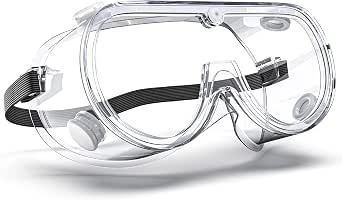


| safety goggles for chemistry lab | UV protection | Fit |
|---|---|---|
| TICONN Anti-Fog Safety Goggles | UV385 | — |
| NoCry Anti-Fog Safety Goggles | UV380 | — |
| Honmein 2-Pack Safety Goggles | None listed | — |
| Safety Goggles Over Glasses | Listed | One size fits most |
| NoCry Clear Anti-Fog Safety Go | Listed | — |
| UKNOW Safety Goggles Over Glas | — | Adjustable; designed to fit over most prescription glasses |
| MELASA Safety Goggles ANSI Z87 | — | — |
| UKNOW Safety Goggles Over Glas | — | Adjustable strap |
| TICONN Anti-Fog Safety Goggles | — | Adjustable elastic strap |
| Anti-Fog Indirectly Vented Lab | — | Adjustable |
| 10 Pack Protective Safety Gogg | Yes | Large; designed to fit over prescription glasses |
| Super More Anti-Fog Protective | — | Adjustable |
| Honeywell Uvex Stealth Safety | 99.9% | — |
| PACIFIC PPE 2 Pack Safety Glas | Yes | Adjustable temples; one size |
| Qbily Anti-Fog Adjustable Lab | — | — |
More Details on Our Top Picks
TICONN Anti-Fog Safety Goggles, Adjustable Over Glasses, ANSI Z87.1 UV385 Eye Protection
For chemistry students or lab workers who need goggles over prescription eyewear, this TICONN model offers a useful balance of full coverage, adjustable fit, and ANSI Z87.1-rated impact protection. Its polycarbonate lenses add UV385 protection, while anti-fog and scratch-resistant coatings address visibility during routine lab work. Compared with the NoCry Clear Anti-Fog Safety Goggles, the TICONN listing gives a specific UV protection level, but provides less detail about venting and materials around the face. The adjustable strap and soft rubber are intended to accommodate different fits; still, the supplied product information warns that prolonged wear may feel less comfortable. It also requires hand washing and air drying, so it is not the simplest choice for frequent, quick cleanup. I’d put it ahead of more basic options when fit flexibility and stated impact protection matter more than extended-wear comfort.
Pros:- ANSI Z87.1 standard and impact-resistant polycarbonate lenses are specified.
- Anti-fog and scratch-resistant coatings support clearer vision during lab tasks.
- Adjustable straps and soft rubber help accommodate different fits.
- Full-coverage design and UV385 protection add useful coverage beyond basic clear lenses.
Cons:- May be less comfortable during prolonged wear.
- Requires hand washing and air drying rather than quick, rough cleaning.
- The supplied details do not specify vent type or how the fit works over different prescription frames.
Best for: Lab users who wear prescription glasses and want adjustable, full-coverage goggles with specified UV385 protection.
Not ideal for: People who wear goggles for long uninterrupted shifts or need a quick-clean design, since prolonged comfort is a stated concern and care requires hand washing and air drying.
- Standard:ANSI Z87.1
- Lens material:Polycarbonate
- UV protection:UV385
- Anti-fog coating:Yes
- Impact resistance:Yes
- Fit features:Adjustable strap; soft rubber
- Coverage:Full coverage
Our verdict“Choose the TICONN if you need adjustable, full-coverage goggles over glasses and value specified impact and UV protection more than all-day comfort.”
NoCry Anti-Fog Safety Goggles Over Glasses, Dust Eye Protection, ANSI Z87.1
The NoCry Over Glasses model is the clearest fit for lab users who want goggles designed specifically to sit over prescription eyewear. Its lightweight build, adjustable non-slip features, rubber gasket, and indirect vents aim to balance a secure fit with airflow. That vent design distinguishes it from the NoCry Clear Anti-Fog Safety Goggles, whose supplied specifications do not list a vent type; it may help with comfort, though the description cautions that vents can admit some dust in very dusty settings. The anti-fog and scratch-resistant lens coatings, UV380 protection, and ANSI Z87.1 designation make this a more thoroughly specified choice than the Honmein two-pack, which lists no UV protection. The main compromise is sizing: it comes in one size, so fit over larger frames or on different face shapes may be uncertain.
Pros:- Designed to fit over prescription glasses, with an adjustable, non-slip fit.
- Indirect vents and a rubber gasket support airflow and a more secure seal.
- Anti-fog and scratch-resistant coatings are specified.
- ANSI Z87.1 designation and UV380 protection are listed.
Cons:- One-size construction may not fit every face or prescription frame.
- Indirect vents may allow some dust into the goggle in very dusty environments.
- The supplied information does not establish how long the scratch-resistant coating lasts.
Best for: Prescription-glasses wearers seeking lightweight, adjustable goggles for routine indoor chemistry lab sessions.
Not ideal for: Users with unusually large glasses or face shapes that need multiple size options, and anyone working in very dusty conditions where indirect vents may admit particles.
- Standard:ANSI Z87.1
- Frame type:Full rim
- Lens coatings:Anti-fog and scratch-resistant
- UV protection:UV380
- Vent type:Indirect
- Gasket:Rubber
- Size:One size
- Weight:0.09 kg
Our verdict“Pick this NoCry model for prescription glasses and a more detailed fit-and-vent specification, provided its one-size design suits your face and frames.”
Honmein 2-Pack Safety Goggles, Anti-Fog Lab Goggles for Men and Women
The Honmein set makes the most sense when a lab needs two basic pairs for shared or occasional tasks, rather than the more detailed feature set of the NoCry models. Adjustable soft frames and a lightweight build are described as comfortable, and the goggles can fit over corrective glasses. Anti-fog and impact-resistant lenses address two practical concerns in a teaching or home lab. The tradeoff is the lens material: this listing specifies acrylic, while the TICONN and both NoCry options specify polycarbonate. Honmein also lists no UV protection and offers fewer construction details, making it a less compelling choice for buyers who prioritize material specifications or a named standard. The product title says two-pack, but the supplied package-quantity field says one, so I would verify what is included before relying on it for shared use.
Pros:- Adjustable soft frames are described as comfortable.
- Large design can fit over corrective glasses.
- Anti-fog and impact-resistant lens features are listed.
- Lightweight construction suits occasional or shared tasks.
Cons:- Acrylic lenses differ from the polycarbonate lenses specified for the TICONN and NoCry options.
- No UV protection is listed.
- The title says two-pack, while the supplied package-quantity field says one.
Best for: Instructors or occasional lab users looking for a simple, adjustable option that can be worn over corrective glasses, after confirming the pack quantity.
Not ideal for: Buyers who require specified UV protection, polycarbonate lenses, or a clearly stated safety standard; the supplied product data does not provide those details.
- Frame type:Full rim
- Lens material:Acrylic
- Frame material:Plastic
- Lens coating:Anti-fog
- UV protection:None listed
- Size:Medium
- Weight class:Lightweight
- Care:Mild soap and water; avoid harsh chemicals
Our verdict“Consider Honmein for basic shared lab use only after confirming the quantity, and choose a more fully specified polycarbonate option if protection details lead your decision.”
Safety Goggles Over Glasses, Anti-Fog Protective Eyewear for Lab
This over-glasses option stands out for buyers who want an adjustable strap and ventilation rather than the simpler build described for the Honmein goggles. Its polycarbonate lenses are listed with anti-fog, scratch-resistant, and impact-protection claims, while the product data also describes chemical resistance and UV protection. Ventilation may make the goggles feel less stuffy during longer tasks, but the listing acknowledges that fogging can still occur in high temperatures. The NoCry Over Glasses model gives a clearer vent specification—indirect vents—whereas this product only says it has ventilation, so I would not assume the same splash-sealing design. Another tradeoff is care: rough wiping can damage the inner anti-fog coating. The title suggests a pair, and the specifications list two items, but the supplied details do not clarify packaging beyond that count.
Pros:- Designed to fit over prescription glasses with an adjustable strap.
- Polycarbonate lenses are listed with anti-fog, scratch-resistant, and impact protection.
- Ventilation may reduce stuffiness during extended tasks.
- UV protection and chemical resistance are listed.
Cons:- Fogging may still occur in high temperatures.
- Rough wiping can damage the inner anti-fog coating.
- The vent design is not specified as indirect, unlike the NoCry Over Glasses model.
Best for: Prescription-glasses wearers who prefer an adjustable, ventilated goggle for varied lab and DIY tasks and can clean the lenses gently.
Not ideal for: People working with frequent high-temperature processes or those who need a clearly specified indirect-vent design and coating suited to rough cleaning.
- Frame type:Full rim
- Lens material:Polycarbonate
- Frame material:PVC
- Lens coating:Anti-fog
- Special feature:Chemical resistant
- UV protection:Listed
- Fit:One size fits most
- Items listed:2
Our verdict“Choose these goggles if you want an adjustable, ventilated fit over glasses, but favor the NoCry model when a specified indirect vent matters more.”
NoCry Clear Anti-Fog Safety Goggles for Lab and Work, ANSI Z87, Adjustable
The NoCry Clear goggles suit lab users who value wide peripheral visibility and coated polycarbonate lenses in a straightforward adjustable design. Their panoramic wraparound lens is intended to give a broad field of view, useful when reading labels or tracking nearby bench activity without turning the head as much. Compared with the NoCry Over Glasses model, this listing highlights panoramic visibility and TPR construction but does not specify an indirect vent or rubber gasket. It may be a better match for routine indoor work than dusty environments, which the product data itself treats as a limitation. The adjustable elastic band helps with fit, though the one-size format can still be uncomfortable on some face shapes. ANSI Z87.1 is claimed in the supplied product information, but ventilation details are sparse, so buyers sensitive to fogging should compare those details before choosing.
Pros:- Panoramic wraparound lenses provide wide-angle visibility.
- Polycarbonate lenses have anti-fog and scratch-resistant coatings.
- Adjustable elastic band supports a flexible fit.
- ANSI Z87.1 certification is claimed in the supplied product information.
Cons:- One-size design may not fit all face shapes comfortably.
- The product is described as less suited to very dusty outdoor environments.
- Ventilation and side-shield details are not provided.
Best for: Indoor lab users who want adjustable goggles with panoramic visibility and polycarbonate lenses.
Not ideal for: People with face shapes that do not suit one-size eyewear, or users in very dusty settings who want specified vents or side shields.
- Standard:ANSI Z87.1 listed
- Frame type:Full rim
- Lens material:Polycarbonate
- Lens coatings:Anti-fog and scratch-resistant
- UV protection:Listed
- Closure:Elastic band
- Size:One size
- Weight:3.52 ounces
Our verdict“Pick these NoCry goggles for broad indoor visibility and coated polycarbonate lenses, but choose the Over Glasses model if a specified indirect vent is a priority.”
UKNOW Safety Goggles Over Glasses, Anti-Fog Safety Glasses with Clear Wraparound Lens, ANSI Z87.1 Protective Eyewear
For chemistry students or lab staff who need to keep their prescription frames on, this UKNOW model makes its over-glasses fit the main selling point. Its stated maximum frame space—5.71 inches wide and 1.85 inches high—gives buyers a useful sizing reference that the MELASA goggles do not provide. The hydrophilic anti-fog coating may help maintain a clearer view in humid conditions, while the adjustable fit offers some flexibility over different frames and faces.
The tradeoff is bulk: this style may feel cumbersome, and very large prescription frames may still be a poor fit. Unlike the MELASA, its listed specifications do not identify ventilation or a second standard. I’d choose it when frame compatibility is the priority, but skip it if you need a low-profile fit or cannot verify that your glasses fall within its stated dimensions.
Pros:- Specified maximum prescription-frame dimensions help buyers check fit before choosing.
- Hydrophilic anti-fog coating is intended to limit fogging in humid conditions.
- Adjustable fit can accommodate differences in head shape and glasses.
- ANSI Z87.1 certification is listed.
Cons:- May not fit prescription frames larger than the stated dimensions.
- Bulky over-glasses design can feel cumbersome during extended lab sessions.
- The provided specifications do not state a ventilation design.
Best for: Chemistry students and lab staff who wear prescription glasses within the stated size limit and want goggles designed to fit over them.
Not ideal for: People with very large frames or anyone who wants compact eyewear; the over-glasses body may feel bulky and may not fit oversized prescriptions.
- Certification:ANSI Z87.1
- Lens:Clear wraparound lens
- Anti-fog coating:Hydrophilic
- Maximum glasses width:5.71 in
- Maximum glasses height:1.85 in
- Fit:Adjustable; designed to fit over most prescription glasses
- Listed protection:Dust, chips, flying particles, and UV rays
Our verdict“Choose this UKNOW pair if your prescription frames fit its stated dimensions and over-glasses compatibility matters more than a compact profile.”
MELASA Safety Goggles ANSI Z87.1 Anti-Fog Protective Lab Goggles
The MELASA stands out for buyers who want a more fully specified goggle rather than relying on a basic fit description. Its polycarbonate impact-resistant lens, soft PVC wraparound frame, and listed ANSI Z87.1 and CE EN166 standards give it a clearer safety-spec profile than the PVC-only details supplied for the indirectly vented lab goggles. Four vents may help reduce moisture buildup during routine sessions, although venting is not the same as a sealed barrier against every lab hazard.
An adjustable elastic strap helps set the fit, but the product data warns that it may not suit every head size. The UKNOW over-glasses model is a more explicit choice for prescription wearers because it gives frame dimensions; MELASA does not list that sizing information. I’d favor MELASA for general lab eyewear when its fit works, but not for buyers who need confirmed glasses clearance or a specified splash-sealing design.
Pros:- Lists both ANSI Z87.1 and CE EN166 standards.
- Polycarbonate lens is described as impact-resistant.
- Four vents may help reduce moisture buildup.
- Soft-edge PVC wraparound frame and adjustable elastic strap are specified.
Cons:- Fit may not work comfortably for every head size.
- No over-glasses dimensions are provided.
- Vents may make it a less suitable choice where a more enclosed barrier is needed.
Best for: Lab students and technicians seeking impact-resistant polycarbonate goggles with listed safety standards and ventilation for routine work.
Not ideal for: Prescription-glasses wearers who need confirmed frame clearance, or anyone needing a documented sealed design for splash-intensive procedures.
- Standards:ANSI Z87.1 and CE EN166
- Lens material:Polycarbonate
- Lens features:Anti-fog, impact-resistant, UV blocking
- Frame:Wraparound PVC with soft edge
- Strap:Adjustable elastic strap
- Ventilation:Four vents
Our verdict“Pick MELASA for a standards-listed, ventilated general-purpose lab goggle if you do not need verified prescription-frame clearance.”
UKNOW Safety Goggles Over Glasses – Anti-Fog Clear Lens – ANSI Z87.1 Certified Eye Protection
This UKNOW model combines an over-glasses design with ventilation ports, making it a practical candidate for lab users who wear prescription frames and tend to struggle with moisture. Its hydrophilic anti-fog coating targets lens fog, while airflow ports offer another route to reducing dampness around the eyes. Compared with the first UKNOW pair in this roundup, this listing specifically mentions ventilation but does not give a maximum glasses size, so buyers have less information for checking frame compatibility.
The specifications list ANSI Z87.1 certification and plastic construction, but provide little detail about durability or the ventilation layout. It also calls for cleaning with mild soap and water, a straightforward routine that still requires regular care to keep the lens clear. I’d choose it over the MELASA when an over-glasses format is the priority, but the MELASA offers more detail on lens material and an additional listed standard.
Pros:- Over-glasses design is suited to users who keep prescription frames on.
- Hydrophilic anti-fog coating is intended to maintain visibility.
- Ventilation ports promote airflow around the eyes.
- Adjustable strap allows fit changes.
Cons:- No maximum prescription-frame dimensions are listed.
- Material and durability information is limited to a general plastic description.
- The listing specifies mild-soap-and-water cleaning, so routine lens care is needed.
Best for: Prescription-glasses wearers seeking adjustable, vented goggles for routine chemistry labs who can check fit in person.
Not ideal for: Buyers who need published glasses dimensions or more detail about construction durability before selecting lab eyewear.
- Standard:ANSI Z87.1 certified
- Design:Over glasses
- Lens:Clear
- Anti-fog coating:Hydrophilic
- Material:Plastic
- Fit:Adjustable strap
- Ventilation:Ventilation ports
- Cleaning:Mild soap and water
Our verdict“Consider this UKNOW pair if you want vented over-glasses goggles, but favor the first UKNOW model when published frame dimensions matter more.”
TICONN Anti-Fog Safety Goggles, HD Clear Eye Protection, ANSI Z87.1 Lab Goggles for Chemistry, Industrial
TICONN is the most explicitly multi-setting option in this group: the listing names laboratory, industrial, woodworking, and kitchen use, alongside an ANSI Z87.1-compliant impact-resistant design. A polycarbonate lens and soft PVC frame pair with four vents and an elastic strap, giving this goggle a more detailed construction profile than the second UKNOW listing. The adjustable strap may help with fit, and the over-glasses claim broadens its appeal, though no prescription-frame measurements are provided.
The main chemistry-lab tradeoff is the ventilation. TICONN notes that gaps can occur with some face shapes and that vents may admit dust or debris, so I would not treat this as a sealed solution for every procedure. Compared with MELASA, it names more kinds of work but lists fewer standards. This makes the most sense for routine lab tasks that benefit from versatile eyewear, not work requiring a close-fitting splash barrier.
Pros:- ANSI Z87.1 impact-resistance compliance is listed.
- Polycarbonate lens and soft PVC frame materials are specified.
- Anti-fog coating and four vents are included in the product details.
- Over-glasses design and elastic strap support varied use and fit.
Cons:- Face-shape differences may leave minor gaps.
- Four vents may admit dust or debris in some environments.
- No specific over-glasses dimensions or second standard are listed.
Best for: Students or technicians who move between routine chemistry lab tasks and general workshop or kitchen work and want one adjustable goggle.
Not ideal for: People who need a reliably close seal for splash-heavy procedures, or prescription-glasses wearers who need confirmed frame dimensions.
- Standard:ANSI Z87.1
- Lens material:Polycarbonate
- Frame material:Soft PVC
- Anti-fog coating:Yes
- Ventilation:Four vents
- Fit:Adjustable elastic strap
- Over-glasses use:Designed to fit over glasses
Our verdict“Choose TICONN for routine lab and workshop versatility, but use a better-sealing option when splash containment is the priority.”
Anti-Fog Indirectly Vented Lab Safety Goggles Over Glasses
This model’s strongest distinction is its stated audience: it is described as suitable for kids, students, and adults, with an adjustable fit and soft, bendable PVC. That makes it a plausible shared-lab option where different users need a flexible goggle, and its indirectly vented design is more lab-oriented than a plainly open-vent layout such as TICONN’s four-vent design. The listing also names protection against splashes, smoke, and dust, which gives buyers a broader hazard description than the UKNOW entries provide.
However, the safety evidence is thinner. No specific impact-resistance rating or certification appears in the supplied data, and anti-fog performance is not described beyond the product name. MELASA is a stronger pick when standards and lens material are priorities; I’d reserve this PVC model for settings where its fit and listed use make sense and the required protection has been checked against the actual lab procedure.
Pros:- Soft, bendable PVC is intended to support a comfortable fit.
- Adjustable design is described for kids, students, and adults.
- Indirect ventilation is specified.
- Listing names splash, smoke, and dust protection.
Cons:- No impact-resistance rating or safety certification is provided in the supplied specifications.
- Anti-fog performance is not detailed.
- Limited technical information makes it harder to compare with standards-listed options such as MELASA.
Best for: Teachers or lab coordinators looking for adjustable PVC goggles for mixed-age student groups, after confirming they meet the lab’s required protection standards.
Not ideal for: Users handling higher-impact hazards or anyone whose lab requires documented impact resistance or a named certification.
- Material:PVC
- Fit:Adjustable
- Ventilation:Indirectly vented
- Stated users:Kids, students, and adults
- Listed uses:Laboratories, workshops, and kitchens
- Listed protection:Splashes, smoke, and dust
- Origin:Imported
Our verdict“Choose this model for adjustable shared student use only after verifying that its protection documentation matches your lab’s requirements.”
10 Pack Protective Safety Goggles for Lab, Construction, and Outdoor Use
I’d pick this 10-pair set for classrooms or shared work areas where having spare goggles on hand matters more than a documented safety rating. Its adjustable strap and stated fit over prescription glasses make it more adaptable across users than the PACIFIC PPE pair, which is not designed to fit over glasses. The product description also lists splash and dust resistance, plus an anti-fog coating, useful features for routine chemistry activities. The tradeoff is that the listing provides no specific industry protection rating, so I wouldn’t treat it as a substitute for eyewear required by a lab’s safety policy. The large sizing may not suit every face, and the set’s broad construction and outdoor positioning is less lab-specific than the Qbily goggles.
Pros:- Ten pairs make it practical to equip a group or keep spares available.
- Adjustable strap allows fit changes between users.
- Designed to fit over prescription glasses.
- Anti-fog coating and stated splash and dust resistance suit routine lab tasks.
Cons:- No specific industry rating for dust or splash protection is provided.
- Large sizing may not fit every head or face securely.
- Product positioning spans many uses, with limited chemistry-specific detail.
Best for: Chemistry teachers and lab coordinators who need multiple pairs for occasional, supervised activities and want options that can fit over prescription glasses.
Not ideal for: Labs that require a documented impact or splash-protection standard, or users who need a close fit tailored to a smaller face.
- Quantity:10 pairs
- Frame type:Full rim
- Lens coating:Anti-fog
- Materials:PVC and PC
- Fit:Large; designed to fit over prescription glasses
- Strap:Adjustable
- Listed features:Anti-droplet and dust resistant
- UV protection:Yes
Our verdict“Choose this set for shared, lower-demand lab use when quantity and over-glasses fit matter more than a stated protection rating.”
Super More Anti-Fog Protective Safety Goggles Clear Lens Wide-Vision
The wide-vision clear lens is the main reason I’d shortlist these for bench work: a broad, distortion-free view can make it easier to monitor glassware and nearby equipment without shifting your head as much. The listing also describes an adjustable fit and anti-fog coating, giving it a more lab-oriented profile than the PACIFIC PPE glasses, which lack an anti-fog coating. Compared with the Qbily goggles, though, Super More gives less specific detail about splash protection and its materials, so I’d treat its protection claims cautiously when selecting eyewear for chemical handling. It is positioned for laboratory use alongside painting and gardening, but the listing doesn’t provide impact-resistance information or a safety standard. That makes it a better match for routine work than demanding hazards.
Pros:- Wide-vision clear lens is described as distortion-free.
- Anti-fog coating supports visibility during routine tasks.
- Adjustable fit can help accommodate different users.
- Listed for laboratory use as well as other general-purpose activities.
Cons:- Impact-resistance details are not provided.
- The listing gives limited information about its materials and protection standard.
- Fit may not suit every face shape.
Best for: Students and hobbyists doing routine chemistry demonstrations who value a clear, wide field of view and adjustable fit.
Not ideal for: Users handling higher-risk chemicals or working where documented impact resistance or a specified protection standard is required.
- Lens type:Clear
- Lens view:Wide vision
- Anti-fog coating:Yes
- Fit:Adjustable
- Material description:Eco-friendly materials
- Listed uses:Laboratory, painting, gardening, and woodworking
Our verdict“Choose Super More for routine lab tasks where a wide clear view is the priority, but look elsewhere when protection specifications need to be documented.”
Honeywell Uvex Stealth Safety Goggles with Clear HydroShield Anti-Fog Lens, Grey Body & Neoprene Headband
For chemistry work where fogged lenses interrupt a task, I’d favor the HydroShield anti-fog lens and customizable headband on this Uvex model. The listing claims fog-free performance lasting up to 60 times longer than standard anti-fog coatings, giving it a more specific fog-control pitch than the Super More goggles. It also describes impact and splash protection and a gap-free fit, features that make it a more serious candidate for lab use than the PACIFIC PPE wraparound glasses. The tradeoffs are practical: the listing says replacement lenses may require a separate purchase, and a snug, enclosed fit may not suit everyone. I’d still check the exact protection markings against lab rules rather than relying only on the product description.
Pros:- HydroShield coating is described as providing extended fog-free performance.
- Listing specifies impact and splash protection.
- Adjustable, latex-free neoprene headband supports a customizable fit.
- Polycarbonate lens and flexible elastomer frame are suited to workplace wear.
Cons:- Replacement lenses may require a separate purchase.
- The snug fit may feel too tight or too loose for some users.
- The listing’s protection claims should be checked against the lab’s required markings.
Best for: Lab workers who spend long sessions in warm or humid conditions and want a secure goggle fit with a specified anti-fog feature.
Not ideal for: Buyers seeking inexpensive group eyewear, a loose fit, or a product with replacement lenses included.
- Lens:Clear toric polycarbonate
- Lens coating:HydroShield anti-fog; impact-resistant coating listed
- Fog-performance claim:Up to 60 times longer fog-free performance
- Frame:Elastomer
- Headband:Adjustable, latex-free neoprene
- UV protection:99.9%
- Visible light transmission:90%
- Care:Clean with mild soap and water; dry thoroughly
Our verdict“Choose the Uvex Stealth for extended, fog-prone lab sessions when fit and sustained visibility matter more than easy lens replacement.”
PACIFIC PPE 2 Pack Safety Glasses for Men and Women, ANSI Z87 Safety Goggles with Scratch-Resistant Wraparound Lenses, Adjustable Lab Goggles, UV Protection
I’d treat these as wraparound safety glasses, not sealed chemistry goggles. Their polycarbonate lenses, scratch-resistant coating, adjustable temples, and stated ANSI Z87 designation make them a different kind of pick from the enclosed Uvex Stealth goggles, which are described as providing splash protection and a gap-free fit. For quick, lower-splash tasks, PACIFIC PPE’s lighter, open design may feel less enclosing and still offers UV protection. That openness is also the central tradeoff: the listing says they don’t fit over prescription glasses, and there’s no anti-fog coating, so humid lab conditions may cloud the lenses. I wouldn’t choose them for chemical splashes or any procedure where a lab policy calls for goggles that seal around the eyes.
Pros:- Polycarbonate lenses and frame are described as durable.
- Scratch-resistant lens coating helps with repeated handling.
- Adjustable temples support fit changes.
- Listing states ANSI Z87 and UV protection.
Cons:- Not designed to fit over prescription glasses.
- No anti-fog coating is listed.
- Open wraparound glasses do not provide the same enclosed splash coverage as goggles.
Best for: Users with compatible prescription-free vision who need lightweight eyewear for brief, low-splash lab tasks and occasional outdoor use.
Not ideal for: Chemistry students handling liquids, people wearing prescription glasses, or anyone whose lab requires enclosed splash goggles.
- Package quantity:2
- Frame type:Semi-rimless
- Lens and frame material:Polycarbonate
- Lens coating:Scratch resistant
- Fit:Adjustable temples; one size
- UV protection:Yes
- Listed safety designation:ANSI Z87
- Weight:3.8 ounces
Our verdict“Choose these for brief, low-splash tasks if you need light wraparound eyewear, not for chemical handling that calls for sealed goggles.”
Qbily Anti-Fog Adjustable Lab Safety Goggles
Qbily keeps its pitch close to the task: anti-fog, splash-proof lab goggles with an adjustable strap and lightweight construction. That focus makes it a more direct chemistry-class option than the 10-pack goggles, whose listing emphasizes several unrelated uses and doesn’t name a protection standard. The adjustable strap can help users get a steadier fit, while the claimed splash protection speaks more directly to routine liquid handling than the PACIFIC PPE glasses’ open wraparound design. The main uncertainty is limited product detail: the listing gives no material, lens construction, or safety certification information. It also notes that limited ventilation may contribute to fogging in humid conditions, despite the anti-fog claim. I’d check lab requirements before relying on it for higher-risk chemical work.
Pros:- Designed specifically for laboratory use.
- Anti-fog feature is listed.
- Splash-proof design is intended to help guard against chemical splatter.
- Lightweight build and adjustable strap support extended wear and fit adjustment.
Cons:- No safety certification or protection rating is provided in the product data.
- Limited ventilation may contribute to fogging in humid conditions.
- Material and lens construction details are not specified.
Best for: Students and teaching labs seeking straightforward, adjustable goggles for routine chemistry activities where the lab has confirmed they meet its requirements.
Not ideal for: Workers who need a documented protection standard, detailed material specifications, or eyewear for humid conditions where ventilation is a concern.
- Intended use:Laboratory
- Lens feature:Anti-fog
- Splash protection:Splash-proof
- Strap:Adjustable
- Build:Lightweight
- Origin:Imported
Our verdict“Choose Qbily for routine chemistry-class use when a simple adjustable design fits your needs and your lab confirms its protection level is acceptable.”

How We Picked
I compared the 15 listed goggles around the decisions that matter at a chemistry bench: coverage and fit, compatibility with prescription glasses, anti-fog features, lens visibility, adjustability, and likely ease of cleaning and reuse. I also separated individually specified models from multipacks and from options whose names give less detail, since buyers should not treat sparse product information as proof of equivalent performance. For chemistry use, a claimed impact standard alone does not confirm that a goggle is suitable for a particular splash hazard, so I gave weight to clear labeling and the need to verify manufacturer instructions.
The ordering reflects the role each option appears best positioned to fill, rather than treating every pair as interchangeable. The Uvex Stealth leads for its named HydroShield feature and headband; over-glasses models rank well for prescription wearers; and pack options stand out for shared-use situations, with fit and task-specific suitability still requiring checks. Products with broad or less specific descriptions are useful candidates to compare, but I would verify their ventilation design, coverage, and certification details before relying on them for chemical handling.
Factors to Consider When Choosing Safety Goggles For Chemistry Labs
Choosing lab goggles is less about collecting features and more about matching the protection design to the work, the wearer, and the lab’s rules. I’d use these factors to narrow the field before deciding between a premium personal pair, an over-glasses design, or a multipack.
Match the goggle to the chemical splash risk
Start with your lab’s hazard assessment and written PPE requirements, not the product title. A goggle described as safety or lab eyewear may still have limits on splash protection, and an ANSI marking does not automatically answer whether it suits every chemical exposure. Check the manufacturer’s documentation for the intended hazard and use, including any restrictions on liquid splash protection. For higher-risk handling, follow your institution’s requirements for goggles, face shields, or both. A common mistake is choosing a pair based on impact protection alone when the procedure calls for a sealed or indirectly vented splash design.
Fit matters more than a one-size label
A goggle only protects as intended when it sits securely and stays in place through normal head movement. Check the seal around the brow, temples, and cheeks without forcing the frame against the face. Prescription wearers should confirm that the goggle fits over their actual frames, since frame width and depth can vary widely. Adjustable straps can help with stability, but tightening too much can create pressure or shift the seal. If goggles are shared, a model that fits several face shapes may be more practical than one that feels secure on only one wearer.
Choose ventilation with the task in mind
Ventilation can help reduce heat and fog, while a more protective vent arrangement may limit the path for splashes to enter. Those goals can conflict, so do not assume that more airflow is always better for wet chemistry. Look for the exact vent design in the manufacturer’s specifications, and check whether the lab permits it for your procedure. If you work through long sessions or move between temperature conditions, fog control may matter more for usable vision, but it cannot compensate for a poor fit. Avoid modifying vents or adding films unless the manufacturer approves the change.
Treat anti-fog claims as one part of visibility
Anti-fog coatings can make it easier to keep a clear view, but performance can vary with humidity, heat, cleaning, and wear. Lens clarity also depends on scratches, residue, and whether the goggles fit without interfering with prescription eyewear. Follow the care instructions rather than reaching for household cleaners, which may damage coatings or lens materials. If a coating wears down, the goggles may become less usable even if the frame remains intact. For frequent lab work, compare replacement guidance and lens-care requirements alongside the advertised anti-fog feature.
Decide between a personal pair and a multipack
A personal pair makes sense when one wearer needs a consistent fit and can follow a regular cleaning routine. Multipacks are convenient for teaching labs, visitors, or occasional use, but they call for a plan to inspect and clean each pair between users. Shared goggles should not be issued without checking that straps, seals, and lenses remain in good condition. Consider storage too: pairs kept loose in a drawer can collect dust or suffer scratches that reduce visibility. The lower-effort purchase is not always the lower-effort choice if upkeep and replacement are overlooked.
Check compatibility with the rest of your PPE
Goggles have to work alongside prescription glasses, respirators, face shields, and any other equipment your task requires. A bulky over-glasses design may interfere with a respirator seal or sit awkwardly under a face shield. Try the full PPE combination before lab work, following your workplace’s fit and safety procedures. For prescription needs, do not assume that clear lenses or a roomy frame solve every compatibility issue. If equipment clashes, ask the lab safety officer for an approved alternative instead of removing or repositioning required protection.
Frequently Asked Questions
Can I use any ANSI Z87.1 goggles for chemical splash work?
No. A listed ANSI Z87.1 claim does not by itself confirm that a goggle is rated or recommended for every chemical splash task. Check the product’s manufacturer documentation for the specific protection type and any limits, then compare that information with your lab’s hazard assessment. Some procedures may require a particular vent arrangement or additional face protection. Follow your institution’s PPE rules when product descriptions leave the intended use unclear.
Are over-glasses goggles a good choice for prescription eyewear?
They can be, but compatibility depends on both the goggle and your frames. Measure or try the fit with your regular glasses and check that the goggles do not press the frames into your face or leave gaps around the seal. Also test whether the combination works with any respirator or face shield you must wear. If the fit shifts during movement or feels uncomfortable, ask about approved prescription safety eyewear or another lab-approved option.
Should I choose indirectly vented goggles for chemistry?
That depends on the procedure and the manufacturer’s stated protection. Indirect ventilation is designed differently from open ventilation, but the label alone does not show whether a particular model meets your lab’s splash requirements. Fog control, comfort, and protection need to be weighed together for the chemicals and handling involved. Check the product documentation and your lab’s PPE rules before choosing a vent style.
When does a multipack make more sense than buying one pair?
A multipack can suit teaching spaces, occasional users, or labs that issue eye protection to visitors. It is less useful if the pairs do not fit the people who need them or if there is no process for cleaning and inspection between uses. Shared goggles should be checked for damaged straps, worn seals, scratched lenses, and residue. For frequent individual use, a well-fitting personal pair may be easier to maintain and track.
How do I know when safety goggles need replacing?
Follow the manufacturer’s inspection and replacement guidance, and remove goggles from use if the lens is cracked, deeply scratched, or too cloudy for clear vision. Replace or repair them if the strap no longer holds the goggles securely or the seal is damaged. Chemical exposure may also affect materials, so consult the product instructions after contact rather than assuming that rinsing is enough. If you are unsure whether a pair remains protective, ask your lab safety officer before using it again.
Conclusion
For most buyers, the Honeywell Uvex Stealth is my best overall choice among these options when its fit and manufacturer-stated use match the lab task; its named HydroShield lens and neoprene headband set it apart. For a premium-focused pick, choose the same Uvex model if you value its specific fog-control feature, while prescription wearers should begin with an over-glasses design such as NoCry or UKNOW and verify the fit with their frames. For value and shared use, compare the Honmein 2-pack and 10-pack option, giving priority to fit, care, and verified protection details rather than pack size alone. For beginners, the adjustable TICONN or NoCry models offer straightforward starting points, provided their documentation suits the work. For any chemical-specific hazard, choose only after checking the manufacturer’s use guidance and your lab’s PPE rules.