Many sunscreens contain chemicals like oxybenzone and octinoxate that harm coral reefs by disrupting reproduction and causing bleaching. These substances weaken reef structures and make corals more vulnerable to disease and stress. Switching to mineral sunscreens with zinc oxide or titanium dioxide can help protect marine life. By choosing reef-safe products and using sunscreen responsibly, you support coral health. Discover more ways you can make a difference for our oceans and reefs.
Key Takeaways
- Chemicals like oxybenzone and octinoxate in sunscreens harm coral reproduction and cause bleaching.
- Mineral sunscreens with zinc oxide or titanium dioxide are safer for coral reefs.
- Applying reef-safe sunscreen before water entry reduces chemical leaching into marine environments.
- Frequent reapplication increases chemical release, so minimal reapplication helps protect reefs.
- Using physical barriers and reef-safe products supports coral reef health and sustainability.

Many sunscreens contain chemicals that can harm coral reefs, posing a significant threat to these fragile ecosystems. When you swim or snorkel in the ocean wearing sunscreen, some of those chemicals wash off and enter the water, where they can cause serious damage. The chemical impacts on reefs are profound; certain compounds like oxybenzone, octinoxate, and parabens are known to be particularly harmful. These substances can interfere with coral reproduction, cause bleaching, and disrupt the growth of coral larvae. Over time, this weakens the entire reef structure, making it more vulnerable to disease and environmental stressors. Understanding these chemical impacts is *crucial* for reef protection because it highlights the need for more sustainable sunscreen choices and regulations that limit harmful ingredients.
Many sunscreens contain harmful chemicals like oxybenzone and parabens that damage coral reefs.
As a conscious beachgoer, you play a *vital* role in reef protection by choosing products that do not contain these damaging chemicals. Mineral sunscreens, which use zinc oxide or titanium dioxide as active ingredients, are safer options because they sit on the skin’s surface and reflect UV rays rather than absorbing them into the water. These mineral-based sunscreens tend to be free of the chemical impacts associated with traditional formulations and are less likely to harm marine life. When shopping for sunscreen, look for labels that specify “reef-safe” or “coral-friendly,” and always apply them well before entering the water to give the product time to settle on your skin.
You should also be aware of how often you reapply sunscreen. Reapplying too frequently increases the chances of chemicals leaching into the water, especially if you’re swimming or sweating. Using physical barriers like UPF-rated clothing, hats, and sunglasses can reduce your dependence on sunscreen, further decreasing the chemical impacts on the environment. Educating yourself about reef protection helps you make better choices that support the health of coral ecosystems. It’s not just about protecting your skin but also about safeguarding the vibrant, diverse habitats that countless marine species depend on.
Ultimately, your actions matter. By opting for reef-safe sunscreens, minimizing chemical impacts, and practicing responsible reef protection, you contribute to the preservation of coral reefs. These ecosystems are *vital*—they support marine biodiversity, protect coastlines from erosion, and sustain local economies. Your conscious decisions can help *ensure* that future generations get to enjoy the beauty and benefits of healthy coral reefs. Small changes in your sunscreen routine can make a big difference, turning your beach days into acts of reef protection rather than harm. Choosing environmentally friendly products is an essential step toward reducing chemical pollution and supporting marine health.
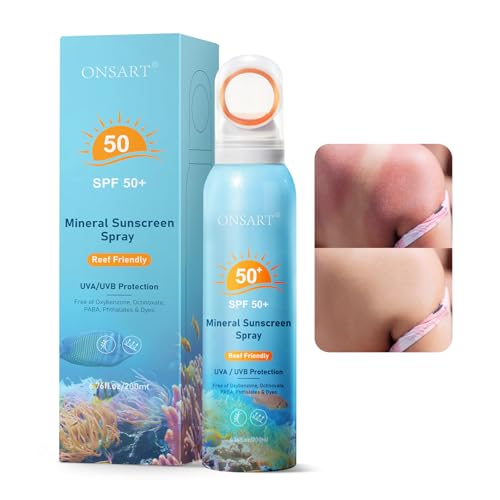
Reef Safe Sunscreen Spray SPF 50, Zinc Oxide Mineral Sunscreen Spray, Broad Spectrum UVA/UVB Protection, 360° Spray, Lightweight & Water Resistant, 6.76oz/200ml
- 360° Spray Nozzle: Provides even coverage with micro spray outlets
- Reef Safe Formula: Free from oxybenzone and octinoxate, eco-friendly
- SPF 50 Broad Spectrum: Mineral protection with 24% zinc oxide
As an affiliate, we earn on qualifying purchases.
As an affiliate, we earn on qualifying purchases.
Frequently Asked Questions
How Do Different Sunscreen Ingredients Affect Coral Reefs?
Different sunscreen ingredients, especially certain UV filters, can harm coral reefs by causing coral bleaching. Chemical UV filters like oxybenzone and octinoxate are known to damage corals’ DNA and disrupt their growth. When you use sunscreens with these ingredients, you increase the risk of coral bleaching, which weakens reefs and endangers marine life. Opt for mineral sunscreens with zinc oxide or titanium dioxide to protect your skin and reefs safely.
Are Mineral Sunscreens Safer for Marine Life Than Chemical Ones?
Think of mineral sunscreens as a gentle tide that barely stirs the ocean floor. Yes, they’re safer for marine life because they cause less marine toxicity and reduce the risk of coral bleaching. Unlike chemical sunscreens, mineral options sit on the skin’s surface, reflecting UV rays without seeping into the water. This makes them a smarter choice to protect your skin and keep the oceans vibrant and healthy.
What Are the Best Practices for Reef-Safe Sun Protection?
To protect reefs, you should choose mineral sunscreens with zinc oxide or titanium dioxide, as they’re reef-safe and reduce ocean pollution. Apply sunscreen generously 15 minutes before swimming, and reapply often, especially after swimming or sweating. Follow local sunscreen regulations and avoid aerosol sprays, which can drift into the water. Wearing protective clothing and seeking shade also minimize sunscreen use, helping preserve marine ecosystems.
Do All Sunscreens Impact Coral Reefs Equally?
Sunscreens don’t all impact coral reefs equally. You’d do well to explore sunscreen manufacturing processes and boost your consumer awareness. Some formulations contain chemicals like oxybenzone and octinoxate that harm corals, while mineral-based sunscreens with zinc oxide or titanium dioxide are reef-friendly. By choosing consciously, you protect both your skin and the sea’s silent, stunning creatures. Your awareness makes a meaningful difference in reef preservation efforts.
How Long Do Sunscreen Chemicals Stay in Marine Environments?
Sunscreen chemicals can persist in marine environments for weeks to months, depending on factors like chemical degradation rates and water conditions. You should know that some chemicals degrade slowly, leading to marine bioaccumulation, which means they build up in marine organisms over time. This persistence increases the risk of long-term ecological impacts, so choosing reef-safe sunscreens helps reduce chemical buildup and protects marine life.
Conclusion
You might be surprised to learn that over 14,000 tons of sunscreen wash into the oceans each year, harming delicate coral reefs. By choosing reef-safe sunscreens, you can help protect these vibrant ecosystems from damage caused by harmful chemicals. Every small action counts—so next time you hit the beach, opt for environmentally friendly products. Together, we can preserve the stunning beauty and biodiversity of coral reefs for future generations.