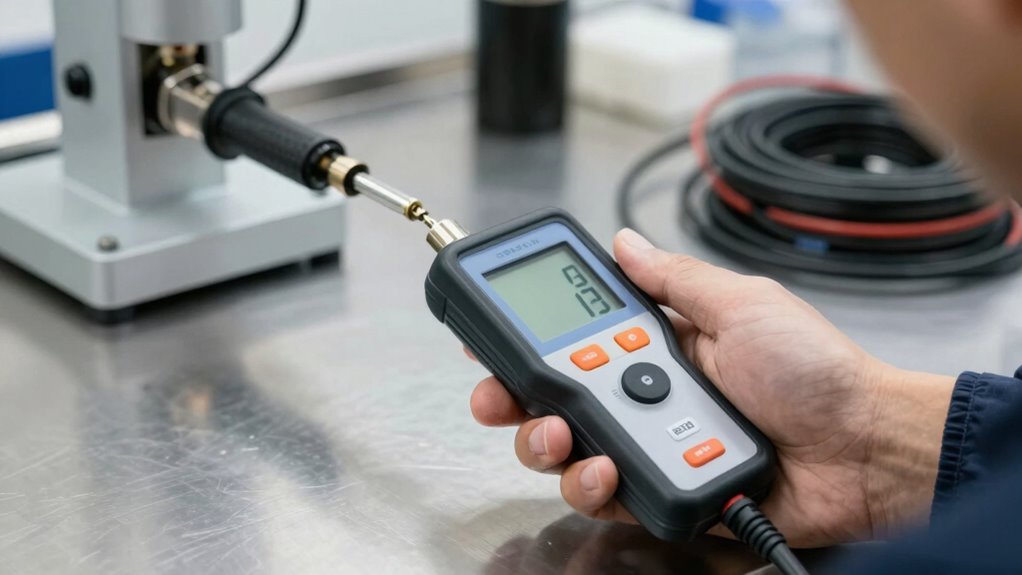

When measuring coating thickness, magnetic methods work best on ferromagnetic materials like steel, using magnetic fields to gauge thickness quickly and accurately. Eddy current techniques are ideal for non-ferrous metals like aluminum, relying on electromagnetic induction to determine coating depth without contact. Both approaches have pros and cons depending on your material. If you want to understand which method fits your needs better, keep exploring the differences and applications behind each technique.
Key Takeaways
- Magnetic methods measure coating thickness on ferromagnetic metals like steel by detecting changes in magnetic response.
- Eddy current testing is used for non-ferrous metals, using electromagnetic induction to assess coating thickness without contact.
- Magnetic tools are highly accurate and ideal for ferromagnetic materials, while eddy current devices are fast and suitable for non-ferrous surfaces.
- Magnetic techniques require physical contact with the surface, whereas eddy current testing is non-contact and quicker.
- Choosing the right method depends on the metal type and coating material for precise and efficient measurement.
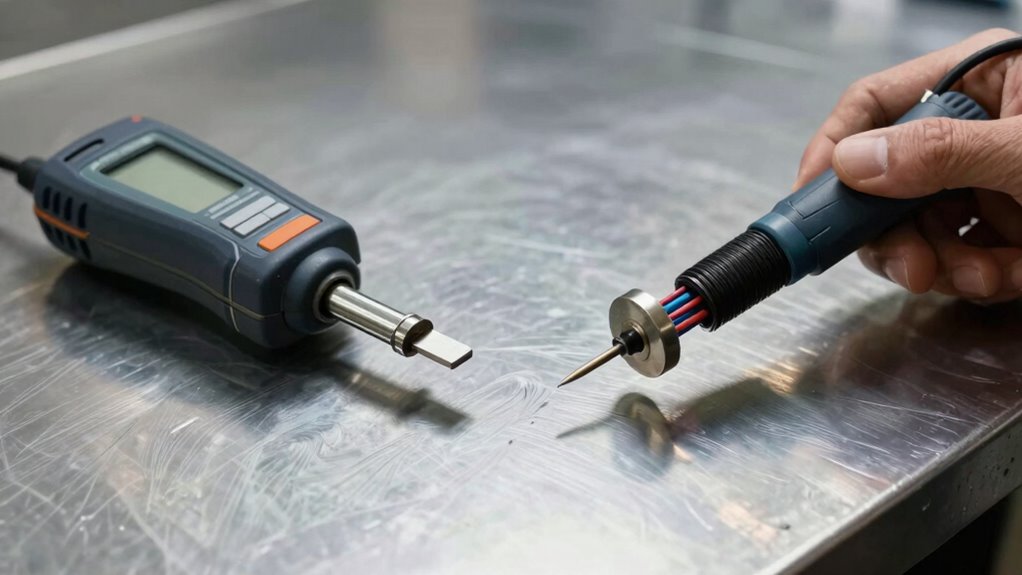
Measuring coating thickness is essential for ensuring quality and durability in a wide range of industries, from automotive to aerospace. When you’re checking how thick a coating is, two common methods come into play: magnetic principles and eddy current. Understanding how each works helps you choose the right tool for your specific needs.
Measuring coating thickness ensures quality across industries using magnetic or eddy current methods.
If you’re working with ferromagnetic materials like steel or iron, magnetic-based measurement techniques are often your best bet. These methods rely on the magnetic principles of attraction and permeability. Essentially, you use a magnetic gauge that applies a magnetic field to the surface. The device then measures how the magnetic field interacts with the coating and substrate. Because magnetic permeability changes with coating thickness, you can determine the exact layer thickness by analyzing the magnetic response. This process is quick, non-destructive, and highly accurate when dealing with ferromagnetic substrates. It’s especially useful in manufacturing environments where rapid, reliable measurements are necessary.
On the other hand, if you’re dealing with non-ferrous metals such as aluminum, brass, or copper, eddy current testing becomes your go-to method. This technique is based on the principles of electromagnetic induction. When you bring an eddy current probe close to the conductive surface, an alternating current flows through the coil, creating a changing magnetic field. This changing magnetic field induces eddy currents in the material beneath the coating. The presence and thickness of the coating influence the flow of these eddy currents, which in turn affect the probe’s impedance. By measuring these changes, your device can accurately determine the coating’s thickness. Eddy current testing is non-contact, fast, and highly sensitive to even thin coatings, making it ideal for non-ferrous materials.
Both methods have their advantages and limitations. Magnetic principles are more suited for ferromagnetic substrates, offering high accuracy and straightforward use. Eddy current testing, however, shines when working with non-ferrous materials, providing precise measurements without touching the surface. Your choice depends on the substrate material and the coating type. Additionally, advancements in innovative testing technologies continue to improve the precision and ease of coating measurements across various industries.

Paint Thickness Gauge CM-205FN for Cars – Digital Coating Thickness Meter, Auto Fe/NFe Detection, 0.1 μm Resolution, 0–1500 μm (0–59.1 mils), ±(3%+2 μm) Accuracy, Backlit LCD
- High Accuracy Measurement: 0.1 μm resolution with ±3% accuracy
- Easy & Fast Operation: Factory calibrated with backlit LCD
- Automatic Fe/NFe Detection: Detects steel, iron, aluminum, copper automatically
As an affiliate, we earn on qualifying purchases.
As an affiliate, we earn on qualifying purchases.
Frequently Asked Questions
How Do Environmental Factors Affect Measurement Accuracy?
Environmental factors can profoundly impact your measurement accuracy by causing environmental interference and affecting calibration stability. Temperature changes, humidity, and electromagnetic interference may distort readings, making measurements unreliable. To minimize these issues, you should regularly calibrate your instruments, shield them from external interference, and monitor environmental conditions. Staying mindful of these factors helps guarantee your coating thickness measurements stay accurate and consistent over time.
Can These Methods Be Used on Non-Metallic Coatings?
Ever wondered if these methods work on non-metallic coatings? Magnetic and eddy current techniques mainly measure metallic properties, so they have significant measurement limitations on non-metallic coatings. Typically, they can’t accurately assess thickness because non-metallic layers don’t influence magnetic fields or eddy currents the way metals do. For non-metallic coatings, you’ll need alternative methods like ultrasonic or optical measurements that aren’t restricted by these limitations.
What Is the Typical Cost Difference Between the Two Methods?
The cost comparison shows magnetic methods generally have higher equipment pricing due to their specialized sensors and magnetic materials, while eddy current devices tend to be more affordable, making them ideal for budget-conscious projects. You’ll find that magnetic equipment may cost several thousand dollars, whereas eddy current tools are often less expensive. Consider your application needs and budget to choose the best method, balancing precision with equipment pricing.
How Long Does Calibration of Each Device Usually Take?
Imagine this: calibrating your device is like tuning up a vintage radio—it takes a bit of time, usually from 15 minutes to an hour. Magnetic devices often need quick calibration procedures, ensuring device longevity, while eddy current devices might take a tad longer. Proper calibration is essential to keep measurements accurate and extend your device’s life, so dedicate enough time for a thorough setup.
Are There Safety Considerations When Using These Measurement Techniques?
When using magnetic or eddy current measurement devices, safety precautions are essential. You should always wear proper protective gear and make certain the equipment is well-maintained. Operator training is vital to prevent accidents, as improper handling can cause injuries or device damage. Always follow manufacturer guidelines and safety protocols, and avoid measuring in hazardous environments without appropriate safety measures. Proper training and precautions keep you safe during coating thickness measurements.
Conclusion
When choosing between magnetic and eddy current methods, think of magnetic testing as your go-to for ferrous metals, offering deep insights but limited to magnetic materials. Eddy current, on the other hand, excels with non-conductive or complex surfaces, providing quick, non-contact measurements. Both methods have their strengths, but understanding their differences helps you pick the right tool for the job. Ultimately, your choice depends on the material and precision you need—so choose wisely.