To prevent ultra-low freezer failures, you should set up reliable alarm systems that notify you immediately of issues like temperature deviations or power failures, and guarantee these alarms are regularly tested. Maintain detailed backups of all temperature and system data, and validate sensors, alarms, and backup power sources periodically to confirm they work correctly. Incorporating redundancy adds extra safety, helping you stay prepared for unexpected problems. Keep these steps in mind to ensure your samples stay safe, and discover more essential tips as you continue.

Prime made for students and young adults
- Fast, free delivery for dorm and study essentials
- Prime Video and Amazon Music included
- Member-only deals
Key Takeaways
- Regularly test and verify alarm systems for accurate alerts on temperature deviations or equipment issues.
- Maintain validated, reliable backup power sources and data backups to ensure continuous operation and data integrity.
- Perform routine validation of sensors, alarms, and backup systems to detect and address potential failures proactively.
- Implement redundant safety measures, such as secondary alarms and backup systems, to prevent catastrophic freezer failure.
- Keep detailed logs of maintenance, validations, and alarm events to facilitate troubleshooting and regulatory compliance.
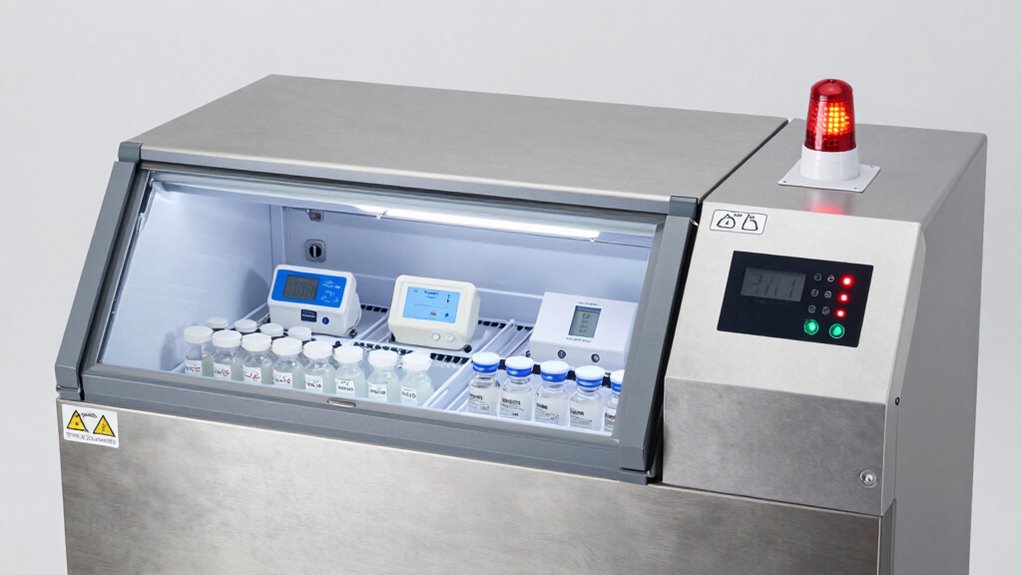
Ultra-low freezers are essential for preserving sensitive biological samples and pharmaceuticals, but their failure can lead to significant data loss and financial setbacks. To prevent this, you need a reliable system for cryogenic safety and precise temperature monitoring. Cryogenic safety isn’t just about preventing accidents; it’s about guaranteeing the freezer operates within safe parameters to avoid catastrophic failures. Proper training and safety protocols help minimize risks associated with handling extremely cold substances, but technology plays an indispensable role in ongoing safety management. Temperature monitoring is fundamental—without continuous, accurate readings, you won’t detect anomalies early enough to intervene.
You should invest in high-quality sensors and automated monitoring systems that provide real-time data. These systems alert you immediately if the temperature deviates from the set range, giving you a chance to act before samples are compromised. Remember, even slight fluctuations can damage sensitive materials, so your monitoring setup must be rigorous and reliable. Regular calibration and maintenance of temperature sensors are indispensable, ensuring that readings remain accurate over time. If your monitoring system integrates alarms—visual, auditory, or both—you’ll get instant notifications of potential issues, enabling swift response. These alarms serve as your first line of defense against freezer failure, alerting you to problems like door openings, power interruptions, or sensor malfunctions.
Invest in quality sensors and alarms for real-time, reliable freezer monitoring and swift issue detection.
Backing up data related to your freezer’s performance is equally important. Maintain detailed logs of temperature readings, alarm history, and maintenance activities. This documentation not only helps in troubleshooting but also provides a record for regulatory compliance. Validate your backup procedures periodically to guarantee data integrity and accessibility in case of failure. A thorough validation includes testing backup systems and recovery procedures, confirming they work seamlessly when needed.
Additionally, perform routine validation checks on your entire freezer setup. These checks include verifying the accuracy of temperature sensors, the functionality of alarms, and the effectiveness of backup power supplies. Regular audits help identify potential issues before they escalate, ensuring continuous operation. When you validate these components, you’re proactively preventing failures rather than reacting to them after the fact. Incorporating redundant systems can further enhance reliability by providing fail-safes in case primary systems malfunction.
Ultimately, safeguarding your ultra-low freezer involves a combination of cryogenic safety practices, rigorous temperature monitoring, reliable alarm systems, and validated backup procedures. By staying proactive and vigilant, you reduce the risk of costly failures that compromise your samples and data. This comprehensive approach ensures your samples remain preserved, your operations stay compliant, and your investment remains protected against unforeseen failures.
ultra low freezer temperature alarm system
As an affiliate, we earn on qualifying purchases.
As an affiliate, we earn on qualifying purchases.
Frequently Asked Questions
How Often Should Ultra-Low Freezers Be Inspected for Potential Failures?
You should schedule maintenance inspections for ultra-low freezers at least quarterly to guarantee peak performance. Regular inspection frequency helps you catch potential failures early, preventing data loss or sample spoilage. During these checks, verify alarm functionality, temperature stability, and backup systems. Consistent maintenance scheduling also includes calibrations and cleaning, reducing the risk of unexpected freezer failures and maintaining compliance with safety standards.
What Are the Most Common Causes of Ultra-Low Freezer Malfunctions?
Think of your freezer as a vintage jukebox, prone to mechanical wear over time. The most common causes of malfunctions are temperature fluctuations, often due to faulty sensors or power issues, and mechanical wear of components like compressors and fans. These issues can lead to inconsistent temperatures or complete failure, so regular maintenance and monitoring are essential to catch early signs before costly breakdowns occur.
How Can Staff Be Effectively Trained to Respond to Freezer Alarms?
You should train staff by clearly explaining emergency protocols and conducting regular staff drills for freezer alarms. Make certain they know how to quickly assess the situation, activate alarms, and follow step-by-step procedures. Reinforce training with hands-on practice, so responses become second nature. Regular drills help staff stay prepared, reduce panic, and ensure timely action to protect sensitive samples during freezer failures.
Are There Industry Standards for Ultra-Low Freezer Failure Prevention?
Think of industry standards as the GPS guiding your freezer safety journey. Yes, there are industry guidelines and safety protocols for ultra-low freezer failure prevention. These standards help you establish alarms, backups, and validation procedures to keep your samples safe. Following them guarantees you’re aligned with best practices, minimizing risks of failure. Regularly reviewing and updating your protocols based on these standards keeps your freezer operations reliable and compliant.
What Are Cost-Effective Backup Solutions for Long-Term Freezer Power Outages?
For cost-effective backup solutions during long-term freezer power outages, you should consider battery backups and thermal monitors. Battery backups provide immediate power support, preventing temperature spikes, while thermal monitors alert you to temperature changes, enabling quick response. Combining these tools guarantees continuous monitoring and temporary power, safeguarding your samples without high costs. Regularly validate these systems to confirm they’re functioning properly, giving you peace of mind during outages.
Conclusion
By implementing alarms, backups, and thorough validation, you can turn your ultra-low freezer from a ticking time bomb into a fortress of reliability. Think of it as planting sturdy roots that hold strong against unexpected storms. Regular checks and proactive measures ensure your samples stay safe, and failure becomes just a distant shadow. With these strategies, you keep your freezer’s heart beating steady, safeguarding your essential data like a lighthouse guiding ships safely home.
Halloween Picks
halloween
As an affiliate, we earn on qualifying purchases.