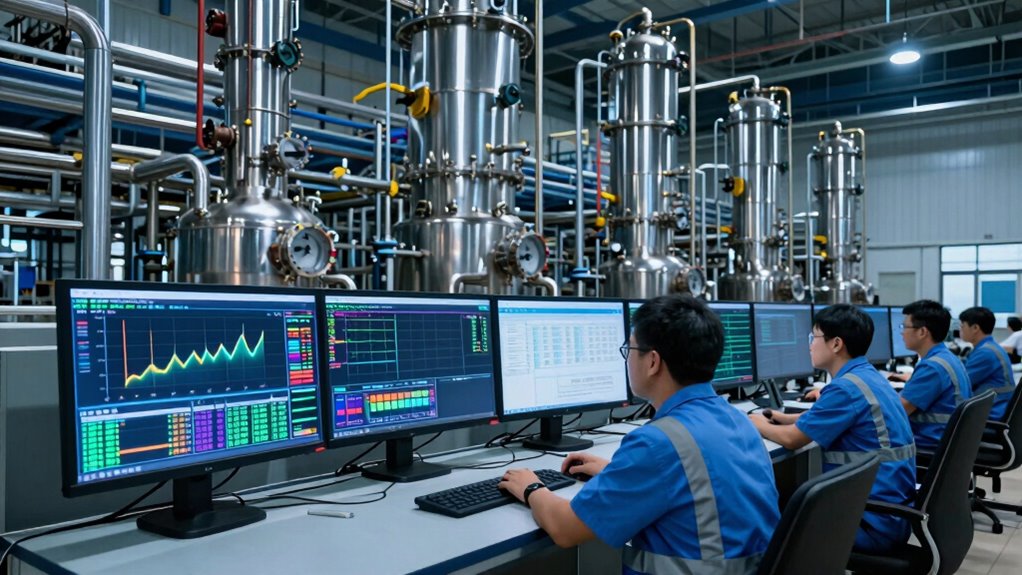

To think about OEE in a chemical plant, focus on its three components: availability, performance, and quality. These factors give you a clear picture of your plant’s overall efficiency and highlight areas needing improvement. By monitoring equipment reliability and adopting proactive maintenance, you can minimize downtime and boost output. Recognizing how OEE reflects your plant’s health helps you target process improvements. If you want to explore effective strategies, keep exploring ways to optimize your operations.
Play games included with Prime
Start a Prime free trial and play with Amazon Luna on your devices.
As an affiliate, we earn on qualifying purchases.
Key Takeaways
- View OEE as a comprehensive indicator of plant health, encompassing availability, performance, and quality metrics.
- Use OEE data to identify bottlenecks and inefficiencies for targeted process improvements.
- Prioritize equipment reliability through predictive maintenance to enhance overall OEE.
- Integrate proactive maintenance strategies to prevent downtime and maintain consistent production.
- Balance process optimization efforts with equipment reliability to maximize productivity and minimize waste.
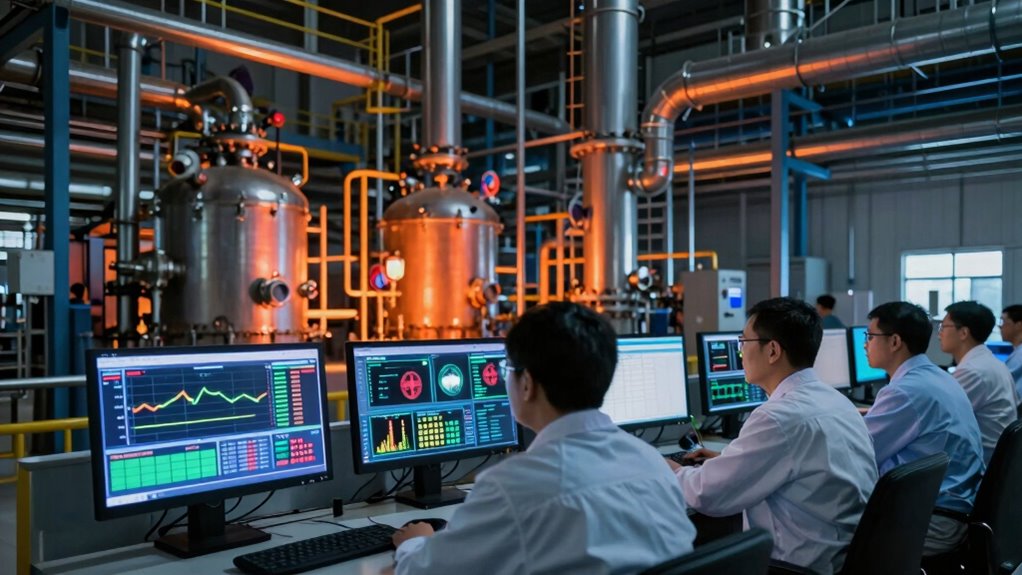
Have you ever wondered how chemical plants measure their production efficiency? It’s not just about how much product they make; it’s also about how effectively they utilize their equipment and processes. This is where Overall Equipment Effectiveness (OEE) comes into play. OEE provides a thorough snapshot of how well a plant’s operations are performing by combining factors like availability, performance, and quality. To truly grasp its significance, you need to understand how it ties into process optimization and equipment reliability. When you focus on process optimization, you’re aiming to streamline every step, eliminate waste, and reduce downtime. OEE acts as a crucial metric that highlights areas where your processes can improve, whether it’s speeding up production, reducing defects, or minimizing unplanned stoppages. If your OEE score is low, it’s a clear sign that something’s hindering your plant’s efficiency, prompting you to investigate further and implement targeted improvements. Recognizing the role of equipment reliability in maintaining consistent performance is essential for sustainable operations. Equipment reliability is another critical piece of the puzzle. Reliable equipment ensures your processes run smoothly without unexpected interruptions. When equipment frequently breaks down or operates inconsistently, your OEE drops because availability suffers. Maintaining equipment reliability means regular inspections, preventive maintenance, and swift repairs, all of which keep your production line running at peak performance. A high level of reliability translates into less downtime, more consistent performance, and better product quality—all factors that positively influence your OEE. By continuously monitoring equipment health, you can predict failures before they happen and plan maintenance accordingly, avoiding costly surprises. Additionally, embracing predictive maintenance techniques can further enhance equipment reliability and reduce unexpected failures. Moreover, understanding the interdependence of maintenance strategies and operational performance can help align maintenance efforts with overall production goals, further boosting OEE. Furthermore, understanding how equipment reliability impacts your OEE encourages a proactive approach rather than a reactive one. Instead of waiting for a breakdown to fix issues, you’re constantly working to prevent them. This proactive stance supports process optimization because it ensures that your operations are not only running efficiently but also sustainably. When your equipment is reliable, your processes become more predictable, allowing you to identify inefficiencies and optimize workflows confidently. To optimize equipment reliability, integrating real-time data analysis can be highly effective in identifying potential issues early. Ultimately, thinking about OEE in a chemical plant involves recognizing that it’s more than just a number—it’s a reflection of your entire operation’s health. By focusing on process optimization and equipment reliability, you can improve your OEE, boost productivity, and ensure your plant operates at its highest potential.
predictive maintenance tools for chemical plants
As an affiliate, we earn on qualifying purchases.
As an affiliate, we earn on qualifying purchases.
Frequently Asked Questions
How Can OEE Improve Safety in a Chemical Plant?
You can improve safety in a chemical plant by using OEE to identify areas where equipment uptime affects safety practices. By fostering a safety culture that emphasizes proactive risk mitigation, you encourage operators to report issues early. This approach helps prevent accidents, reduces hazards, and promotes continuous safety improvements. As OEE highlights inefficiencies, you can address underlying problems that might compromise safety, ensuring a safer, more reliable operation overall.
What Are Common Challenges in Implementing OEE?
You face the colossal challenge of implementing OEE, where even tiny data inaccuracies can derail efforts faster than a runaway train. Employee engagement often feels like herding cats, making it tough to gather reliable data and sustain enthusiasm. Overcoming these hurdles requires unwavering focus on data accuracy and motivating your team to see OEE as a game-changer. Without this, your OEE improvements might crash and burn before they even take off.
How Does OEE Relate to Environmental Compliance?
OEE directly impacts environmental compliance because it highlights your plant’s efficiency and potential waste. By monitoring environmental metrics alongside OEE, you can identify areas where inefficiencies lead to excess emissions or resource use, helping you meet regulatory standards. Improving OEE guarantees ideal operations, reduces environmental impact, and keeps your plant aligned with regulatory standards, ultimately supporting sustainable practices while maintaining productivity.
Can OEE Be Used to Predict Maintenance Needs?
Yes, OEE can predict maintenance needs through predictive analytics. Imagine your plant’s OEE data as a dashboard, highlighting subtle shifts that signal equipment wear. By analyzing these patterns, you can optimize maintenance scheduling, preventing breakdowns before they happen. This proactive approach minimizes downtime, boosts efficiency, and keeps your plant running smoothly. OEE becomes not just a performance metric, but a valuable tool for strategic maintenance planning.
How Does OEE Influence Product Quality Control?
OEE directly influences product quality control by highlighting process inefficiencies that can cause defects. When you focus on process optimization, you can reduce variability and improve consistency. Data analysis of OEE metrics helps you identify root causes of quality issues, enabling targeted improvements. By continuously monitoring OEE, you guarantee your chemical processes run smoothly, ultimately leading to higher product quality and fewer reworks or waste.
Conclusion
So, next time you’re obsessing over OEE numbers, remember: it’s not about turning your chemical plant into a well-oiled machine but about pretending you’re running one. After all, who needs actual efficiency when you can bask in the glow of perfect metrics? Just keep a straight face, nod knowingly at the data, and enjoy the illusion of control. Because in the end, it’s all about looking good on paper, isn’t it?
Fall yard work Picks
leaf blowers
As an affiliate, we earn on qualifying purchases.