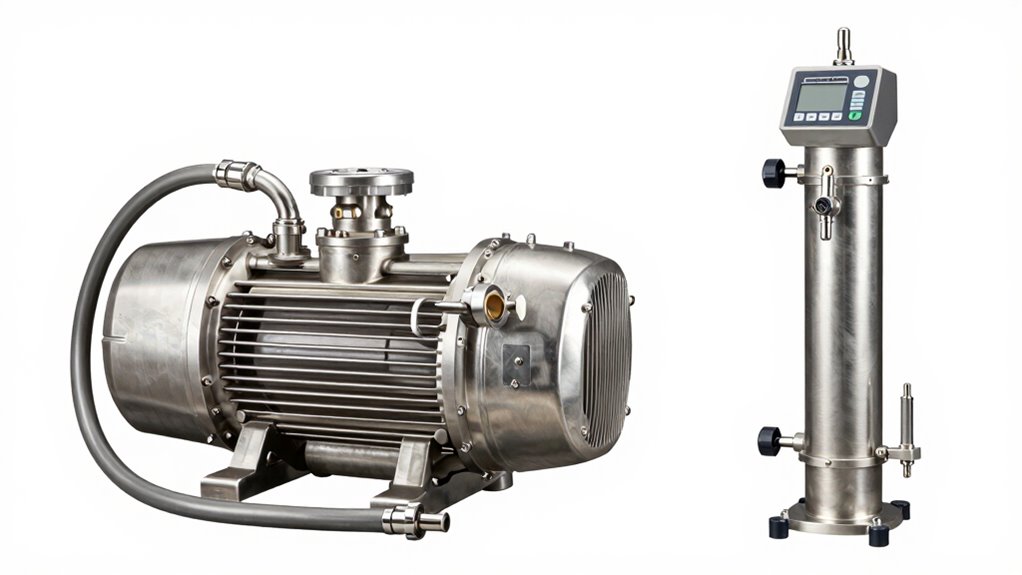

When choosing between AODD and metering pumps, consider your fluid’s properties and your application’s needs. AODD pumps excel with viscous, abrasive, or solids-laden liquids and are easy to maintain, making them ideal for tough environments. Metering pumps offer precise flow control for chemical dosing, perfect for applications requiring high accuracy. To make the best choice, weigh factors like fluid compatibility, maintenance, and dosing precision—continue to explore to find the perfect fit.

Get school and study supplies delivered free — and shop member deals
- Fast, free delivery on millions of items
- Access to Prime Big Deal Days deals on October 6–7
- Prime Video, Amazon Music and more included
Key Takeaways
- Select AODD pumps for handling viscous, abrasive, or solids-laden fluids requiring durability and ease of maintenance.
- Use metering pumps for precise, steady chemical dosing, especially in applications demanding high accuracy.
- Consider fluid compatibility, including viscosity and particulates, to determine the appropriate pump type.
- Prioritize operational ease and maintenance needs; AODD pumps generally require less upkeep than metering pumps.
- Match pump choice with process requirements: durability and simplicity versus precision and dosing accuracy.
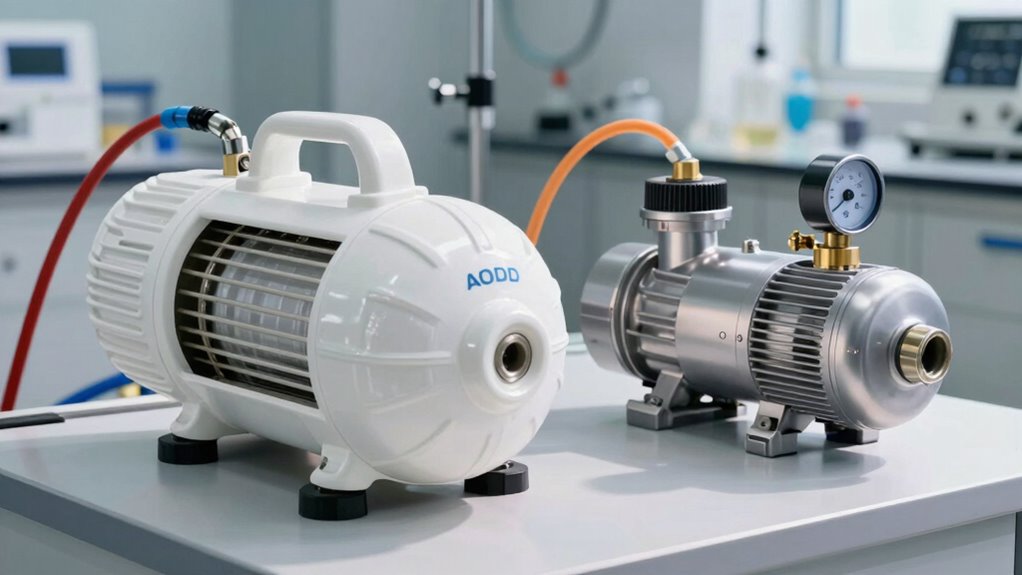
When choosing the right pump for your application, understanding the differences between AODD (Air-Operated Double Diaphragm) pumps and metering pumps is essential. One of the key factors to consider is fluid compatibility. AODD pumps are highly versatile when it comes to handling various fluids, including viscous, abrasive, or solids-laden liquids. Their robust construction allows them to manage corrosive chemicals and sludges without significant wear. In contrast, metering pumps excel when precise fluid handling is critical. They are designed to deliver accurate, steady flow rates suitable for chemicals that require strict dosing, such as pharmaceuticals or food products. If your application involves fluids that vary in viscosity or contain particulates, AODD pumps might be your best choice. However, for chemicals that demand exact measurements, metering pumps are often more suitable.
Maintenance requirements are another essential aspect to evaluate. AODD pumps are generally simple to maintain due to their straightforward design. They have fewer delicate parts and are built for durability in tough environments, which means less downtime and lower maintenance costs over time. Regular inspections of diaphragms and valves are necessary, but these are typically easy to replace without specialized tools. On the other hand, metering pumps usually require more meticulous maintenance because of their precision components, such as pistons, plungers, or gears. They often need calibration to guarantee consistent flow rates, and their seals and internal parts may need frequent replacement depending on the chemicals being pumped. While they might demand more attention, metering pumps provide the advantage of maintaining accuracy over longer periods, which is critical for applications where dosing precision is non-negotiable.
Ultimately, your choice hinges on your application’s specific needs. If you prioritize durability, ability to handle challenging fluids, and easier maintenance, AODD pumps are a solid choice. Conversely, if your process demands precise chemical dosing and consistent flow accuracy, a metering pump will serve you better. Both pump types have their strengths and limitations, so understanding your fluid compatibility needs and maintenance requirements helps you make an informed decision. By aligning these factors with your operational goals, you can select a pump that not only performs efficiently but also minimizes downtime and maintenance costs, ensuring smooth and reliable chemical transfer in your process.
As an affiliate, we earn on qualifying purchases.
Frequently Asked Questions
Which Pump Type Is More Energy-Efficient for Continuous Operation?
For continuous operation, metering pumps are generally more energy-efficient because they precisely control flow rates and consume less power during steady operation. AODD pumps, while versatile, tend to have higher energy consumption due to their reciprocating action and air-driven mechanism. If your priority is energy efficiency in continuous processes, metering pumps are the better choice, as they optimize power usage and guarantee consistent chemical transfer.
How Do Maintenance Requirements Differ Between AODD and Metering Pumps?
You’ll find that AODD pumps generally require less frequent maintenance due to their robust design and high pump durability, making them suitable for harsh conditions. In contrast, metering pumps demand more regular maintenance because of their precision components that can wear out over time. While AODDs are built for durability, metering pumps need consistent upkeep to guarantee accurate dosing and peak performance, impacting your maintenance schedule accordingly.
Can These Pumps Handle Corrosive or Abrasive Chemicals Effectively?
You’ll find that both AODD and metering pumps can handle corrosive and abrasive chemicals effectively, but material compatibility is crucial. AODD pumps excel with durable, corrosion-resistant materials, making them suitable for harsh chemicals. Metering pumps, with their precise control and specialized seals, also handle corrosives well when equipped with compatible materials. Overall, choosing pumps with the right material compatibility guarantees durability and reliable chemical transfer, even with challenging substances.
What Are the Typical Installation Costs for Each Pump Type?
The cost comparison for installing AODD and metering pumps varies based on your setup. AODD pumps usually have lower initial costs and offer greater installation flexibility, fitting into diverse environments easily. Metering pumps tend to be more expensive upfront due to their precision and specialized components, but they provide accurate chemical dosing. Consider your application’s needs and budget to choose the pump that offers the best balance of cost and flexibility.
How Do Pump Sizes Vary for Small Versus Large-Scale Applications?
Your choice of pump size can be a game-changer, from tiny lab setups to massive industrial plants. For small-scale applications, pumps with lower capacity variability and scaled-down dimensions are ideal, offering precise control. Larger applications demand bigger pumps with increased capacity, capable of handling high-volume transfer efficiently. Scaling considerations are essential here, as pump sizes must match the application’s demands, ensuring peak performance without over-specifying or underpowering your system.
Conclusion
When choosing between AODD and metering pumps, you hold the power to select the perfect tool for your chemical transfer needs. Think of it as choosing the heartbeat of your operation—each pump type offers unmatched precision or robustness. While AODD pumps excel in high-volume applications, metering pumps deliver pinpoint accuracy. Ultimately, selecting the right pump isn’t just a decision; it’s a game-changing move that can elevate your process from good to legendary in impact.
Halloween Picks
halloween
As an affiliate, we earn on qualifying purchases.