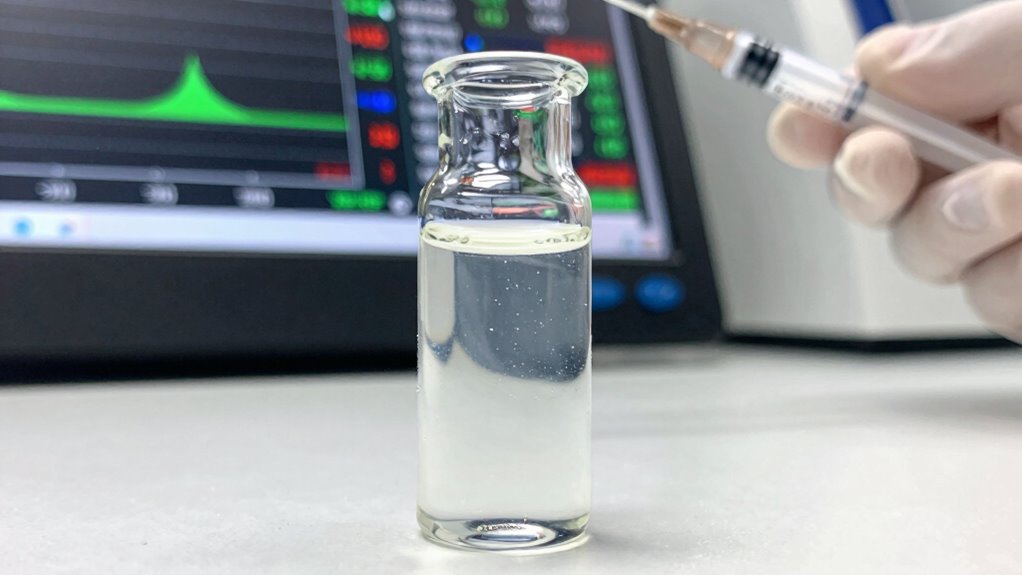

Injectable formulations often fail stability testing because of incompatibility between active ingredients and excipients or preservatives, leading to chemical or physical changes like precipitate formation or degradation. Poor storage conditions, such as high temperature, humidity, or light exposure, can accelerate these issues. Deviations from proper pH or container interactions may also cause instability. By understanding these factors, you’ll discover how formulation and storage control help maintain product safety and effectiveness over time.

Prime made for students and young adults
- Fast, free delivery for dorm and study essentials
- Prime Video and Amazon Music included
- Member-only deals
Key Takeaways
- Incompatibility between active ingredients and excipients can cause precipitation or degradation during stability testing.
- Improper storage conditions, such as high temperature or humidity, accelerate instability in injectable formulations.
- pH deviations may lead to physical changes or chemical breakdown, resulting in stability failures.
- Light exposure can induce photodegradation of sensitive compounds, compromising stability.
- Physical changes like cloudiness, particulates, or color shifts indicate stability issues in injectable products.

Injectable formulations play a essential role in delivering medications directly into the bloodstream or tissues, offering rapid and targeted therapeutic effects. However, despite their importance, many injectable products fail stability testing, often due to issues rooted in formulation compatibility and storage conditions. When preparing an injectable, you need to guarantee that all ingredients are compatible; otherwise, the formulation can undergo undesirable chemical or physical changes. For example, certain active pharmaceutical ingredients (APIs) may react with excipients or preservatives, leading to precipitate formation or degradation. Compatibility isn’t just about the active drug—it also involves excipients, solvents, and container materials, all of which must work harmoniously to maintain stability over time. If any component is incompatible, the formulation can become unstable, resulting in reduced efficacy or safety concerns.
Ensuring ingredient compatibility is crucial to maintaining the stability and safety of injectable formulations.
Storage conditions play a pivotal role in the stability of injectable formulations. You must control factors like temperature, light, humidity, and pH, because these parameters influence how well the product withstands time. For instance, exposure to elevated temperatures can accelerate degradation pathways, causing the active ingredient to break down faster than intended. Similarly, improper storage under high humidity may lead to hydrolysis or microbial contamination, compromising sterility and safety. Light exposure can also induce photodegradation, especially in sensitive compounds, which is why many injectables come in opaque or amber containers. You should always adhere to recommended storage conditions specified by stability studies, as deviations can cause the product to fail stability testing, even if it’s initially well-formulated. Proper storage conditions help maintain the integrity of the formulation, ensuring the product remains safe and effective throughout its shelf life. Ensuring proper storage conditions is also vital in preventing contamination, which can severely impact the safety profile of injectable medications. Additionally, understanding stability-indicating parameters helps in designing appropriate storage and handling procedures to prolong product life.
Other factors contributing to stability failures include the formulation’s pH and the physical state of the ingredients. Maintaining ideal pH levels is essential because deviations can cause precipitation or chemical instability. Additionally, the physical form—whether the solution is clear, cloudy, or contains particulates—must stay consistent throughout shelf life. If incompatibilities arise, such as the formation of particulates or color changes, it indicates underlying stability issues. Ensuring proper formulation compatibility and storage conditions is crucial to prevent such failures and extend the product’s shelf life. Regular stability testing and monitoring are also necessary to detect early signs of instability before they compromise safety or efficacy.
In essence, the failure of injectable formulations during stability testing often boils down to overlooked aspects of formulation compatibility and storage conditions. Guaranteeing that all components are compatible and that storage environments are stringently controlled are indispensable steps in developing a stable, effective injectable product. By paying close attention to these factors, you can greatly improve the chances of your formulation passing stability tests, ultimately safeguarding patient safety and therapeutic efficacy.
Popular right now

Roborock Q10 S5+ Robot Vacuum and Mop with Self-Emptying Station, 10,000 Pa Suction

Vitamix Nano Personal Blender with SmoothiePilot, Black

DREAME D20 Air Plus Robot Vacuum and Mop with Auto-Empty Dock
As an affiliate, we earn on qualifying purchases.
Frequently Asked Questions
How Do Storage Conditions Specifically Affect Injectable Stability?
You need to carefully control storage conditions because temperature fluctuations can cause chemical degradation or physical changes in injectables, reducing efficacy. Light exposure accelerates degradation of sensitive components, leading to instability. When you store injectables properly—keeping them at consistent, appropriate temperatures and protecting them from light—you help preserve their stability, ensuring they remain safe and effective until use.
What Role Do Container Materials Play in Formulation Stability?
Did you know that over 30% of injectable formulation failures are linked to container materials? Container compatibility plays a vital role in stability, as incompatible materials can cause degradation or reduce shelf life. Material leachates from certain plastics or glass can interact with formulations, affecting potency or safety. Choosing the right container guarantees stability and minimizes risks, ultimately safeguarding patient health and maintaining drug efficacy.
How Can Endotoxin Levels Influence Stability Testing Outcomes?
Endotoxin levels can substantially influence stability testing outcomes because endotoxin interference may cause false readings or degrade formulation components, compromising sterility assurance. High endotoxin levels can lead to inaccurate results, masking true stability issues or suggesting problems that don’t exist. By controlling endotoxin levels, you guarantee more reliable stability testing, maintain sterility assurance, and accurately assess how your injectable formulation performs over time.
Are There Differences in Stability Testing for Biologics Versus Small Molecules?
Yes, stability testing differs for biologics versus small molecules because biologics are more sensitive to formulation pH and excipient compatibility. You need to carefully optimize the formulation pH to prevent protein denaturation or aggregation, while ensuring excipients support stability without causing degradation. Small molecules are generally more robust, but you still must evaluate how formulation pH and excipients affect their shelf life, making tailored testing essential for each type.
What Are Common Analytical Methods Used Beyond Standard Testing?
Ever wondered how you guarantee your injectable’s stability? You turn to advanced analytical techniques like chromatography, mass spectrometry, and spectroscopy to detect subtle degradation or impurities. Alongside standard quality assays, these methods provide detailed insights into molecular integrity, aggregation, or oxidation. They’re essential for confirming product stability beyond just basic tests, helping you catch issues early and guarantee your formulation remains safe and effective throughout its shelf life.
Conclusion
Just as Icarus’s wax wings failed when soaring too close to the sun, injectable formulations falter without proper stability testing. If you overlook this critical step, your product’s integrity and safety are at risk, much like Icarus’s flight ended in disaster. Remember, stability testing is your safeguard against unforeseen failures. It’s your wings—without it, your injectable formulation might just fall from the sky, risking everything you’ve worked so hard to build.