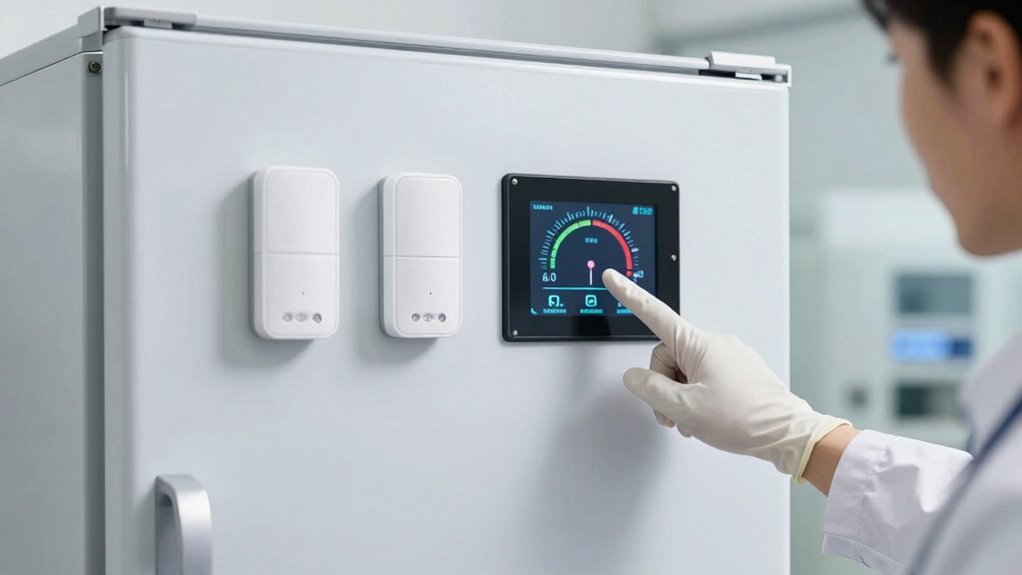

Before trusting wireless freezer alerts, validate sensor calibration by comparing readings with a trusted thermometer, and verify data transmits reliably without gaps. Check that power sources are maintained, batteries are fresh, and low-battery alerts work. Test network strength across storage areas, and confirm the software provides clear notifications and logs. Additionally, assess the build quality for durability and confirm support options are available. Continuing will help you uncover essential tips for a dependable monitoring system.
Listen free for 30 days with Audible
Thousands of audiobooks and originals — cancel anytime.
As an affiliate, we earn on qualifying purchases.
Key Takeaways
- Verify sensor calibration and accuracy with trusted thermometers to ensure reliable temperature readings.
- Regularly test data transmission for gaps or weak signals to ensure timely alerts.
- Check battery health and power management to prevent unexpected system failures.
- Confirm network connectivity across storage areas for consistent communication and alert delivery.
- Assess sensor durability and support options to maintain system reliability in harsh environments.

Have you ever worried about the safety of your stored perishables or the efficiency of your refrigeration system? Wireless freezer monitoring systems promise peace of mind by providing real-time alerts on temperature fluctuations, but before you rely on these alerts, it’s essential to validate their accuracy and reliability. One of the first things to check is temperature calibration. If the sensors aren’t properly calibrated, you might receive false alarms or, worse, miss critical temperature breaches. Make sure that the sensors are calibrated according to the manufacturer’s instructions, and consider periodically verifying their accuracy with a trusted thermometer. Proper calibration guarantees that the data you receive accurately reflects the actual conditions inside your freezer, preventing unnecessary disruptions or spoilage. Additionally, understanding how the system collects and transmits data can help you identify potential weak points in your monitoring setup. Regularly testing data transmission helps ensure there are no gaps in your monitoring coverage.
Ensure freezer sensor calibration and verify accuracy regularly for reliable temperature monitoring.
Another critical aspect to evaluate is battery life. Wireless sensors operate on batteries, and if their power sources run out unexpectedly, you lose the entire monitoring system’s effectiveness. Before trusting the alerts, find out how long the batteries are supposed to last under normal conditions. Some systems feature low-battery notifications, but it’s best to confirm that these alerts are functional and timely. A sensor with a short battery life or unreliable power management can result in blind spots, leaving you unaware of temperature deviations until it’s too late. Regularly checking battery status and establishing a maintenance routine to replace or recharge batteries is imperative for continuous, dependable monitoring. It’s also helpful to review battery management strategies to ensure consistent performance. Incorporating proper maintenance routines can further enhance the longevity and reliability of your sensors. Staying proactive in these areas minimizes the risk of unexpected failures.
Beyond calibration and battery life, you should validate the system’s connectivity and data transmission reliability. Wireless systems depend on stable network connections to send alerts promptly. Test the system’s range and ensure it can communicate effectively from all storage areas. If there are dead zones or weak signals, your alerts could be delayed or lost altogether. It’s also wise to verify that the system’s software or app is easy to use, with clear notifications and logs to track historical data. This way, you can quickly identify issues, confirm trends, and take appropriate action. Ensuring connectivity stability is fundamental to maintaining continuous and reliable monitoring.
Finally, don’t forget to review the system’s overall build quality and support options. A durable sensor withstands the cold environment, vibrations, and potential moisture. Additionally, check whether the manufacturer offers responsive technical support and updates. This proactive validation helps you trust that your wireless freezer monitoring system will deliver accurate, timely alerts, protecting your inventory and maintaining food safety standards. In reality, thorough validation of calibration, battery life, connectivity, and support ensures you’re not just relying on technology, but trusting it to work when it matters most.
wireless freezer temperature monitoring system
As an affiliate, we earn on qualifying purchases.
As an affiliate, we earn on qualifying purchases.
Frequently Asked Questions
How Often Should Freezer Temperature Be Calibrated?
You should calibrate your freezer temperature at least once every six months to guarantee temperature accuracy. Regular calibration helps maintain reliable readings and prevents false alerts or undetected issues. If your freezer experiences frequent door openings, power fluctuations, or maintenance, consider more frequent calibration. Always verify calibration with a certified thermometer, and document each session to track temperature accuracy over time, ensuring your monitoring system remains trustworthy and effective.
What Are Common Causes of False Alerts?
False alerts often occur due to sensor calibration issues or improperly set alert thresholds. If sensors aren’t correctly calibrated, they might send inaccurate temperature readings, triggering unnecessary alerts. Similarly, if alert thresholds are too narrow or too broad, you’ll get false alarms or missed issues. Regularly check and adjust sensor calibration and guarantee your alert thresholds align with your freezer’s ideal temperature range to reduce false alerts and improve reliability.
How Secure Is Wireless Data Transmission?
Wireless data transmission is generally secure if you implement strong data encryption and maintain robust network security. You should guarantee that your devices use advanced encryption protocols, like WPA3, and regularly update firmware to patch vulnerabilities. Additionally, segment your network to limit access and monitor for suspicious activity. When these measures are in place, you can trust that your wireless freezer monitoring data remains protected against unauthorized access.
Can the System Operate During Power Outages?
During a power outage, your system’s operation hinges on robust power outage protocols and emergency backup systems. If these aren’t reliable, you risk losing critical temperature data and freezer integrity. Guarantee your monitoring system has backup power sources like batteries or generators that kick in instantly. Test these backup systems regularly. Without them, even a minor outage could cause costly disruptions and compromised product safety.
Is There a Backup Plan for Sensor Failure?
Yes, you should have a backup plan for sensor failure. You need sensor redundancy to guarantee continuous monitoring if one sensor fails. Implement emergency protocols that specify how to respond when sensor alerts are lost or unreliable. Regularly test these protocols and maintain spare sensors. This way, you can quickly switch to backup sensors and avoid risking your freezer contents, keeping your system reliable and your response swift.
Conclusion
Before trusting your wireless freezer alerts, remember that they’re only as good as the validation behind them. Think of it like a compass—you need to make sure it’s calibrated correctly before heading into uncharted territory. By verifying sensor accuracy, connectivity, and response times, you’re setting yourself up for success. Don’t let false alarms be the siren song that leads you astray—trust, but verify, and keep your cold chain secure.
Fall Picks
fall essentials
As an affiliate, we earn on qualifying purchases.