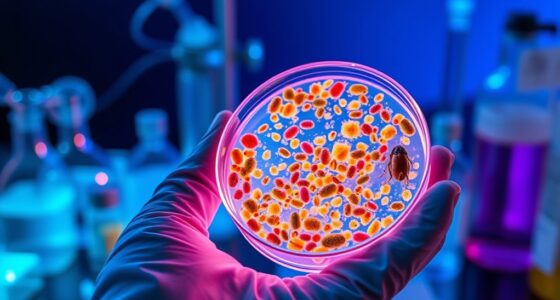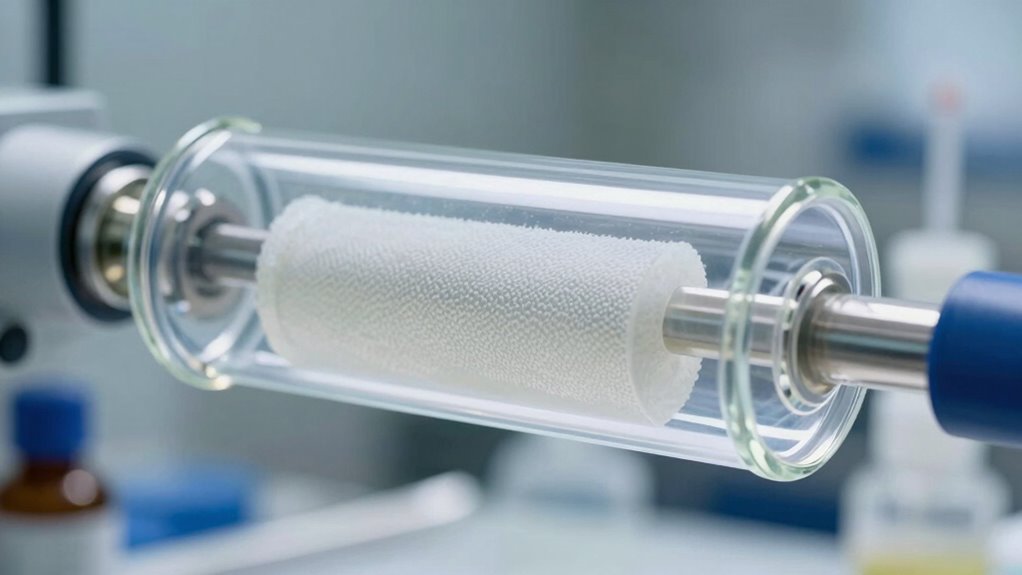
Sterile filtration relies on membranes acting as molecular sieves, which block microorganisms and contaminants by combining physical, electrostatic, and adsorption mechanisms. Pore size determines which particles are retained, while surface charge helps attract or repel certain contaminants. Material choice impacts compatibility with different liquids or chemicals. These properties work together to guarantee effective sterilization and product purity. To understand more about how these mechanisms precisely work together, keep exploring this fascinating process.

Prime made for students and young adults
- Fast, free delivery for dorm and study essentials
- Prime Video and Amazon Music included
- Member-only deals
Key Takeaways
- Membranes act as selective barriers based on pore size, physically blocking microorganisms and particulates.
- Surface charge of membranes influences electrostatic interactions, aiding in contaminant removal.
- Material composition determines chemical compatibility and influences filtration mechanisms like adsorption.
- Pore size and density control flow rate and filtration efficiency, balancing removal of tiny microbes and process throughput.
- Advances in membrane technology improve selectivity, enhancing sterilization and ensuring product safety.

Sterile filtration is a critical process used to remove microorganisms and particulates from liquids, guaranteeing they are free from contamination. At the heart of this process are membranes that act as selective barriers, allowing only specific particles or molecules to pass through. Understanding the properties of these membranes is vital because their membrane properties—such as pore size, material composition, and surface charge—dictate how effective the filtration will be. These properties determine what gets retained and what flows freely, directly impacting the sterility and purity of the final product. When you’re selecting a membrane, you want to contemplate how its characteristics align with your filtration needs, whether it’s removing bacteria, viruses, or other contaminants.
The filtration mechanisms involved in sterile filtration are driven by the physical and chemical interactions between the membrane and the particles in the liquid. As the liquid passes through the membrane, different filtration mechanisms come into play. Sieving or size exclusion is the most straightforward mechanism, where particles larger than the membrane’s pore size are physically blocked. For microorganisms like bacteria and fungi, which are larger than the pores, this mechanism is highly effective. Conversely, smaller particles or dissolved substances may pass through, depending on the membrane’s properties. Other mechanisms include electrostatic interactions, where charged membranes attract or repel particles based on their surface charge, enhancing removal efficiency. Adsorption also plays a role, where certain molecules adhere to the membrane surface, helping to purify the liquid further. Recognizing the importance of membrane selectivity can help improve filtration outcomes by tailoring the process to target specific contaminants effectively. Additionally, understanding how filtration processes work can assist in troubleshooting and optimizing overall system performance.
The effectiveness of sterile filtration hinges on understanding these filtration mechanisms and how membrane properties influence them. For instance, choosing a membrane with a smaller pore size improves removal of tiny microorganisms but may increase resistance, reducing flow rate and efficiency. The material composition can also affect compatibility with different liquids, especially those that are viscous or chemically aggressive. You need to balance pore size, material, and filtration mechanism to optimize performance for your specific application. When you comprehend these principles, you can select the right membrane and design your filtration process to deliver high-quality, sterile liquids. This knowledge guarantees that your process remains efficient, cost-effective, and compliant with regulatory standards, ultimately safeguarding the integrity of your products. Additionally, understanding membrane selectivity can help improve filtration outcomes by tailoring the process to target specific contaminants effectively. Recognizing how membrane properties influence filtration efficiency allows for more precise control over the sterilization process. Moreover, staying informed about advances in membrane technology can lead to innovations that enhance both performance and sustainability in sterilization practices.
sterile filtration membrane filters
As an affiliate, we earn on qualifying purchases.
As an affiliate, we earn on qualifying purchases.
Frequently Asked Questions
What Types of Microorganisms Are Most Effectively Filtered Out?
You can effectively filter out bacteria, fungi, and some viruses through filter sterilization. These microorganisms are usually larger than the pore size of sterilizing filters, making them easy to remove. However, some viruses with small sizes may resist filtration, especially if the filter’s pore size isn’t fine enough. Microbial resistance varies, so selecting the right filter pore size is vital to guarantee thorough sterilization and prevent contamination.
How Does Pore Size Influence Filtration Effectiveness?
Sure, because smaller pore sizes are obviously the superheroes of filtration, they dramatically boost filtration efficiency by trapping even the sneakiest microorganisms. When pore size shrinks, you eliminate tiny invaders that dare to pass through, making your barrier nearly impenetrable. Conversely, larger pores let more microbes slip by, decreasing effectiveness. So, if you want a truly sterile environment, opt for filters with the smallest pores possible—your microbial bodyguards will thank you.
Are There Any Chemical Interactions With Different Filter Materials?
You should consider chemical compatibility when selecting filter materials because some chemicals can cause filter degradation. Certain filters, like cellulose or nylon, may react with aggressive chemicals, leading to compromised effectiveness or breakdown. Always check the chemical resistance of the filter material against your specific substances. This guarantees the filter remains intact and effective during sterilization or filtration processes, preventing contamination or failure due to chemical interactions.
How Long Can a Sterile Filter Be Used Before Replacement?
You should replace a sterile filter after its recommended filter lifespan, which depends on usage frequency and the specific application. Generally, filters are used until they show signs of clogging, reduced flow rate, or contamination risk increases. Regular monitoring ensures maximum performance. For high usage, consider more frequent replacements, while infrequent use may extend filter lifespan. Always follow manufacturer guidelines for the best results and safety.
What Are the Environmental Impacts of Filter Disposal?
Did you know that millions of sterile filters are discarded annually, impacting the environment? When you dispose of filters, consider recycling options to reduce waste. These filters may contain plastics and residues that challenge waste management systems. Environmental regulations encourage proper disposal and recycling to mitigate pollution. By following these guidelines, you help protect ecosystems, conserve resources, and reduce landfill burden, making your disposal choices environmentally responsible.
Conclusion
Remember, a chain is only as strong as its weakest link. By understanding the chemistry behind sterile filtration, you guarantee your products stay pure and safe. When you choose the right filter and technique, you prevent contamination and uphold quality. Keep this barrier in mind—it’s your first line of defense. Stay vigilant, trust the science, and always prioritize safety. After all, an ounce of prevention is worth a pound of cure.
Halloween Picks
halloween
As an affiliate, we earn on qualifying purchases.