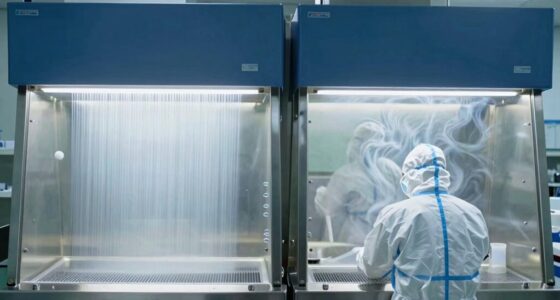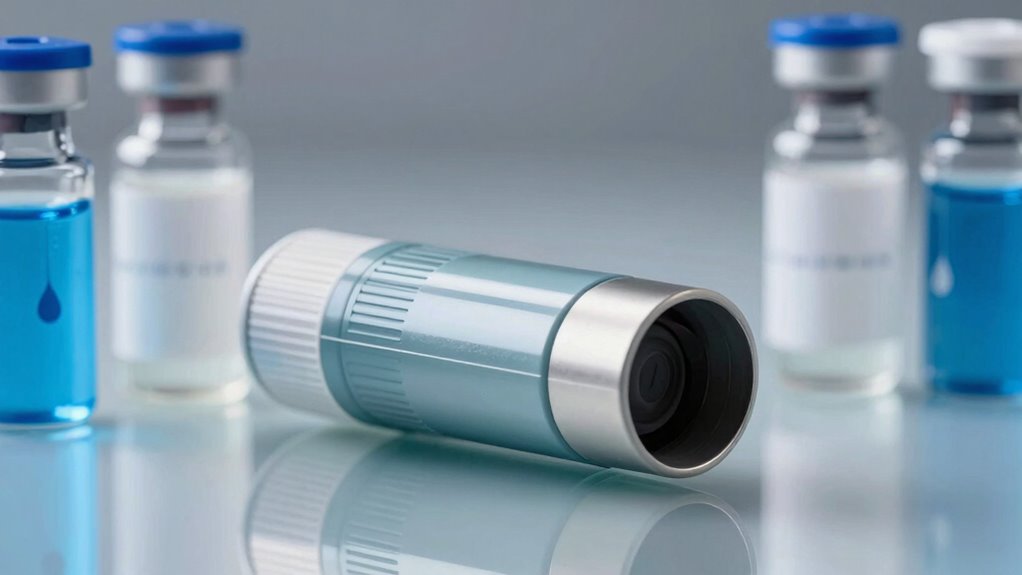

Designing inhaled biologics involves overcoming significant chemistry challenges, including maintaining molecular stability during storage, aerosolization, and delivery. You need to address how environmental factors like temperature, humidity, and shear stress affect proteins and antibodies. Choosing the right excipients, optimizing formulation pH, and designing devices that generate consistent aerosol particles are essential. If you want to understand how these issues can be tackled, exploring the innovative strategies ahead can provide valuable insights.

Get school and study supplies delivered free — and shop member deals
- Fast, free delivery on millions of items
- Access to Prime Big Deal Days deals on October 6–7
- Prime Video, Amazon Music and more included
Key Takeaways
- Ensuring formulation stability during aerosolization to prevent denaturation and aggregation of fragile biologic molecules.
- Developing preservation strategies that maintain biologic activity under variable storage and environmental conditions.
- Designing delivery devices that generate consistent, gentle aerosols to minimize shear-induced biologic degradation.
- Optimizing excipients and pH conditions to enhance stability without compromising delivery efficiency.
- Integrating formulation and device design to sustain biologic integrity throughout handling, storage, and inhalation.
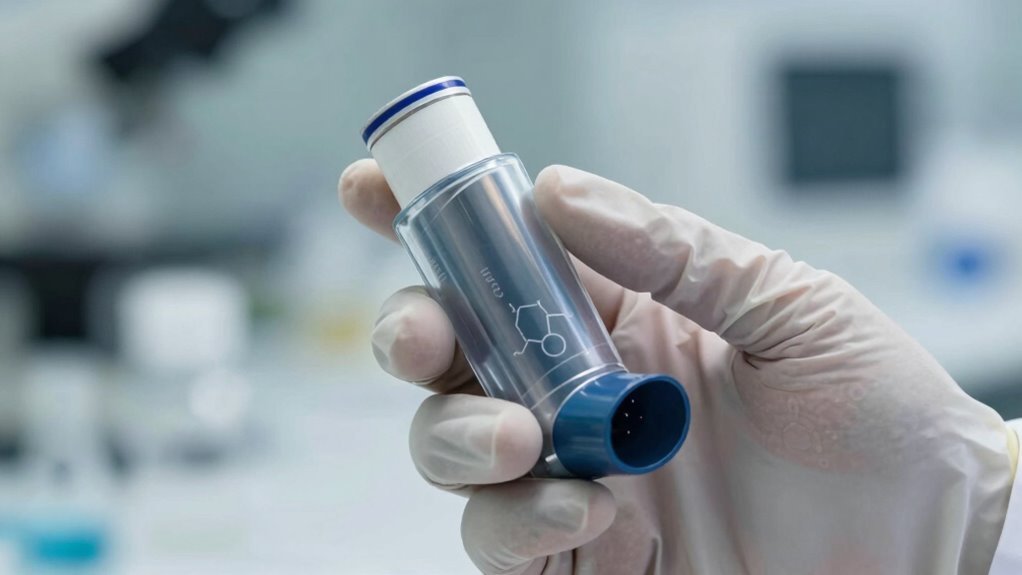
Inhaled biologics are an innovative class of therapeutics designed to deliver complex biological molecules directly to the lungs, offering targeted treatment for respiratory diseases. As you explore this emerging field, you’ll quickly realize that guaranteeing these therapies reach their destination intact is a significant challenge. One of the key hurdles is formulation stability. Biological molecules like proteins and antibodies are inherently fragile; they can easily degrade or lose activity when exposed to environmental factors such temperature, humidity, or shear stress during processing and storage. To maintain their therapeutic efficacy, you need to develop formulations that protect these molecules from denaturation or aggregation. This involves selecting suitable excipients, optimizing pH levels, and controlling manufacturing conditions. Achieving a stable formulation is essential because any compromise could reduce drug potency or trigger immune responses, ultimately impacting patient safety and treatment outcomes. Additionally, understanding the environmental sensitivity of biologics is crucial for designing effective storage and handling protocols to preserve their activity. Recognizing the intrinsic fragility of biologics is vital for developing robust preservation strategies that ensure their stability throughout the product lifecycle. Moreover, understanding the structure and function of biologics can help in designing formulations that better maintain their stability during aerosolization and storage. Incorporating advanced analytical techniques can provide deeper insights into the molecular stability of biologics under different conditions, guiding improvements in formulation and delivery methods.
Another critical aspect you must consider is delivery device design. Unlike traditional inhalers or nebulizers, biologic inhalation devices need to generate consistent, fine aerosols capable of delivering large, complex molecules deep into the lungs. The device must produce a uniform particle size distribution that balances deep lung penetration with minimal loss in the device or upper airways. Designing such a device requires careful attention to airflow mechanics, material compatibility, and user-friendliness. You’ll want a device that minimizes shear forces to prevent damaging the biologic, while also providing reliable, reproducible dosing. The interface between the biologic formulation and the device plays a key role in safeguarding the stability of the therapeutic during aerosolization. If the device design isn’t optimized, you risk degradation of the biologic or inconsistent dosing, which can compromise treatment efficacy. Ensuring that the device materials are compatible with biologic formulations can also help prevent unintended interactions that might affect stability or delivery performance.
Furthermore, integrating formulation stability with delivery device design isn’t just a technical challenge; it’s a delicate balancing act. You need to guarantee that the biologic remains stable throughout storage, handling, and aerosolization, while also making the device easy for patients to use correctly. This means considering factors like the device’s cleaning and maintenance, as well as how environmental conditions might affect both the formulation and device performance. As you push forward in this field, you’ll find that addressing these chemistry challenges requires a multidisciplinary approach—combining pharmaceutical science, engineering, and clinical insights—to develop inhaled biologics that are both stable and deliverable. Overcoming these hurdles will be critical in transforming inhaled biologics from promising concepts into reliable, widely accessible therapies for respiratory diseases.
inhaled biologics formulation stability kit
As an affiliate, we earn on qualifying purchases.
As an affiliate, we earn on qualifying purchases.
Frequently Asked Questions
How Do Inhaled Biologics Compare to Traditional Systemic Therapies?
Inhaled biologics offer targeted delivery, reducing systemic side effects compared to traditional therapies. You benefit from rapid onset and lower doses, but face challenges with formulation stability and ensuring proper delivery device function. Unlike systemic treatments, inhaled biologics require precise formulation and device compatibility to maintain efficacy. This approach can enhance patient compliance and improve outcomes, but overcoming chemistry challenges is essential for widespread adoption.
What Are the Environmental Impacts of Producing Inhaled Biologics?
You might not realize it, but producing inhaled biologics can impact environmental sustainability through manufacturing emissions. These emissions contribute to pollution and climate change, raising concerns about eco-friendliness. To minimize this, manufacturers are exploring greener processes, reducing waste, and optimizing energy use. By focusing on sustainable production methods, you can help lessen the environmental footprint of inhaled biologics, making healthcare more eco-conscious without compromising efficacy.
How Can Patient Inhalation Techniques Affect Biologic Efficacy?
Your inhalation technique greatly influences biologic efficacy. If you don’t perform proper inhalation training, you might not deliver the correct dose effectively. Technique consistency guarantees the biologic reaches your lungs as intended, maximizing benefits. Poor technique can lead to medication wastage, reduced effectiveness, or increased side effects. Focus on practicing your inhalation method regularly, follow instructions closely, and maintain consistency to get the most out of your inhaled biologic therapy.
Are There Specific Storage Challenges for Inhaled Biologics?
You might think storing inhaled biologics is straightforward, but their storage stability and temperature sensitivity tell a different story. These delicate medicines require precise conditions to stay effective, yet many overlook this, risking degradation. Ironically, a simple shift in temperature can render your biologic useless. So, you must handle them with care, maintain ideal storage conditions, and avoid temperature fluctuations to guarantee they work when you need them most.
What Are the Long-Term Safety Considerations for Inhaled Biologics?
You should consider long-term immunogenicity when using inhaled biologics, as repeated exposure might trigger immune responses over time. Additionally, monitor for chronic respiratory effects like airway inflammation or lung function decline, which could develop with prolonged use. Staying vigilant about these safety aspects helps guarantee that you minimize potential risks and optimize the therapeutic benefits, especially as these biologics are administered over extended periods.
Conclusion
As you navigate the maze of inhaled biologics, remember that each challenge is like a storm on the horizon—difficult but not insurmountable. With innovation as your compass and chemistry as your vessel, you can steer through these turbulent waters. The road ahead may be riddled with obstacles, but your determination can turn these hurdles into stepping stones. Keep forging forward, and you’ll open the promise of this promising therapeutic frontier.
Halloween Picks
halloween
As an affiliate, we earn on qualifying purchases.