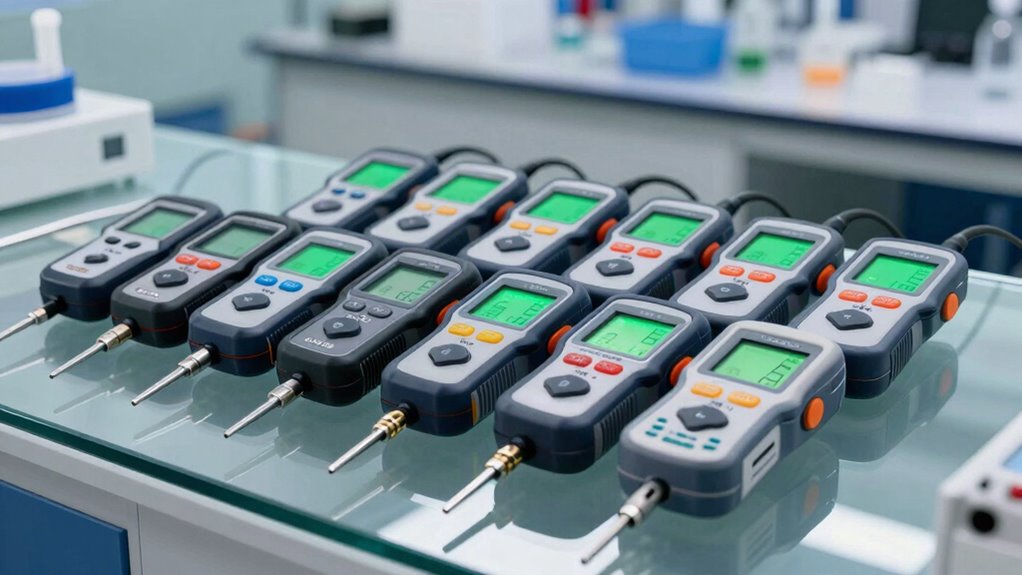

If you’re looking for a reliable handheld conductivity meter for water treatment, you’ll find options ranging from budget-friendly models to advanced, feature-rich devices. The Oakton AO-35604-00 CON 6+ stands out as the best overall due to its accuracy and durable probe, ideal for professional use. The Apera Instruments AI316 offers a versatile 5-in-1 measurement kit, making it a top pick for multi-parameter testing. Meanwhile, the HM Digital AP-2 provides great value for basic needs. However, tradeoffs often involve balancing features versus ease of use and price. Keep reading for the full breakdown to help you choose the best handheld conductivity meter for your water treatment needs.

Prime made for students and young adults
- Fast, free delivery for dorm and study essentials
- Prime Video and Amazon Music included
- Member-only deals
Key Takeaways
- High-accuracy models like the Oakton AO-35604-00 CON 6+ excel in professional water treatment settings.
- Multi-parameter testers such as the Apera AI316 simplify testing by combining conductivity with pH and temperature measurements.
- Budget options like HM Digital EC-3 offer good reliability but lack advanced features and durability found in pricier models.
- Waterproof and rugged design features are vital for field use, as seen in several top-rated picks.
- Ease of calibration and maintenance significantly impact long-term usability and measurement consistency.
| Oakton AO-35604-00 CON 6+ Handheld Conductivity Meter with Probe |  | Best Overall for Versatile Field Use | Product Type: conductivity meter | Meter Style: portable | Range (conductivity): 0 µs to 200 MS | VIEW ON AMAZON | See Our Full Breakdown |
| HM Digital AP-2 AquaPro Water Quality Electrical Conductivity Tester | 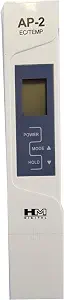 | Best Value for Basic Water Quality Testing | Measurement Range: 0-9999 µS | Resolution: 1 µS | Readout Accuracy: +/- 2% | VIEW ON AMAZON | See Our Full Breakdown |
| Apera Instruments AI316 Premium Series PC60 5-in-1 Waterproof pH/EC/TDS/Salinity/Temp Pocket Tester Kit |  | Best for Multi-Parameter Water Testing in the Field | Measurement Parameters: pH, EC, TDS, Salinity, Temperature | Display: Large backlit LCD | Calibration: Auto calibration | VIEW ON AMAZON | See Our Full Breakdown |
| Myron L Ultrameter II 6PIIFCE Multiparameter Handheld Water Quality Meter | 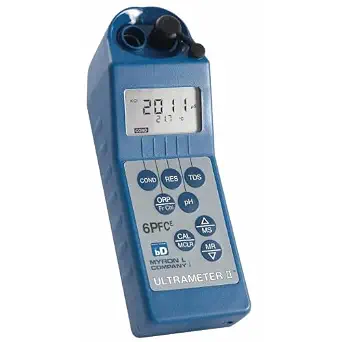 | Best for Professional, High-Precision Water Analysis | Parameters Measured: pH, ORP, conductivity, TDS, resistivity, FCE, temperature | Measurement Accuracy: ±1% for conductivity, TDS, resistivity | Temperature Range: 0–71°C | VIEW ON AMAZON | See Our Full Breakdown |
| Myron L 512M5 DS Conductivity Meter, 0-5000 µM/µS |  | Best for Durable, Basic Conductivity Measurements | Measurement Range: 0-5000 µM/µS | Temperature Compensation: 50°F to 160°F | Power: 9V battery | VIEW ON AMAZON | See Our Full Breakdown |
| Apera Instruments AI314 Premium Series EC60 Waterproof Conductivity Pocket Tester Kit | 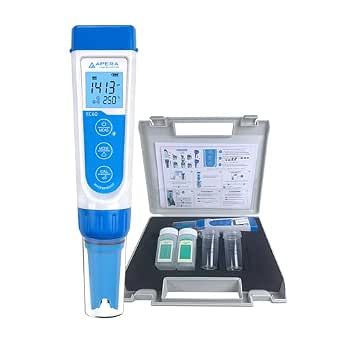 | Best Overall for Precision and Portability | Accuracy: ±1% F.S | Measurement Range: Wide-range conductivity | Display: Large LCD with 3 backlit colors | VIEW ON AMAZON | See Our Full Breakdown |
| HM Digital EC-3 Handheld Conductivity Tester with Case |  | Best Budget-Friendly, Quick Reading Tool | VIEW ON AMAZON | See Our Full Breakdown | |||
| HM Digital COM-80 Electrical Conductivity (EC) and Total Dissolved Solids Hydro Tester |  | Best Versatile Multi-Parameter Meter | Range: 0-5000 ppm | Resolution: 1 ppm | Scales: EC: µS, mS; TDS: ppm, ppt | VIEW ON AMAZON | See Our Full Breakdown |
| Myron L 512M10 DS Conductivity Meter |  | Best for Heavy-Duty, Long-Term Use | Conductivity Range: 0-10,000 micromhos/microsiemens | Temperature Compensation: Automatic, 10-71°C | Power: One 9-volt battery | VIEW ON AMAZON | See Our Full Breakdown |
| Varify TDS Meter Digital Water Tester for Drinking Water – 4-in-1 Test |  | Best All-in-One Compact Tester | Measurement Types: TDS, EC, Temperature | Temperature Units: °C/°F | Display: Backlit LCD | VIEW ON AMAZON | See Our Full Breakdown |
More Details on Our Top Picks
Oakton AO-35604-00 CON 6+ Handheld Conductivity Meter with Probe
This model stands out for its broad measurement range, covering from 0 µs to 200 MS, making it highly adaptable for various water treatment scenarios. Compared with the Myron L Ultrameter II 6PIIFCE, it offers a simpler interface and portability, though it lacks detailed calibration options and may not match the precision needed for laboratory-grade work. The wide temperature span from -10°C to 110°C ensures reliable readings in diverse environments, but the device provides limited information on calibration procedures or battery life, which could be a concern for continuous field operation. Its straightforward design and robust measurement capabilities make it a strong choice for professionals needing reliable, on-the-go conductivity testing. While it does not include advanced features like data logging or multi-parameter measurement, its durability and range make it a solid all-rounder.
Pros:- Wide conductivity and temperature measurement ranges
- Portable and easy to operate
- Accurate temperature readings
Cons:- Limited details on calibration features
- No information on battery life or advanced display options
Best for: Water treatment professionals or technicians needing a portable, wide-range conductivity meter for field conditions
Not ideal for: Laboratory analysts requiring detailed calibration options and data logging features
- Product Type:conductivity meter
- Meter Style:portable
- Range (conductivity):0 µs to 200 MS
- Range (temperature °C):-10 to 110
- Range (temperature °F):14 to 230
- Temperature Accuracy:±0.5°C
Our verdict“This meter is suitable for professionals who need reliable, versatile measurements in the field without complex features.”
HM Digital AP-2 AquaPro Water Quality Electrical Conductivity Tester
The HM Digital AP-2 AquaPro excels in providing accurate, easy-to-use conductivity and temperature measurements with automatic temperature compensation, making it ideal for routine water quality checks. Compared to the more advanced Myron L Ultrameter II 6PIIFCE, it offers a simplified digital interface and auto calibration, but it does not measure parameters like pH or TDS directly, limiting its scope. Its water-resistant housing enhances durability across different testing environments, yet it relies solely on batteries and may need frequent replacements, especially with regular use. Overall, this model balances affordability with reliable performance for non-specialist users, though it might fall short for those needing detailed water analysis or multi-parameter testing.
Pros:- Accurate measurement of conductivity and temperature
- Automatic temperature compensation (ATC)
- Water-resistant housing
Cons:- Limited to conductivity and temperature only
- Requires battery replacements over time
Best for: Homeowners or small-scale water treatment users needing straightforward conductivity and temperature testing
Not ideal for: Industrial or laboratory users requiring comprehensive water quality analysis or multi-parameter features
- Measurement Range:0-9999 µS
- Resolution:1 µS
- Readout Accuracy:+/- 2%
- Features:ATC, digital calibration, auto-off
- Power:Battery operated
Our verdict“This tester is best suited for users who want simple, reliable water conductivity readings without extra complexity.”
Apera Instruments AI316 Premium Series PC60 5-in-1 Waterproof pH/EC/TDS/Salinity/Temp Pocket Tester Kit
The Apera PC60 distinguishes itself by offering five key water parameters—pH, EC, TDS, salinity, and temperature—in a compact, waterproof design. Unlike the Myron L Ultrameter II 6PIIFCE, which targets high-precision, multi-parameter professional use, this device emphasizes portability and ease of use, making it perfect for field technicians or hobbyists who require quick, comprehensive assessments. Its auto calibration and large backlit display facilitate straightforward operation, but it isn’t intended for highly precise laboratory measurements, especially of pH in deionized water, where probe durability can be an issue. The included accessories enhance convenience, yet the device’s multi-parameter scope may compromise some measurement accuracy compared to dedicated single-parameter meters.
Pros:- Measures five parameters including pH, EC, TDS, salinity, and temperature
- Waterproof and durable design
- Auto calibration and large backlit LCD
Cons:- Limited pH accuracy in deionized water
- Probe storage can damage if not handled properly
- Less precise than dedicated laboratory meters
Best for: Water quality inspectors or field technicians needing broad, quick assessments of multiple parameters
Not ideal for: Laboratory analysts requiring lab-grade precision or specialized calibration protocols
- Measurement Parameters:pH, EC, TDS, Salinity, Temperature
- Display:Large backlit LCD
- Calibration:Auto calibration
- Waterproof:IP67
- Battery Life:Up to 1000 hours
Our verdict“This multi-parameter tester is ideal for field environments where convenience and durability outweigh lab-level precision.”
Myron L Ultrameter II 6PIIFCE Multiparameter Handheld Water Quality Meter
The Ultrameter II 6PIIFCE offers extensive parameters—pH, ORP, conductivity, TDS, resistivity, FCE, and temperature—with a focus on precision and reliability. Compared to the simpler Oakton AO-35604-00, it provides advanced features like user-adjustable settings and automatic range selection, suited for laboratory or industrial environments. Its detailed calibration options and high accuracy come with a steeper learning curve, making it less suitable for casual users. The device’s extensive parameter set makes it invaluable for comprehensive water analysis, but its cost and complexity might be overkill for basic water treatment needs.
Pros:- Measures seven parameters including pH, ORP, conductivity, TDS, resistivity, FCE, and temperature
- High accuracy and reliability
- User-adjustable settings and auto range
Cons:- Complex interface for casual users
- Higher price point
- Requires calibration and maintenance
Best for: Industrial laboratories or water treatment facilities demanding detailed, high-accuracy measurements
Not ideal for: Hobbyists or casual users seeking straightforward, low-cost conductivity testing
- Parameters Measured:pH, ORP, conductivity, TDS, resistivity, FCE, temperature
- Measurement Accuracy:±1% for conductivity, TDS, resistivity
- Temperature Range:0–71°C
- Battery Life:Over 100 hours
- Features:Automatic range, auto compensation, user settings
Our verdict“This professional-grade meter is perfect for advanced water analysis where precision and multi-parameter data are essential.”
Myron L 512M5 DS Conductivity Meter, 0-5000 µM/µS
The Myron L 512M5 DS offers dependable, straightforward conductivity measurements from 0 to 5000 µS with automatic temperature compensation, making it suitable for routine testing. Compared to the Oakton AO-35604-00, it emphasizes durability with a shock-resistant display and long battery life, but it is limited to conductivity alone, lacking the multi-parameter capabilities of higher-end devices. Its reliance on a 9-volt battery means frequent replacements for heavy users, which could add ongoing costs. This model suits users who prioritize ruggedness and long-term use over advanced features or multi-parameter testing.
Pros:- Automatic temperature compensation
- Shock-resistant, durable display
- Long battery life with over 2000 tests
Cons:- Requires frequent battery replacements
- Limited to conductivity measurements only
Best for: Field technicians or industrial users needing a rugged, single-parameter conductivity meter
Not ideal for: Water analysts requiring multi-parameter data or laboratory-grade accuracy
- Measurement Range:0-5000 µM/µS
- Temperature Compensation:50°F to 160°F
- Power:9V battery
- Battery Life:Over 2000 tests
Our verdict“This meter is ideal for users who need a tough, reliable conductivity tester for ongoing field use without extra measurement parameters.”
Apera Instruments AI314 Premium Series EC60 Waterproof Conductivity Pocket Tester Kit
The Apera AI314 EC60 stands out for its high accuracy (±1% F.S) and ease of use, making it ideal for professionals who need reliable, on-the-go measurements. Its replaceable sensor and auto calibration simplify maintenance, while the large backlit LCD ensures clear readings in low-light conditions. Compared with the HM Digital EC-3, it offers broader functionality with TDS and salinity modes, plus auto temperature compensation, which enhances measurement accuracy. However, it requires calibration solutions for optimal performance and has a limited temperature range (0-50°C), which could be restrictive in some environments. The kit includes calibration solutions, batteries, and a carrying case for convenience. This model is perfect for water treatment professionals or serious hobbyists who prioritize precision and portability in field measurements.
Pros:- High accuracy with a replaceable sensor
- Auto calibration and temperature compensation
- Large, backlit LCD display for easy reading
- Complete portable kit for field use
Cons:- Requires calibration solutions for best accuracy
- Limited temperature range of 0-50°C
- Battery life details not specified
Best for: Water treatment professionals and advanced hobbyists needing precise, portable testing tools
Not ideal for: Casual users or those only performing occasional measurements, due to calibration needs and limited temperature range
- Accuracy:±1% F.S
- Measurement Range:Wide-range conductivity
- Display:Large LCD with 3 backlit colors
- Temperature Compensation:Auto Temp. Compensation (0-50°C)
- Calibration:Auto calibration with buffer recognition
- Includes:Calibration solutions, batteries, lanyard, carrying case
Our verdict“This pick suits users demanding high accuracy and comprehensive features in a compact, portable format.”
HM Digital EC-3 Handheld Conductivity Tester with Case
The HM Digital EC-3 offers a straightforward, portable solution for quick conductivity checks, making it well-suited for hobbyists and field technicians who need instant results. Its compact design and included protective case facilitate easy transport and storage. Compared with the Apera AI314 EC60, this model lacks detailed specifications and calibration features, which means it might sacrifice some accuracy for simplicity. Despite this, it performs reliably for general water quality assessments where high precision isn’t critical. The absence of calibration options and limited data on measurement range are notable drawbacks, especially for users requiring consistent, accurate readings. This device is ideal for users seeking a no-frills, easy-to-carry tester for occasional water testing tasks.
Pros:- Portable and easy to operate
- Includes protective carrying case
- Provides quick conductivity readings
Cons:- Lacks detailed specifications and calibration features
- No information on measurement range or accuracy
- Limited to basic conductivity testing
Best for: Hobbyists or field workers who need a simple, portable conductivity checker for occasional use
Not ideal for: Water treatment professionals or those requiring detailed calibration and high accuracy
Our verdict“This device is best suited for casual users who prioritize portability and quick results over detailed data.”
HM Digital COM-80 Electrical Conductivity (EC) and Total Dissolved Solids Hydro Tester
The HM Digital COM-80 provides versatile testing of EC and TDS with four scales, making it suitable for more detailed water analysis. Its automatic temperature compensation and water resistance add to its reliability in various environments. Compared to the Myron L 512M10 DS, it offers a broader TDS range (0-5000 ppm), but with slightly less durability and no digital connectivity. The COM-80’s auto temperature compensation improves the accuracy of readings, yet it still requires periodic calibration for best results. Its water resistance makes it suitable for outdoor or industrial settings, but its limited range might restrict use in high TDS waters. This model appeals to users who need flexible, multi-scale testing without the high cost of premium meters.
Pros:- Accurate EC and TDS measurements
- Multiple scales for versatile testing
- Automatic temperature compensation
- Water resistant for durability
Cons:- Limited to 0-5000 ppm range
- Requires calibration for precision
- No digital connectivity
Best for: Water testing professionals and serious hobbyists needing multi-parameter versatility
Not ideal for: Users requiring extremely high TDS ranges above 5000 ppm or digital data logging features
- Range:0-5000 ppm
- Resolution:1 ppm
- Scales:EC: µS, mS; TDS: ppm, ppt
- Features:Automatic Temperature Compensation, Water resistant
- Readout Accuracy:+/- 2%
Our verdict“This meter is well-suited for users who need flexible, multi-parameter testing in various water conditions without high-end features.”
Myron L 512M10 DS Conductivity Meter
The Myron L 512M10 DS excels in durability and long-term reliability, measuring conductivity up to 10,000 micromhos. Its automatic temperature compensation between 10-71°C ensures consistent readings, while the robust polyethylene cell cup and shock-resistant design make it suitable for demanding environments. Compared with the HM Digital COM-80, it offers a higher maximum measurement range, but it lacks digital connectivity and has a higher price point. The long battery life—over 2000 tests per 9-volt battery—supports extensive field testing, though the device’s limited to conductivity measurements only. This model is best for professionals who require a rugged, high-capacity meter for frequent use in tough conditions.
Pros:- High maximum conductivity range (0-10,000 µM/µS)
- Automatic temperature compensation
- Durable, shock-resistant construction
- Long battery life for extensive testing
Cons:- Requires 9-volt battery (not included)
- Limited to conductivity testing only
- No digital or connectivity features
Best for: Industrial water treatment or research professionals needing durable, high-range conductivity testing
Not ideal for: Casual users or those wanting multi-parameter measurements or digital data management
- Conductivity Range:0-10,000 micromhos/microsiemens
- Temperature Compensation:Automatic, 10-71°C
- Power:One 9-volt battery
- Battery Life:>2000 tests
- Display:2½ inch shock-resistant meter
- Material:Polyethylene
Our verdict“This meter is ideal for users requiring a rugged, high-capacity conductivity tester for frequent, demanding applications.”
Varify TDS Meter Digital Water Tester for Drinking Water – 4-in-1 Test
The Varify TDS Meter combines TDS, EC, and temperature measurements into a compact, easy-to-use device, making it excellent for quick checks in domestic settings, aquariums, or hydroponics. Its titanium alloy sensor enhances durability, and the backlit LCD simplifies readings in dim environments. While it covers essential parameters, it doesn’t offer the detailed calibration or high precision found in the Apera EC60. Its limited parameter set and need for calibration over time make it less suitable for professional water treatment tasks. Still, for casual users or those managing small systems, its rapid and reliable readings provide a convenient solution. The included accessories and quick-start guide add to its appeal for beginners.
Pros:- Provides quick TDS, EC, and temperature readings
- Durable titanium sensor for longevity
- Compact and portable design
- Includes full testing kit with batteries and guide
Cons:- Limited to basic parameters, no salinity or advanced testing
- Requires calibration for consistent accuracy
- Battery life may be limited with frequent use
Best for: Home users, hobbyists, or small-scale systems needing quick, reliable TDS and EC readings
Not ideal for: Professional water treatment applications requiring detailed calibration and extensive parameter analysis
- Measurement Types:TDS, EC, Temperature
- Temperature Units:°C/°F
- Display:Backlit LCD
- Sensor Material:Titanium alloy
- Included Accessories:Batteries, quick-start guide
- Dimensions:7.48 x 1.97 x 0.83 inches
Our verdict“This all-in-one tester is best for casual users needing fast, reliable water quality indicators in compact form.”

How We Picked
The products featured in this roundup were selected based on several key criteria relevant to water treatment professionals and serious hobbyists. Performance was evaluated through accuracy, stability, and calibration ease, ensuring reliable readings essential for water quality control. Usability factors, such as display clarity, response time, and ergonomic design, were also considered. Durability and waterproof features matter particularly for fieldwork, while value was assessed by balancing features against price. Finally, versatility in measurement capabilities and long-term maintenance ease influenced the rankings, helping to identify models that deliver consistent results across different water conditions.Factors to Consider When Choosing Handheld Conductivity Meter For Water Treatment
Choosing the right handheld conductivity meter involves balancing several factors to match your specific water treatment needs. Understanding key features and potential tradeoffs can help you avoid common pitfalls, such as sacrificing accuracy for lower cost or opting for overly complex models when simplicity suffices. The following sections outline critical considerations to guide your purchase decision.Measurement Accuracy and Range
Accurate readings are essential for effective water treatment, especially when precise conductivity levels influence chemical dosing or filtration processes. Consider models that provide a broad measurement range and high resolution, which accommodate different contamination levels. Beware of low-cost options that may sacrifice accuracy, as this can lead to costly errors in treatment procedures.
Ease of Calibration and Maintenance
Regular calibration ensures consistent, reliable measurements. Look for meters that support easy calibration, preferably with automatic or simple manual procedures. Additionally, consider the availability and cost of replacement probes or calibration solutions—these impact long-term usability and total ownership costs. Overlooking these factors might result in frequent inaccuracies and increased expenses over time.
Durability and Waterproof Features
Field water treatment often involves exposure to moisture, dust, and rough handling. A rugged, waterproof design can significantly extend your device’s lifespan and reduce downtime. While more durable models may cost more upfront, they often save money on repairs or replacements in the long run. Avoid fragile designs that are not rated for outdoor or industrial environments.
Additional Features and Versatility
Some models combine conductivity measurement with other parameters like pH, TDS, and temperature, offering greater value for comprehensive water testing. These multi-parameter devices can save space and streamline workflow. However, more features can also increase complexity—ensure you choose a model that balances functionality with ease of use for your skill level.
Price and Long-Term Value
While budget models might seem attractive initially, they often lack durability and may require frequent replacements or recalibrations. Conversely, premium models tend to offer better accuracy, durability, and features, making them suitable for professional or frequent use. Assess your specific needs and frequency of testing to determine whether investing in a higher-priced device provides better long-term value.
Frequently Asked Questions
How often should I calibrate my handheld conductivity meter?
Calibration frequency depends on how often you use the device and the water quality you’re testing. For regular use, calibrating at least once a month is recommended to maintain accuracy. In more demanding environments, such as industrial water treatment, more frequent calibration—weekly or even daily—may be necessary. Always follow the manufacturer’s guidelines and calibrate with fresh, certified calibration solutions for best results.
Can I use a regular conductivity meter for water treatment purposes?
While some general-purpose conductivity meters can be used for water treatment, they may lack the precision, durability, or calibration stability needed for accurate dosing or compliance testing. Water treatment applications often demand devices with higher accuracy, waterproofing, and specific measurement ranges. Investing in a model designed explicitly for water quality ensures more reliable results and helps prevent costly mistakes.
Are multi-parameter testers worth the extra cost?
Multi-parameter testers offer significant convenience by measuring conductivity, pH, TDS, and temperature in a single device. This can streamline testing workflows and reduce the need for multiple instruments. However, they tend to be more complex and potentially less accurate in each parameter compared to dedicated devices. If you require comprehensive water analysis regularly, these models can provide excellent value, but for simple conductivity checks, a dedicated meter might suffice.
What features should I prioritize for field use?
For field applications, prioritize waterproof and rugged construction, a clear and easy-to-read display, and long battery life. Quick response times and simple calibration are also beneficial, especially if you need to perform multiple tests throughout the day. A compact, lightweight design can improve handling and reduce fatigue during extended use. Avoid fragile or overly complex models that are not built to withstand outdoor conditions.
Is higher-priced always better for water treatment meters?
Not necessarily. While higher-priced models often offer greater accuracy, durability, and additional features, they may be more than what casual or infrequent users need. If your water treatment tasks are simple or occasional, a mid-range or budget-friendly device might be adequate, provided it meets your accuracy requirements. For professional or continuous monitoring, investing in a higher-end model can improve reliability and reduce long-term costs.