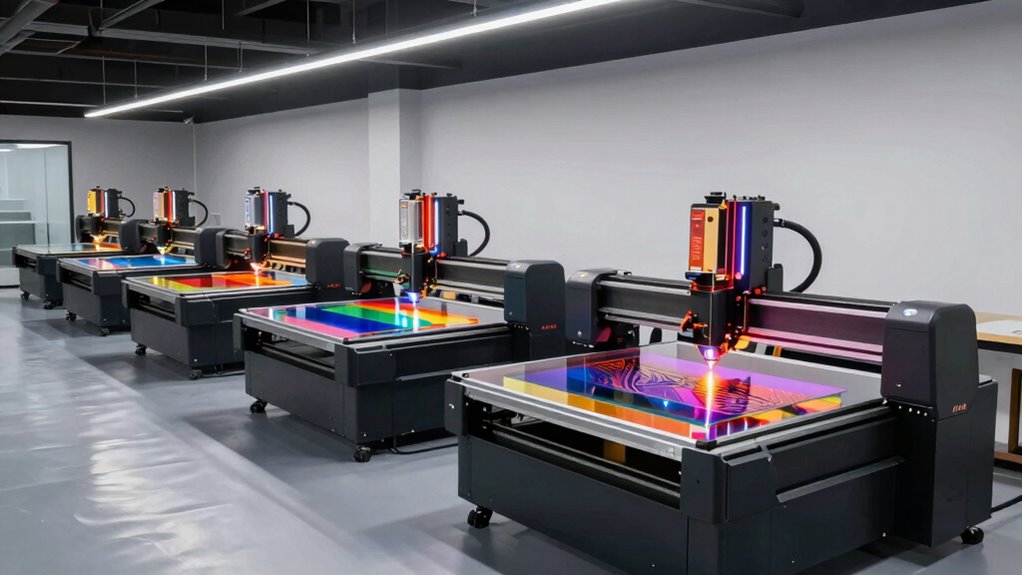

For a laser cutter for acrylic and polymer sheets, my best overall pick is the xTool S1 40W for buyers who want a higher-powered, enclosed machine and room to grow. The Longer Ray5 20W stands out for its generous work area, while the Ray5 10W offers a simpler entry point for lighter-duty projects. The main tradeoffs are cutting capability, usable bed size, material compatibility, and the added cost and setup demands of more powerful systems. Acrylic type matters too: diode lasers may struggle with clear acrylic, even when their power ratings look compelling. Read on for the full breakdown and guidance on matching a machine to your sheet materials and projects.

Get school and study supplies delivered free — and shop member deals
- Fast, free delivery on millions of items
- Access to Prime Big Deal Days deals on October 6–7
- Prime Video, Amazon Music and more included
Key Takeaways
- The xTool S1 40W is the clearest premium choice in this lineup for buyers prioritizing power and a more enclosed format, but it is more machine than occasional, small-format work may need.
- The Longer Ray5 20W pairs a larger 400×356mm work area with mid-range power, a useful combination for larger layouts that do not require the top-end 40W options.
- Laser wattage alone does not settle acrylic compatibility. Clear acrylic is a particular challenge for many diode lasers, so buyers should confirm material guidance before choosing any model.
- The 7W-class options favor smaller or lighter-duty projects; their compact work areas and lower power make them less compelling for frequent sheet cutting.
- The lineup spans very different needs, not just power levels: foldability, app control, work area, and bundles can matter more than a headline wattage for some buyers.
| Ray5 Laser Engraver, 10W High Power Laser Cutter and Engraver |  | Best for Acrylic Cutting Capacity | Laser power: 10W | Maximum listed acrylic thickness: 3mm | Maximum listed wood thickness: 5mm | VIEW ON AMAZON | See Our Full Breakdown |
| Artilume T1-P Foldable Laser Engraver 7000mW Laser Engraving Machine |  | Best Portable Pick | Laser power: 7000mW | Working area: 8 x 6 inches (200 x 150mm) | Laser spot size: 0.04 x 0.04mm | VIEW ON AMAZON | See Our Full Breakdown |
| Artilume T1 Laser Engraver Machine, Laser Cutter for Wood and Acrylic |  | Best Compact Starter | Laser power: 7W | Engraving accuracy: 0.01mm | Working area: 200 x 150mm | VIEW ON AMAZON | See Our Full Breakdown |
| Artilume A4 Laser Engraver 22000mW with App and 400x400mm Work Area |  | Best for Large-Format Engraving | Laser power: 22,000mW | Engraving area: 400 x 400mm | Engraving precision: 0.01mm | VIEW ON AMAZON | See Our Full Breakdown |
| X2 7000mW Laser Engraver & Cutter 200x200mm for Wood & Acrylic, Leather |  | Best Value for a Mid-Size Work Area | Laser power: 7000mW | Working area: 200 x 200mm | Material compatibility: Wood, acrylic, leather | VIEW ON AMAZON | See Our Full Breakdown |
| xTool S1 40W Laser Cutter and Engraver with Rotary Bundle |  | Best Overall for Enclosed 40W Cutting | Laser power: 40W | Bed size: 23.93 x 15.16 inches | Maximum speed: 600 mm/s | VIEW ON AMAZON | See Our Full Breakdown |
| Aliencell X1 Lite 40W Photo-quality Laser Engraver Cutter |  | Best for Large-Format Engraving | Laser power: 40W | Bed size: 26 x 21 inches | Acceleration: 20,000 mm/s² | VIEW ON AMAZON | See Our Full Breakdown |
| Longer Ray5 Laser Engraver and Cutter Machine, 20W, 400×356mm |  | Best for Buyers Who Need Stated Acrylic Capacity | Laser power: 20W | Working area: 400 x 356mm | Engraving speed: 24,000 mm/min | VIEW ON AMAZON | See Our Full Breakdown |
| laser cutter for acrylic and polymer sheet | Laser power | Weight | Dimensions | Working area |
|---|---|---|---|---|
| Ray5 Laser Engraver | 10W | 11.79 pounds | 12.6 x 12.62 x 7.87 inches | — |
| Artilume T1-P Foldable Laser E | 7000mW | 5.9 pounds | 14 x 14 x 6 inches | 8 x 6 inches (200 x 150mm) |
| Artilume T1 Laser Engraver Mac | 7W | 4.62 pounds | 145.28 x 141.73 x 57.87 inches (as listed) | 200 x 150mm |
| Artilume A4 Laser Engraver 220 | 22,000mW | — | 570 x 543 x 152mm | — |
| X2 7000mW Laser Engraver & Cut | 7000mW | — | — | 200 x 200mm |
| xTool S1 40W Laser Cutter and | 40W | 86.8 pounds | 19.6 x 19.6 x 0.04 inches (as listed) | — |
| Aliencell X1 Lite 40W Photo-qu | 40W | 65 pounds | — | — |
| Longer Ray5 Laser Engraver and | 20W | 10.98 pounds | — | 400 x 356mm |
More Details on Our Top Picks
Ray5 Laser Engraver, 10W High Power Laser Cutter and Engraver
For buyers focused on thin acrylic sheets, the Ray5 MiniS has the clearest cutting claim in this group: its listed capacity reaches 3mm acrylic, while the Artilume T1 emphasizes light cutting without specifying an acrylic thickness. Its 10W laser also gives it more stated output than the 7W Artilume T1, though neither should be treated as a substitute for a higher-power machine when thicker stock or production volume is the goal. The pre-assembled aluminum frame and protective cover reduce some setup and operating friction, while Wi-Fi adds flexibility. I’d choose it for small, defined cuts and engraving, not large panels: the work-area dimensions are not supplied, and calibration is still needed for consistent results.
Pros:- Listed ability to cut acrylic up to 3mm gives buyers a concrete limit for thin-sheet projects.
- 10W laser output is higher than the 7W Artilume T1 in this lineup.
- Pre-assembled aluminum frame supports a stable desktop setup.
- Protective cover, door sensor, and Wi-Fi are useful safety and control features.
Cons:- The 3mm acrylic limit restricts it to relatively thin sheet work.
- Working-area dimensions are not included in the supplied specifications.
- Setup and calibration are still needed to dial in reliable results.
Best for: Hobbyists and small makers cutting or engraving thin acrylic pieces up to the listed 3mm limit, who want a sturdier frame and wireless operation.
Not ideal for: Makers processing large acrylic panels or thicker polymer stock, since the listed cutting capacity is limited and no working-area dimensions are provided.
- Laser power:10W
- Maximum listed acrylic thickness:3mm
- Maximum listed wood thickness:5mm
- Engraving speed:12,000mm/min
- Dimensions:12.6 x 12.62 x 7.87 inches
- Weight:11.79 pounds
- Connectivity and safety:Wi-Fi; door sensor and protective cover
Our verdict“Choose the Ray5 MiniS for small acrylic work where its stated 3mm cutting capacity matters more than a large workspace or thicker-stock capability.”
Artilume T1-P Foldable Laser Engraver 7000mW Laser Engraving Machine
The T1-P is the easiest option here to move between a shared workbench and storage: it folds down and weighs 5.9 pounds, unlike the heavier Ray5 MiniS. Its 8 x 6-inch work area is useful for small signs, tags, and parts, while the 0.04 x 0.04mm spot and stated 0.01mm precision favor detailed engraving. That precision does not establish acrylic cutting depth, however, and the supplied description gives no maximum sheet thickness. Compared with the Artilume T1, this version’s main advantage is portability rather than a clearer acrylic-cutting specification. I’d pick it for compact, occasional projects and app-led control, but skip it if your priority is dependable cutting of thicker acrylic or a larger sheet format.
Pros:- Foldable design and 5.9-pound weight make storage and transport easier than with the Ray5 MiniS.
- 8 x 6-inch work area accommodates small signs and components.
- Fine listed spot size and 0.01mm precision suit detailed engraving.
- Wireless app control and compatibility with popular engraving software offer flexible operation.
Cons:- No maximum acrylic cutting thickness is provided.
- The 8 x 6-inch working area limits the size of sheet projects.
- Fumes require ventilation, and laser safety precautions remain necessary.
Best for: Apartment makers, students, and craft sellers who need a light, foldable machine for small acrylic engravings and occasional compact projects.
Not ideal for: Buyers who need documented acrylic cutting thickness, a large work area, or a machine dedicated to processing full-size polymer sheets.
- Laser power:7000mW
- Working area:8 x 6 inches (200 x 150mm)
- Laser spot size:0.04 x 0.04mm
- Engraving precision:0.01mm
- Maximum speed:10,000mm/min
- Dimensions:14 x 14 x 6 inches
- Weight:5.9 pounds
- Laser module lifespan:More than 10,000 hours
Our verdict“Choose the T1-P for portable, detailed engraving on small pieces, not for acrylic cutting jobs that depend on a stated thickness limit.”
Artilume T1 Laser Engraver Machine, Laser Cutter for Wood and Acrylic
The standard Artilume T1 makes the most sense for a small-workspace beginner who wants to learn engraving and try light cuts on dark acrylic. It shares the T1-P’s 200 x 150mm work area and 0.01mm precision, but the supplied material list is more explicit about dark acrylic; the T1-P, by contrast, highlights foldability and app control. The T1’s 7W diode is suited to small, detailed jobs, not a broad range of polymer colors or thick sheet cutting. Its stated 4mm cutting limit applies to wood, not acrylic, so I would not read it as an acrylic capacity claim. Compared with the Ray5 MiniS, it is lighter and more compact, but offers less laser power and no stated acrylic thickness limit.
Pros:- Material compatibility explicitly includes dark acrylic, unlike a broad but less specific acrylic claim.
- 0.01mm stated accuracy supports fine artwork and small lettering.
- Compact, foldable design takes less room than the Ray5 MiniS.
- 10,000mm/min maximum engraving speed supports brisk marking on suitable materials.
Cons:- The 200 x 150mm work area is small for sheet-based projects.
- The 4mm cutting limit is specified for wood, not acrylic.
- The listed material compatibility does not establish suitability for clear or all-color acrylic.
Best for: New hobbyists with limited bench space who want to engrave dark acrylic and learn light-cutting workflows on small projects.
Not ideal for: Buyers cutting clear or colored acrylic sheets, larger panels, or material near a specific thickness limit, since the supplied data only identifies dark acrylic and gives no acrylic cut depth.
- Laser power:7W
- Engraving accuracy:0.01mm
- Working area:200 x 150mm
- Listed material compatibility:Wood, leather, kraft paper, bamboo, dark acrylic, coated metal
- Maximum engraving speed:10,000mm/min
- Weight:4.62 pounds
- Dimensions:145.28 x 141.73 x 57.87 inches (as listed)
- Model number:T1
Our verdict“Choose the Artilume T1 as a compact entry point for engraving dark acrylic and small projects, not as a general-purpose acrylic sheet cutter.”
Artilume A4 Laser Engraver 22000mW with App and 400x400mm Work Area
The Artilume A4 earns its place through its 400 x 400mm work area, by far the clearest choice here for laying out larger acrylic panels or several smaller pieces in one job. That footprint is double the X2’s 200 x 200mm area on each side, and its stated 22W output is also substantially above the compact 7W and 10W options. Those figures make it more capable on paper, but they do not establish a maximum acrylic cutting thickness or confirm performance across different polymer types. The 0.01mm precision and LightBurn/LaserGRBL compatibility suit users willing to handle a more involved setup. I would favor it over the X2 for workspace; I would favor the Ray5 MiniS if a stated acrylic thickness limit matters more than format.
Pros:- 400 x 400mm work area is substantially larger than the X2’s 200 x 200mm area.
- 22W listed laser power exceeds the compact machines in this group.
- 0.01mm precision and a 0.04 x 0.04mm focus area support detailed work.
- Compatible with LightBurn and LaserGRBL.
Cons:- No maximum acrylic cutting thickness is specified.
- Setup may be demanding for beginners.
- The supplied information gives limited customer support and warranty detail and flags possible reliability concerns.
Best for: Experienced hobbyists and small shops laying out larger acrylic engravings or batches of parts who can manage setup and verify material-specific cutting settings.
Not ideal for: Beginners seeking simple setup or buyers who need clearly documented acrylic cut thickness and strong support or warranty details.
- Laser power:22,000mW
- Engraving area:400 x 400mm
- Engraving precision:0.01mm
- Maximum speed:10,000mm/min
- Laser focus area:0.04 x 0.04mm
- Dimensions:570 x 543 x 152mm
- Power supply:12V/4A
- Power consumption:Under 72W
- Software compatibility:LightBurn and LaserGRBL
Our verdict“Choose the A4 for a large working area and higher stated output, provided you can handle setup and confirm acrylic performance for your material.”
X2 7000mW Laser Engraver & Cutter 200x200mm for Wood & Acrylic, Leather
The X2 offers a practical middle ground for buyers who need more room than the 200 x 150mm Artilume T1 or T1-P but do not need the A4’s 400 x 400mm footprint. Its 200 x 200mm work area fits modest signs and parts, and LightBurn and LaserGRBL support gives more control than an app-only workflow. The 7W rating and 0.01mm precision are close to the compact T1’s specification, so the X2’s stronger distinction is its square workspace and one-year warranty, not a clear leap in acrylic cutting capacity. Although its title identifies acrylic, no maximum sheet thickness or acrylic type is supplied. I’d shortlist it for small batches and hobby production, but choose the Ray5 MiniS when a specific acrylic thickness limit is more useful than the extra work-area width.
Pros:- 200 x 200mm workspace is larger than the Artilume T1 and T1-P areas.
- LightBurn and LaserGRBL compatibility suits users who want desktop workflow options.
- 0.01mm listed precision supports detailed engraving.
- A one-year warranty is specified.
Cons:- No maximum acrylic cutting thickness or acrylic type is listed.
- The 200 x 200mm area remains too small for larger sheet projects.
- Setup and calibration may take time, and 7W output does not distinguish it from the Artilume T1 by power.
Best for: Hobby sellers and makers producing small acrylic signs, tags, and parts who want a 200 x 200mm area and desktop software compatibility.
Not ideal for: Users cutting thicker acrylic, working with large panels, or seeking a documented acrylic thickness capacity before buying.
- Laser power:7000mW
- Working area:200 x 200mm
- Material compatibility:Wood, acrylic, leather
- Precision:0.01mm
- Maximum speed:10,000mm/min
- Software compatibility:LightBurn and LaserGRBL
- Warranty:1 year
Our verdict“Choose the X2 for a modestly larger square workspace and familiar software, but not when acrylic cutting capacity must be documented.”
xTool S1 40W Laser Cutter and Engraver with Rotary Bundle
The xTool S1 40W is my strongest pick here for buyers who want an enclosed machine with substantial cutting power and a roomy work area. Its 40W laser and 23.93 x 15.16-inch bed give larger acrylic projects more space than the Longer Ray5’s 400 x 356mm area, while its enclosure, flame sensors, and smoke and noise filtration add useful safeguards for a regular home workshop. The listed material compatibility includes acrylic, though the supplied data does not specify acrylic thickness limits, so I would not assume a particular cut depth without checking the manufacturer’s guidance. Compared with the Aliencell X1 Lite, the xTool lists a lower maximum speed, but its safety and filtration details are more explicit. The tradeoff is its 86.8-pound weight, large footprint, and need for proper ventilation.
Pros:- 40W laser power suits buyers prioritizing cutting capability over lower-powered options such as the Longer Ray5 20W.
- 23.93 x 15.16-inch bed accommodates larger pieces than many compact hobby machines.
- Enclosed design, flame sensors, and smoke and noise filtration provide a more contained setup.
- User-friendly software with AI design capabilities can reduce friction for new users.
Cons:- At 86.8 pounds, it is difficult to reposition and calls for a permanent workspace.
- The product data gives no acrylic thickness limit, so buyers must confirm cutting capacity for their sheet material.
- Requires ventilation and safety precautions despite its enclosure and filtration.
Best for: Makers who regularly cut sizable acrylic sheets and want an enclosed 40W machine with stated flame and filtration features.
Not ideal for: Apartment users or occasional hobbyists without dedicated floor or bench space, ventilation, and room for an 86.8-pound machine.
- Laser power:40W
- Bed size:23.93 x 15.16 inches
- Maximum speed:600 mm/s
- Listed materials:Wood, metal, acrylic
- Safety features:Enclosed design, smoke and noise filtration, flame sensors
- Frame material:Aerospace-grade aluminum
- Weight:86.8 pounds
- Dimensions:19.6 x 19.6 x 0.04 inches (as listed)
Our verdict“Choose the xTool S1 if you need an enclosed 40W cutter for larger acrylic work and can dedicate space to a heavy machine.”
Aliencell X1 Lite 40W Photo-quality Laser Engraver Cutter
The Aliencell X1 Lite earns its place for buyers whose acrylic projects need an unusually broad work area: its 26 x 21-inch bed is the largest stated here, exceeding the xTool S1’s 23.93 x 15.16 inches. Its 40W power, auto-focus, and LightBurn support suit detailed jobs where placement and software control matter as much as raw coverage. The listed compatibility includes acrylic, but the product details do not give a maximum acrylic cutting thickness, so I would verify that point before choosing it for sheet-cutting work. The Aliencell also specifies 20,000 mm/s² acceleration and Class 1 certification, while the xTool provides more explicit details about filtration and flame sensing. At 65 pounds, it is lighter than the xTool but still not a casually portable desktop tool; beginners should also budget time for setup and software learning.
Pros:- 26 x 21-inch bed offers the broadest stated work area among these three machines.
- 40W laser power gives it more listed power than the Longer Ray5 20W.
- Auto-focus and LightBurn support provide useful control for repeatable, detailed work.
- Fully enclosed design and Class 1 safety certification are specified.
Cons:- The product data does not state a maximum acrylic cutting thickness.
- At 65 pounds, it remains cumbersome to move despite weighing less than the xTool S1.
- Setup and professional software may present a learning curve for beginners.
Best for: Small-shop owners and experienced hobbyists who engrave large acrylic panels and want LightBurn control with auto-focus.
Not ideal for: First-time users seeking a clearly documented acrylic cut-depth limit or a lightweight machine that can be moved between work areas.
- Laser power:40W
- Bed size:26 x 21 inches
- Acceleration:20,000 mm/s²
- Frequency:20 kHz
- Safety certification:Class 1
- Weight:65 pounds
- Listed materials:Wood, leather, acrylic, felt, fabric, paper, metal
- Software support:LightBurn
Our verdict“Pick the Aliencell X1 Lite when a very large engraving bed and LightBurn workflow matter more than portability or beginner simplicity.”
Longer Ray5 Laser Engraver and Cutter Machine, 20W, 400×356mm
The Longer Ray5 20W is the most straightforward choice here for buyers who want a stated acrylic thickness figure: the supplied specifications list cutting up to 8mm acrylic. That is more actionable for sheet-material planning than the xTool S1 and Aliencell X1 Lite listings, which name acrylic compatibility but give no cut-depth limit. Its 400 x 356mm work area is smaller than either 40W machine, and its 20W laser provides less power, so I would favor it for more modest sheet sizes rather than large-format production. The touchscreen and USB, TF card, Wi-Fi, and app connections offer flexible control, while the listed safety kit includes a protective shield, goggles, emergency stop, and overheating protection. The tradeoff is that the data reports setup challenges and its safety provisions do not make ventilation unnecessary.
Pros:- Specifies acrylic cutting up to 8mm, unlike the other two products in this batch.
- 400 x 356mm working area provides useful capacity for common hobby projects.
- USB, TF card, Wi-Fi, and app connectivity offer several ways to send jobs.
- Includes a touchscreen, protective shield, goggles, emergency stop, and overheating protection.
Cons:- Its 20W laser has less listed power than the 40W xTool S1 and Aliencell X1 Lite.
- The working area is smaller than both 40W alternatives.
- The supplied product data notes setup challenges, which may frustrate first-time users.
Best for: Hobbyists and small makers cutting acrylic sheets within the stated 8mm limit who value clear capacity guidance and flexible machine controls.
Not ideal for: Shops handling oversized panels or buyers who need the higher listed power and larger beds of the xTool S1 or Aliencell X1 Lite.
- Laser power:20W
- Working area:400 x 356mm
- Engraving speed:24,000 mm/min
- Listed material thickness:Up to 15mm wood, 0.05mm stainless steel, 8mm acrylic
- Laser spot size:0.08 x 0.1mm
- Connectivity:USB, TF card, Wi-Fi, app
- Display:3.5-inch touchscreen
- Safety features:Protective shield, enclosure, goggles, emergency stop, overheating protection
- Weight:10.98 pounds
Our verdict“Choose the Longer Ray5 if its stated 8mm acrylic capacity matches your projects and you do not need the larger bed or 40W power of the other picks.”
How We Picked
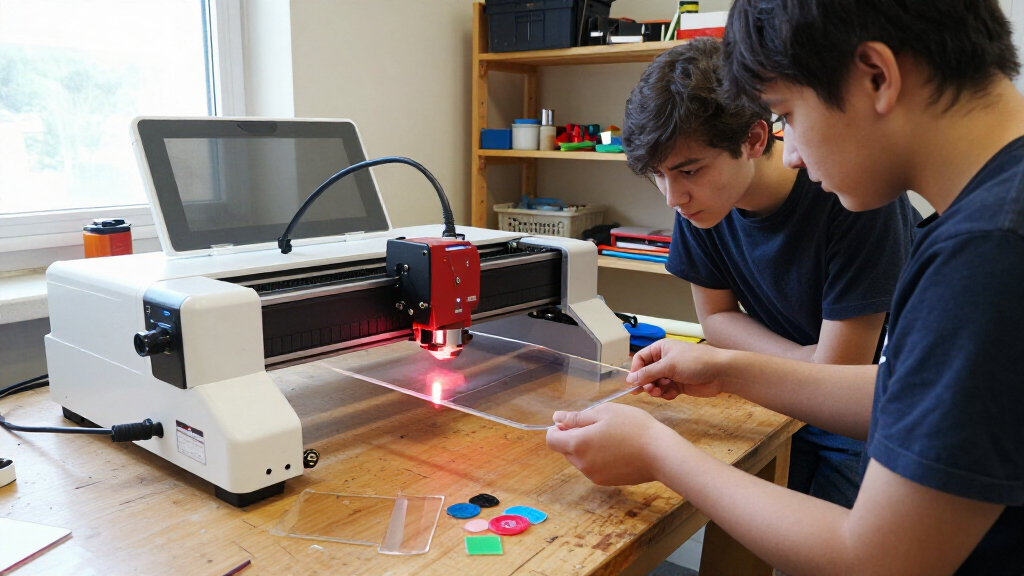
I compared these eight machines around the tasks implied by the search: cutting and engraving acrylic and other polymer sheets, handling practical sheet sizes, and fitting a buyer’s available workspace and experience. I weighed stated laser power alongside work area, machine format, usability features, and the likely demands of setup and operation. I also treated material compatibility as a key limit: a machine advertised for acrylic should not be assumed to cut every acrylic color or type, especially clear sheet.
The ranking gives more weight to a balanced fit for sheet work than to a single large specification. That puts the xTool S1 40W first for its higher power and enclosed format, while the Longer Ray5 20W earns a strong position for its larger work area. Smaller 7W-class models and the Ray5 10W remain relevant for compact, lighter-duty use, but their lower power or narrower working area makes them less versatile for regular sheet cutting. Product claims can vary by material and configuration, so I recommend checking the maker’s current material guidance and bundle details before buying.
Factors to Consider When Choosing Laser Cutter For Acrylic And Polymer Sheets
Choosing a machine for sheet work takes more than matching a wattage to a project. I’d first identify the exact polymer, sheet dimensions, and finish you need, then check whether the machine’s laser type and work area suit that combination. These broader factors can prevent a costly mismatch even when a model looks strong on paper.
Check the Exact Acrylic or Polymer Type
“Acrylic” covers materials with very different responses to laser light, and other polymers have their own cutting risks. Many diode lasers have difficulty cutting clear acrylic because much of the beam passes through the sheet rather than being absorbed. Opaque colors may behave differently, but a result on one color does not predict results on another. Ask the manufacturer for guidance on the exact material, thickness, and laser configuration you plan to use. Do not assume a listing that says “acrylic” means every acrylic sheet is suitable. If clear acrylic is central to your work, research laser types built for that material before choosing from a diode-focused lineup.
Match Power to Sheet Thickness and Production Pace
Higher stated power can improve cutting capacity and reduce the number of passes, but it does not guarantee a clean edge on every sheet. Material composition, focus, air assist, and motion settings all affect the result. A lower-powered machine may be adequate for thin, occasional projects, while repeated cuts or thicker stock call for closer attention to cutting specifications. Avoid buying by wattage alone: check documented results for your specific material and thickness. More power can also bring a larger machine, greater setup needs, and a steeper learning curve. Pay for additional capacity only when your likely projects can use it.
Measure the Usable Work Area, Not Just the Frame
Sheet dimensions determine whether a project fits in one pass or requires repositioning and alignment. Compare the advertised work area with the size of the material you intend to process, leaving room for safe placement and any fixture. A larger bed, such as the Longer Ray5 20W’s stated 400×356mm area, can simplify layouts, but it does not make the laser more suitable for every polymer. Compact machines can be easier to store and may suit small parts, yet full-sheet work could require trimming material beforehand. Check whether the machine’s real usable area matches the listed figure. Also plan for exhaust access and clearance around the machine, not just the sheet itself.
Treat Ventilation and Material Safety as Purchase Criteria
Laser cutting can produce smoke and fumes, and different plastics can release hazardous emissions when heated. Identify the material before processing it; never rely on a generic plastic label as proof that it is laser-safe. Plan for a suitable exhaust route or filtration system and follow the machine maker’s operating guidance. An enclosure can help contain light and smoke, but it does not replace proper ventilation. Keep the work area attended and clear of combustible material, since laser cutting carries a fire risk. If you cannot confirm a sheet’s composition or provide safe extraction, choose another process rather than testing it in the machine.
Compare Workflow Features With Your Actual Projects
App control, foldable construction, rotary accessories, and other bundled features are useful only when they fit the work you do. App-led operation can make setup more approachable, while desktop software may offer a workflow better suited to repeatable layouts. A rotary bundle is aimed at curved objects, so it may add little value for buyers focused only on flat sheets. Foldability can help with storage, though frequent setup and takedown may be inconvenient for production work. Check file compatibility, connection options, and whether accessories are included in the configuration you plan to buy. Prioritize features that remove a real bottleneck instead of treating every add-on as an upgrade.
Budget for the Whole Working Setup
The machine is only one part of a dependable cutting station. You may also need exhaust equipment, a stable base, air assist, material supports, and protective measures suited to your workspace. These additions can change whether a compact or premium machine is the better fit for your budget and available room. A beginner may benefit more from a manageable setup and clear operating guidance than from the highest power rating. Buyers making repeat parts should account for setup time, alignment, and material waste, not only cutting speed. Compare the complete setup required for your material before making a final choice.
Frequently Asked Questions
Can these diode laser cutters cut clear acrylic sheets?
Many diode lasers are poorly suited to clear acrylic because the beam may pass through the material instead of heating it effectively. The answer can vary with laser wavelength, sheet formulation, and machine configuration, so the word “acrylic” in a product listing is not enough to confirm compatibility. Check the manufacturer’s guidance for clear acrylic specifically, including the thickness and cutting method. If clear sheet is your main material, compare laser technologies designed to process it rather than relying on a higher diode wattage. For opaque acrylic or other polymers, confirm the exact material is safe and supported before cutting.
Is a 40W machine worth choosing over a 20W model for sheet work?
A 40W machine can offer more headroom for cutting tasks and may reduce the need for multiple passes, but that advantage matters only if your material and projects benefit from it. A 20W model such as the Longer Ray5 also offers a comparatively large work area, which can matter more when your priority is laying out larger parts. Neither wattage guarantees a clean cut through a particular polymer. Compare manufacturer guidance for your intended sheet thickness, along with bed size, enclosure, and the cost of safe extraction. If your work is occasional and thin-stock, the extra power may not justify the added investment and setup demands.
What should I do if my acrylic sheets are larger than the machine bed?
First decide whether you can cut the sheet down safely before loading it, and whether doing so would compromise part alignment or edge quality. Repositioning a sheet for multiple passes is possible in some workflows, but it adds alignment risk and can make long or repeated cuts less consistent. A larger bed, such as the Longer Ray5 20W’s stated 400×356mm area, may suit bigger layouts, though the usable area still needs to fit your parts and margins. Measure the sheet and largest nested layout rather than choosing from the frame dimensions alone. If full-sheet work is routine, consider a machine with a bed sized for that workflow or another fabrication method.
How do I know whether a polymer sheet is safe to laser cut?
Identify the exact polymer and check its safety data and the laser manufacturer’s material guidance before cutting. Generic labels such as “plastic” or “acrylic” do not provide enough information about composition or emissions. Do not process a sheet if you cannot confirm what it contains or whether it is appropriate for laser use. Even supported materials can produce smoke that requires effective extraction, and some fumes may be hazardous. Follow the machine maker’s safety instructions, keep cuts attended, and use suitable ventilation rather than relying on an enclosure alone.
Should a beginner choose a compact lower-powered model or a more capable machine?
A compact model such as the Artilume T1-P foldable or a lower-powered option can make sense when projects are small, storage is limited, and sheet cutting is occasional. A more capable machine may reduce limits on project size or cutting pace, but it also asks more of your budget, workspace, and operating setup. Beginners should weigh setup guidance, software, ventilation, and material compatibility alongside power. If you expect to work with larger sheets or expand into regular production, buying too small can create alignment workarounds and early replacement costs. If your projects remain modest, extra capacity may sit unused.
Conclusion
For the broadest mix of power and an enclosed format, I’d choose the xTool S1 40W as best overall, provided its material guidance fits your sheets and your workspace can support it. The Longer Ray5 20W is my best value-style pick for larger layouts, thanks to its stated 400×356mm work area without moving to the 40W tier. For a premium choice, the xTool S1 is the strongest fit here; for beginners with smaller, lighter-duty projects, I’d look first at the Ray5 10W or a compact Artilume option rather than paying for unused capacity. Choose the Artilume T1-P if foldable storage is your specific need, and the xTool S1 Rotary Bundle if curved objects are part of your plans. Above all, confirm compatibility with the exact acrylic or polymer you intend to cut—especially if it is clear acrylic—before choosing any model.
Fall Picks
fall essentials
As an affiliate, we earn on qualifying purchases.