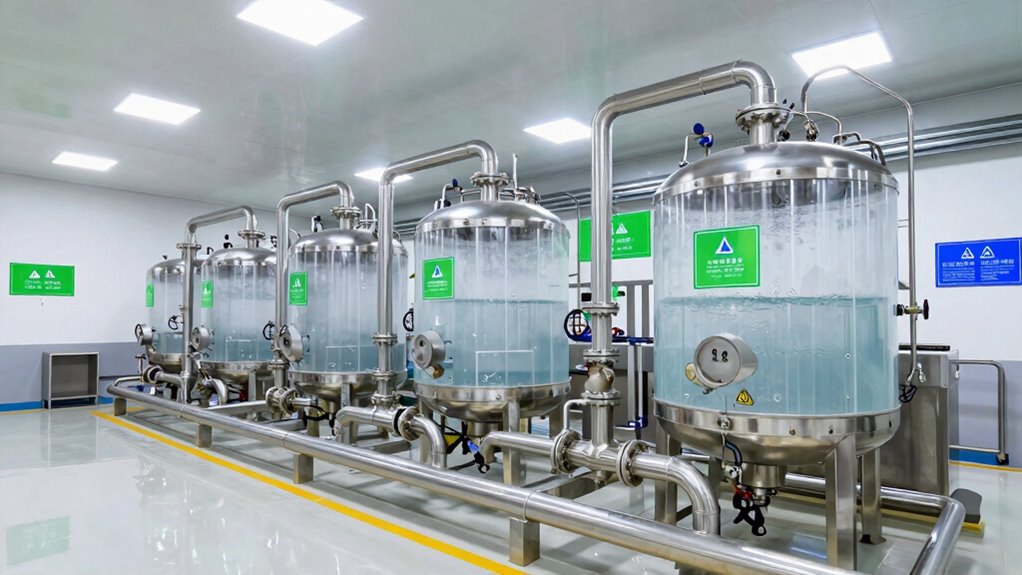

Inside chemical facilities, you can implement water reuse strategies by using membrane filtration technologies like ultrafiltration, nanofiltration, and reverse osmosis to treat wastewater for recycling. Proper pretreatment prevents membrane fouling and guarantees system efficiency. Adopting a Zero Liquid Discharge (ZLD) approach maximizes water recovery, cuts costs, and meets strict regulations. If you want to learn more about optimizing water management and enhancing sustainability, there’s much more to explore ahead.

Prime made for students and young adults
- Fast, free delivery for dorm and study essentials
- Prime Video and Amazon Music included
- Member-only deals
Key Takeaways
- Implement membrane filtration technologies such as ultrafiltration, nanofiltration, or reverse osmosis to treat wastewater for reuse.
- Employ proper pretreatment protocols to prevent membrane fouling and extend system lifespan.
- Adopt Zero Liquid Discharge (ZLD) systems to recycle water internally and minimize liquid waste discharge.
- Integrate advanced treatment methods like thermal evaporation and crystallization for high-purity water recovery.
- Balance economic and operational factors to optimize water reuse, reducing freshwater intake and wastewater treatment costs.
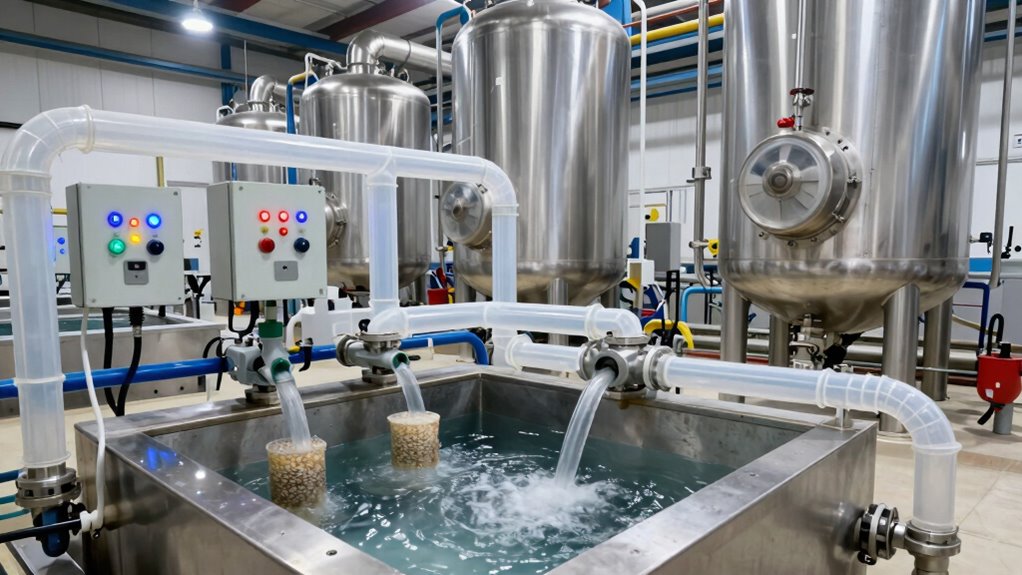
Inside chemical facilities, implementing effective water reuse strategies is fundamental for reducing environmental impact and improving operational efficiency. One of the most reliable methods to achieve this is through membrane filtration. This technology uses semi-permeable membranes to separate contaminants from wastewater, allowing you to recycle water within your processes. Membrane filtration systems, such as ultrafiltration, nanofiltration, and reverse osmosis, can remove a wide range of impurities, including suspended solids, organic compounds, and dissolved salts. By integrating these systems, you can markedly lower your freshwater intake, cut disposal costs, and minimize your facility’s ecological footprint.
Membrane filtration is particularly advantageous because it offers high-quality water suitable for reuse in various applications. For instance, you can reuse treated water for cooling, equipment cleaning, or as process water, depending on your specific needs. As you implement these systems, it’s essential to establish routine maintenance and membrane cleaning schedules to guarantee consistent performance and longevity. Proper pretreatment of wastewater before membrane filtration also plays an indispensable role in preventing membrane fouling, which can compromise efficiency and increase operational costs. Additionally, understanding water reuse strategies can help optimize your treatment processes and ensure sustainable water management. Incorporating innovative treatment technologies can further enhance the efficiency and effectiveness of your water reclamation efforts.
Alongside membrane filtration, the concept of Zero Liquid Discharge (ZLD) has gained prominence in chemical facilities aiming for maximum water sustainability. ZLD involves treating wastewater to the point where virtually no liquid waste is discharged externally. Instead, the water is recycled back into the process, and residual brine or solids are disposed of responsibly. Achieving ZLD requires a combination of advanced treatment techniques, including membrane filtration, thermal evaporation, and crystallization. This approach not only minimizes environmental contamination but also aligns with strict regulatory standards and sustainability goals. Moreover, advancements in treatment system integration continue to make ZLD more feasible and cost-effective for diverse chemical operations.
As you consider ZLD, it’s crucial to evaluate the economic and operational implications. While initial investments can be substantial, the long-term savings in water procurement, wastewater treatment fees, and environmental compliance often justify the costs. Implementing membrane filtration as part of a ZLD system ensures you produce high-purity water that can be reused repeatedly, reducing dependence on external water sources and lowering your overall environmental impact. Additionally, adopting innovative treatment methods can help further optimize and adapt your water management strategies for future sustainability challenges. Exploring advanced treatment options can also provide tailored solutions to meet specific regulatory and operational requirements.
As an affiliate, we earn on qualifying purchases.
Frequently Asked Questions
What Are the Initial Costs of Implementing Water Reuse Systems?
The initial costs of implementing water reuse systems vary depending on the scale and technology, but generally, you’ll need to take into account a detailed cost estimation and investment analysis. Expect expenses for equipment, infrastructure upgrades, and installation. While upfront costs can be significant, a thorough analysis helps you weigh these against long-term savings and environmental benefits, ensuring your investment is justified. Planning carefully helps maximize the value of your water reuse initiative.
How Do Water Reuse Strategies Impact Facility Safety Standards?
Water reuse strategies can positively impact your facility’s safety standards by reducing environmental impact and enhancing process efficiency. By implementing these systems, you decrease the risk of water shortages and contamination, promoting a safer working environment. These strategies also help you meet regulatory requirements more easily, ensuring compliance and minimizing safety hazards. Overall, adopting water reuse methods supports a safer, more sustainable operation, aligning environmental and safety goals effectively.
Are There Specific Regulatory Requirements for Water Reuse in Chemicals?
Yes, there are specific regulatory requirements for water reuse in chemical facilities. You must guarantee regulatory compliance by adhering to permits and standards set by agencies like the EPA and local authorities. Permitting procedures typically involve submitting detailed plans demonstrating water treatment, quality control, and safe reuse practices. Staying up-to-date with these regulations helps prevent violations, protects the environment, and maintains safe, efficient operations within your facility.
How Is Water Quality Monitored in Reuse Systems Over Time?
You should know that about 75% of water reuse systems in chemical facilities rely on continuous water treatment and quality monitoring. To guarantee safety and compliance, you regularly check parameters like pH, turbidity, and contaminants through automated sensors and sampling. This ongoing quality monitoring helps you detect any deviations early, maintaining water integrity and preventing process disruptions, ultimately supporting sustainable and efficient reuse practices within your facility.
What Are the Common Challenges Faced During Water Reuse Implementation?
You face challenges like integrating innovative filtration and membrane technologies effectively. Ensuring these systems operate reliably over time requires careful planning, as membrane fouling and scaling can occur. You might also struggle with balancing cost and performance, maintaining consistent water quality, and training staff to manage advanced systems. Overcoming these hurdles involves ongoing monitoring, regular maintenance, and selecting the right combination of filtration methods to optimize water reuse.
Conclusion
By adopting water reuse strategies inside chemical facilities, you reduce waste, conserve resources, and promote sustainability. You optimize processes, lower costs, and protect the environment. You innovate, improve efficiency, and build resilience. You embrace change, foster responsibility, and lead industry standards. Ultimately, you create a future where water is valued, resources are preserved, and operations are sustainable. Water reuse isn’t just a strategy—it’s a commitment to responsible growth, a step toward a greener, more sustainable tomorrow.
Fall Picks
fall essentials
As an affiliate, we earn on qualifying purchases.