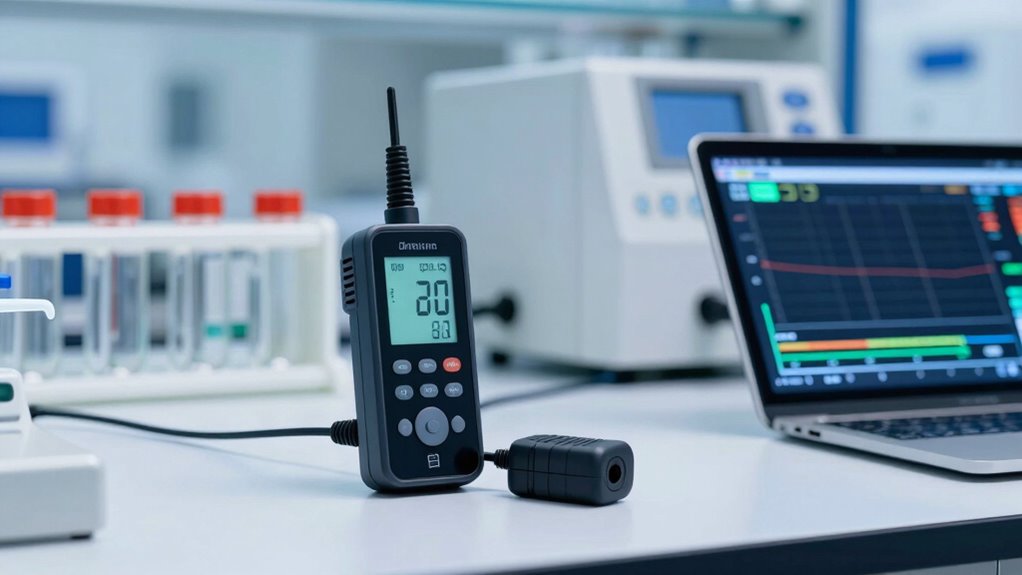

Wireless temperature data logging is becoming essential as it offers real-time insights, automates processes, and guarantees compliance with industry regulations. It enables you to monitor environmentally sensitive areas remotely, quickly detect issues, and improve operational efficiency. Using IoT and cloud infrastructure enhances data security and accessibility. As regulations tighten, adopting wireless monitoring helps you meet safety standards effortlessly. Keep exploring to discover how this technology can transform your environment management strategies.
Key Takeaways
- Increasing regulatory standards require continuous, accurate temperature monitoring for compliance and safety assurance.
- Wireless data logging enables real-time environmental control, reducing manual checks and operational errors.
- IoT integration and cloud storage improve data accessibility, supporting proactive decision-making and process optimization.
- Enhanced security measures are essential to protect sensitive temperature data from cyber threats in wireless systems.
- Remote monitoring in hard-to-access or hazardous areas ensures comprehensive environmental oversight and regulatory compliance.
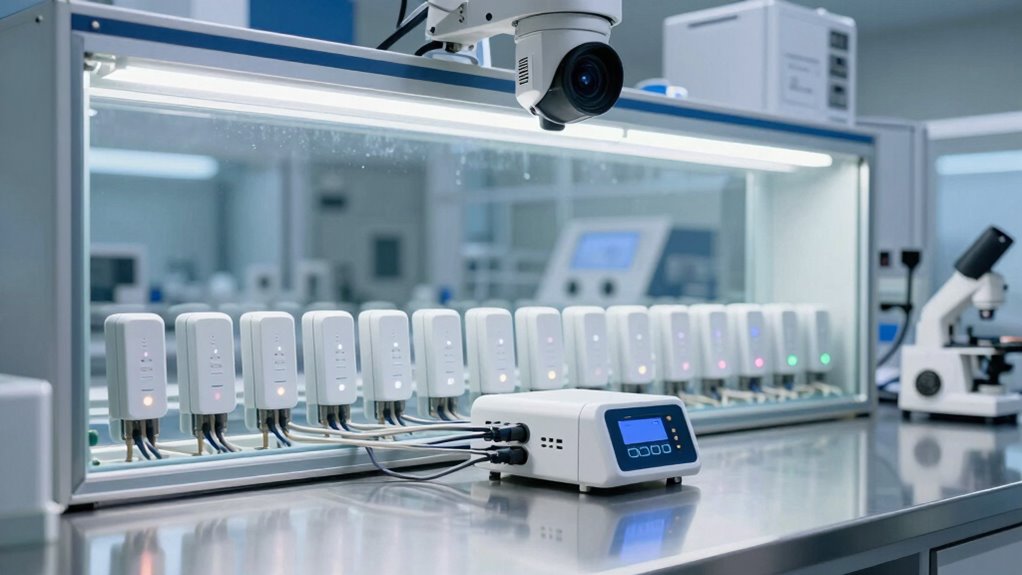
Wireless monitoring and temperature data logging have become essential tools for ensuring accurate and real-time environmental control across various industries. As technology advances, integrating these systems with the Internet of Things (IoT) has revolutionized how you collect, analyze, and respond to temperature data. IoT integration allows your monitoring devices to connect seamlessly with networks, providing instant access to critical information from anywhere. This connectivity not only streamlines operations but also enhances the precision of environmental management, making manual checks a thing of the past.
Moreover, the development of innovative European cloud servers supports these systems by offering secure, energy-efficient data storage solutions that align with sustainable practices. However, with increased connectivity comes the necessity of prioritizing data security. When your temperature data is transmitted wirelessly, it becomes vulnerable to cyber threats and unauthorized access. Implementing robust security protocols is a must to protect sensitive information, especially in sectors like healthcare, food storage, or pharmaceuticals, where data integrity is paramount. Encryption, secure authentication methods, and regular system updates are fundamental steps you should take to safeguard your data. Ensuring data security isn’t just about protecting information; it’s about maintaining trust and compliance with industry regulations.
The rise of wireless temperature data logging also means you can proactively address environmental issues before they escalate. Real-time alerts notify you instantly if temperatures fluctuate outside set parameters, enabling immediate corrective actions. This rapid response not only prevents spoilage or damage but also reduces downtime and operational costs. Wireless systems eliminate the need for manual data collection, freeing up your staff to focus on more strategic tasks. Additionally, the historical data collected can be analyzed for patterns, helping you optimize processes and improve overall efficiency.
The adaptability of wireless monitoring systems means you can deploy sensors in hard-to-reach or hazardous areas without risking personnel safety. Whether in cold storage warehouses, clean rooms, or outdoor environments, these systems adjust to your needs, providing comprehensive coverage and continuous data logging. As regulations tighten and quality standards become more stringent, adopting these advanced monitoring solutions becomes no longer optional but mandatory for compliance and competitive advantage.

Govee Smart Bluetooth Thermometer Hygrometer H5074, Mini Humidity Sensor
- App Control: Monitor remotely via smartphone app
- Wireless Range: 262 feet connectivity without obstacles
- High Accuracy: Temperature ±0.54°F, Humidity ±3%RH
As an affiliate, we earn on qualifying purchases.
As an affiliate, we earn on qualifying purchases.
Frequently Asked Questions
How Secure Is Wireless Temperature Data Transmission?
Wireless temperature data transmission can be quite secure if you use strong data encryption protocols, which safeguard your information from unauthorized access. However, you should also be aware of potential signal interference, which can disrupt data flow or cause vulnerabilities. Regularly updating your security measures and choosing reliable, encrypted systems helps make sure your data remains safe from hacking or interference during transmission.
What Are the Initial Costs of Implementing Wireless Data Loggers?
They say “you have to spend money to make money,” and that’s true for wireless data loggers. Your initial investment covers setup costs like purchasing devices, software, and installation. These costs vary depending on the system’s complexity and size. While it might seem steep upfront, the efficiency and accuracy gained often offset the initial expenses over time, making wireless monitoring a smart, long-term choice.
Can Wireless Systems Operate in Remote or Harsh Environments?
Yes, wireless systems can operate in remote or harsh environments by utilizing remote power sources like batteries or solar panels. Their environmental resilience is incorporated into their design, allowing them to withstand extreme temperatures, moisture, and vibrations. This ensures reliable data logging even in challenging conditions, giving you peace of mind that your temperature data remains accurate and consistent, regardless of the environment.
How Often Should Temperature Data Be Reviewed for Compliance?
You should review your temperature data regularly, ideally aligning with your compliance monitoring schedules, often weekly or monthly. Frequent data reviews guarantee you catch any deviations early, maintaining compliance with industry standards. Keep a consistent data review frequency, especially for critical environments, to avoid violations. Automated alerts from wireless systems can help you stay on top of temperature fluctuations, making compliance monitoring more efficient and reliable.
Are Wireless Monitoring Devices Reusable or Single-Use?
Wireless monitoring devices can be either reusable or single-use disposables, depending on the specific model and application. Reusable devices are designed for multiple uses, requiring proper cleaning and calibration between uses to guarantee accuracy. Single-use disposables are intended for one-time use, reducing cross-contamination risks. You should choose based on your needs, regulatory requirements, and the environment in which the devices will be used.
Conclusion
As you embrace wireless monitoring and temperature data logging, you’re stepping into a future where precision is unstoppable. This technology revolutionizes safety and compliance, making outdated methods seem like relics of the past. With real-time insights at your fingertips, you’ll be able to avert crises before they happen—truly harnessing the power of data. Don’t get left behind in the stone age; this shift is transforming industries at a pace faster than you can imagine.