Gluten is a natural protein found in wheat, barley, and rye, not a chemical additive or man-made substance. It helps give bread its structure and stretchiness, making it a common part of many foods. Food labels clearly indicate if gluten or wheat is present, especially for those with sensitivities or celiac disease. Understanding that gluten is a natural component can help you interpret labels better—if you want to learn more, keep exploring this topic.
Key Takeaways
- Gluten is a natural protein found in wheat, barley, and rye, not a man-made chemical.
- It consists of proteins gliadin and glutenin, which give dough elasticity and structure.
- Gluten-free labels indicate products contain minimal gluten, not that gluten is a chemical additive.
- Food labels list ingredients by weight, with gluten or wheat clearly marked for consumer safety.
- Understanding gluten as a biological protein helps clarify that it is not a harmful chemical to fear.
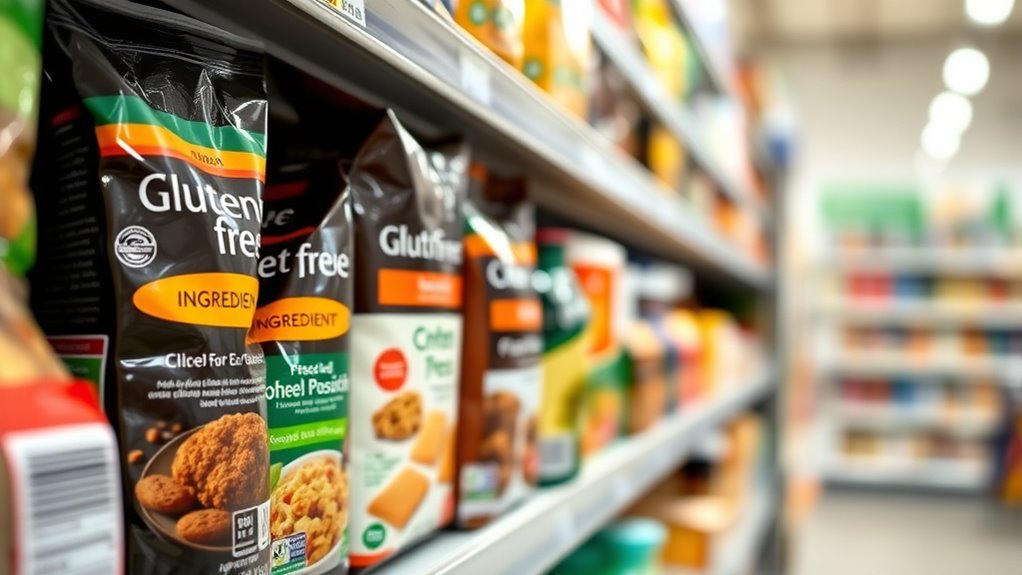
Have you ever wondered what all those numbers and terms on a food label really mean? It can be confusing trying to decipher what ingredients are included and what they actually do. One common question people have is whether gluten is a chemical. The answer depends on how you look at it. Gluten isn’t a chemical in the traditional sense; it’s a protein found naturally in wheat, barley, and rye. When you see “gluten” listed on a food label, it’s referencing this protein, which contributes to the structure and elasticity of baked goods. It’s not a man-made compound or a chemical additive. Instead, it’s part of the food’s natural chemical composition, which means it’s a biological component rather than a synthetic ingredient. Understanding gluten in terms of chemical composition can help clear up misconceptions. Gluten is made up of two main proteins: gliadin and glutenin. These proteins combine to give dough its stretchiness and help bread hold its shape. When manufacturers label foods as gluten-free, they’re indicating that the product contains little to no detectable gluten, often less than 20 parts per million, per industry standards. This labeling is essential for people with celiac disease or gluten sensitivity, as consuming gluten can trigger severe health reactions. The gluten-free labeling isn’t about removing a chemical but about ensuring the absence of a naturally occurring protein that can cause harm to sensitive individuals. Food labeling regulations have evolved to make it easier for consumers to understand what they’re eating. When you read a label, you’ll notice that ingredients are listed in order by weight. If gluten or wheat is included, it’s clearly marked, or the product may be labeled “gluten-free” to reassure those avoiding it. This labeling helps you make informed choices based on your dietary needs. It’s also worth noting that many processed foods may contain added ingredients that mimic gluten’s properties, but those are usually identified separately on the label. Knowing that gluten is a natural protein, part of the food’s chemical composition, can help you better interpret food labels. Instead of viewing it as a chemical to fear, recognizing it as a natural component can give you a clearer perspective. When you see gluten-free labeling, it’s a sign that the manufacturer has taken steps to meet specific health standards and cater to consumers with dietary restrictions. Ultimately, understanding the language on food labels empowers you to make healthier, more informed choices every time you shop. Additionally, food label regulations are designed to protect consumers and promote transparency in food production.

LINKTOR Chemistry Molecular Model Kit (444 Pieces), Student or Teacher Set for Organic and Inorganic Chemistry Learning, Motivate Enthusiasm for Learning and Raising Space Imagination, A Fullerene Set
- Comprehensive Molecular Model Kit: 444 pieces for various chemistry levels
- Includes Fullerene Set: 150 parts for Carbon-60 structures
- Two Structural Models: Ball-and-stick and space-filling models
As an affiliate, we earn on qualifying purchases.
Frequently Asked Questions
Can Gluten Be Found in Non-Food Products?
Yes, gluten can be found in non-food products like cosmetics and medications. You might encounter gluten in skincare items, shampoos, or lotions, which could affect those with gluten sensitivities or celiac disease. Similarly, some medications contain gluten as a binder or filler, so it’s essential to read labels carefully. Always check product ingredients if you’re avoiding gluten, even outside of food, to prevent unintended reactions.
How Does Gluten Affect People With Celiac Disease?
You might feel like gluten is a sneaky villain, but for people with celiac disease, it triggers a fierce immune response that leads to intestinal damage. Even tiny amounts can cause severe symptoms, fatigue, and long-term health issues. Your body mistakenly attacks its own tissues, making it essential to avoid gluten entirely. Staying vigilant with food labels helps protect your gut and keeps your health safe.
Are Gluten-Free Products Always Healthier?
Gluten-free products aren’t always healthier. While they may aid those with gluten digestion issues or celiac disease, they often contain added sugars or fats to improve taste. The gluten protein structure is what causes problems for some, but removing it doesn’t automatically make a food healthier. Always check labels carefully, focusing on nutrient content, rather than assuming gluten-free equals better nutrition.
What Processes Are Used to Remove Gluten From Food?
Removing gluten from food involves extraordinary food processing techniques that seem almost like magic. During gluten removal, food manufacturers often use methods like enzymatic treatment, fermentation, or specialized filtering to extract or break down gluten proteins. These processes are designed to guarantee gluten-free products meet strict standards, but they can vary widely. So, when you see gluten-free labels, know that complex, precise food processing has worked tirelessly to remove gluten from your favorite foods.
Is Gluten a Naturally Occurring Chemical in Grains?
Gluten is a naturally occurring protein in grains like wheat, barley, and rye, which are part of the grain composition. Its chemistry involves a mix of proteins that give dough its elasticity. You’ll find gluten naturally in these grains, but it’s not a chemical added during processing. Understanding this helps you read labels better, especially if you need to avoid gluten for health reasons.
Conclusion
Remember, gluten isn’t a chemical—it’s a protein found in wheat, barley, and rye. Nearly 1 in 100 people worldwide have celiac disease, making food labels essential for safety. By reading labels carefully, you can avoid hidden gluten and make informed choices. Stay vigilant and don’t hesitate to ask questions when in doubt. Clear labels empower you to enjoy your food safely and confidently, knowing exactly what’s in your meal.